Fabaceae
Brazilian Ironwood: Full Sun Plant
Libidibia ferrea
A hardy, low-maintenance tree when grown in full sun in fertile, well-drained soil. It requires regular watering only during the seedling stage; once established, it tolerates dry periods well thanks to its deep roots. It is sensitive to frost and should be cultivated in tropical or subtropical climates without intense cold.
Every 14 days
Direct sun
2° - 40°C
40% - 70%
Categories
What is Brazilian Ironwood?
Brazilian Ironwood (Libidibia ferrea) is a easy-care plant from the Fabaceae family. The Brazilian Ironwood (Libidibia ferrea), also known as Jucá, is a tree native to the Brazilian Atlantic Forest, occurring from the southeast to the northeast of the country and considered a symbol of the Caatinga biome. Recently reclassified from the former genus Caesalpinia, it is famous for its...
Brazilian Ironwood grows up to 20.0m, spread of 1000cm, watering every 14 days, 2°C – 40°C, 40–70% humidity. It is not suitable for indoor environments and safe for pets.
Unlike many tropical plants, Brazilian Ironwood tolerates watering mistakes. Best for beginners. Unlike many popular species, Brazilian Ironwood is safe to keep around pets.
How to Care for Brazilian Ironwood?
TLDR: Brazilian Ironwood needs Direct sun, watering every 14 days, and temperatures between 2-40°C with 40-70% humidity.
How Often Should You Water Brazilian Ironwood?
Water the seedling regularly (morning and afternoon) during the first year after planting, keeping the soil moist but not waterlogged. Once established, reduce the frequency: the adult tree tolerates short periods of drought well due to its deep root system.
How Much Light Does Brazilian Ironwood Need?
Prefers full sun all day. It is a heliophilic (sun-loving) species that blooms and grows best when receiving abundant direct light; development is slower in partial shade.
What Is the Best Soil for Brazilian Ironwood?
Grow in fertile, well-drained soil enriched with organic matter (compost or well-rotted manure). It adapts to various soil types as long as it does not become waterlogged or overly compacted.
What Pot Should You Use for Brazilian Ironwood?
As it is a large tree, it is not suitable for permanent pots. Young seedlings can be kept in large, deep pots with good drainage only until final transplantation into the ground.
Care Schedule
Fertilize
Every 90 days
What Is Brazilian Ironwood and Where Does It Come From?
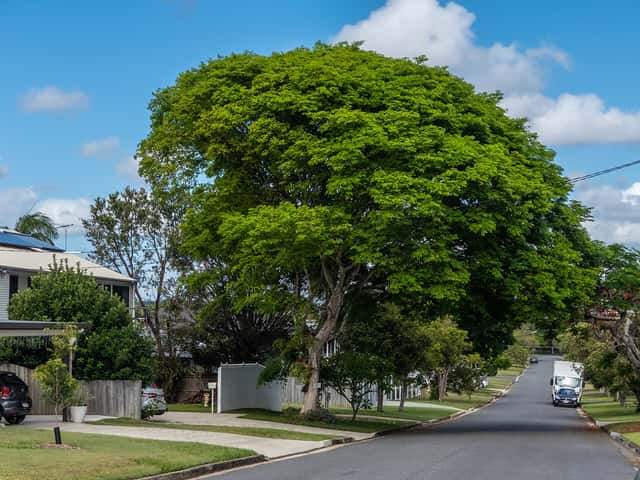
The Brazilian Ironwood (Libidibia ferrea), also known as Jucá, is a tree native to the Brazilian Atlantic Forest, occurring from the southeast to the northeast of the country and considered a symbol of the Caatinga biome. Recently reclassified from the former genus Caesalpinia, it is famous for its smooth, marbled trunk that peels in light and dark patches, and for its extremely dense and resistant wood, one of the heaviest in the Americas. With a rounded crown and bipinnate leaves, it produces small fragrant yellow flowers between spring and summer, followed by dark pods widely used in folk medicine. It can live for over 100 years and is extensively planted in Brazilian urban landscaping.
How Big Does Brazilian Ironwood Grow?
TLDR: Brazilian Ironwood can reach up to 20.0m tall with Fast growth rate.
Max height
20.0m
Spread
10.0m
Growth rate
Fast
Foliage
Semi-evergreen
Plant Uses
Ornamental
Great for decoration
Medicinal
Medicinal properties
Medicinal Uses
- Pods macerated in alcohol are traditionally used for healing wounds and burns
- Infusions and teas made from the pods (jucá) are used in folk medicine for inflammation, diabetes, and respiratory problems
- Scientific studies confirm moderate healing and antimicrobial activity of the pod extract
Is your plant showing symptoms?
Click on the symptom to discover possible causes:
What Diseases Commonly Affect Brazilian Ironwood?
TLDR: Brazilian Ironwood is susceptible to 6 known diseases. Monitor regularly for early detection.
Mealybugs
Mealybugs are small, soft-bodied insects covered with a white, waxy, cottony material. They are common pests of houseplants and outdoor plants in mild climates. These sap-sucking insects feed on plant tissue, causing damage, stunted growth, and can lead to plant death if left untreated. They produce sticky honeydew which attracts sooty mold.
Spider Mites
Spider mites are tiny arachnids (less than 1/20 inch long) related to spiders and ticks that feed on plant sap. They thrive in hot, dry conditions and can cause significant damage to ornamental and vegetable plants. During severe infestations, crop losses can reach 14% or higher as these pests disrupt vital plant processes including photosynthesis, carbon dioxide absorption, and transpiration.
Scale Insects
Scale insects are small sap-sucking pests that appear as brown, shell-like bumps on plant stems and leaves. There are over 25 species, divided into armored (hard) and unarmored (soft) scales. They feed by piercing plant tissue and extracting sap, which weakens the plant and can lead to yellowing, stunted growth, and even death if left untreated. They also excrete honeydew, which attracts ants and promotes sooty mold growth.
Sooty Mold
Sooty mold is a fungal disease that develops on surfaces coated with honeydew, a sticky sweet substance secreted by sap-sucking insects like aphids, scale insects, and whiteflies. While it does not directly infect plant tissue, it reduces photosynthetic capacity by blocking sunlight and diminishes the plant's aesthetic appearance.
Meaning & Symbolism
Due to its extremely hard and durable wood, the Brazilian Ironwood is associated with strength, resilience, and overcoming adversity. It is considered the symbol tree of the Caatinga biome and has a strong presence in Brazilian culture and folk medicine.
Compare with similar plants
| Attribute | Difficulty | Light | Watering | Pet Safe |
|---|---|---|---|---|
| Field Maple | Easy | Bright indirect | 14d | ✓ |
| Silver Birch | Easy | Direct sun | 14d | ✓ |
| Common Blanketflower | Easy | Direct sun | 10d | ✓ |
| Cushion Bush | Easy | Direct sun | 14d | ✓ |





