Asteraceae
Field Rosemary: Aromatic Plant
Baccharis dracunculifolia
A hardy and easy-to-grow plant, adapted to poor soils and full sun regions. It prefers at least 6 hours of direct sunlight per day, well-drained soil, and tolerates drought well once established. Light pruning at the end of winter helps maintain its shape and stimulates new growth.
Every 10 days
Direct sun
-5° - 38°C
% - %
Categories
What is Field Rosemary?
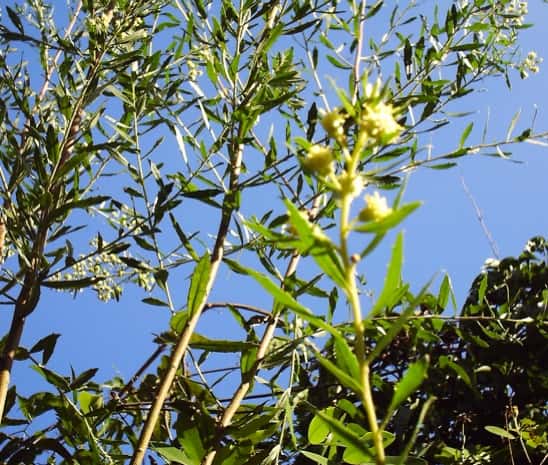
Field Rosemary (Baccharis dracunculifolia) is a easy-care plant from the Asteraceae family. Baccharis dracunculifolia, popularly known as field rosemary or vassourinha, is a shrub native to Brazil belonging to the Asteraceae family. It can reach up to 4 m in height, with thin, sparse, and aromatic branches, and small, lanceolate leaves, 1 to 2.5 cm long. It produces small white to slightly...
Field Rosemary grows up to 4.0m, watering every 10 days, -5°C – 38°C. It is not suitable for indoor environments and safe for pets.
Unlike many tropical plants, Field Rosemary tolerates watering mistakes. Best for beginners. Unlike many popular species, Field Rosemary is safe to keep around pets.
How to Care for Field Rosemary?
TLDR: Field Rosemary needs Direct sun, watering every 10 days, and temperatures between -5-38°C with 40-70% humidity.
How Often Should You Water Field Rosemary?
Water frequently during the first two months after planting (2 to 3 times a week) to establish rooting. Once established, it is drought-resistant: water every 7 to 10 days in summer and significantly reduce in winter, avoiding waterlogging, which promotes root rot.
How Much Light Does Field Rosemary Need?
Requires full sun, at least 6 hours of direct light daily. Lack of sun is the main cause of poor flowering and weak growth.
What Is the Best Soil for Field Rosemary?
Grows well in sandy or loamy soil, well-drained and even poor in organic matter, with a pH between 6.0 and 7.5. Avoid waterlogged or compacted soils.
What Pot Should You Use for Field Rosemary?
As a full sun plant with vigorous growth, it prefers direct cultivation in the ground or in large, well-drained pots (minimum 30 to 40 L), with generous drainage holes and a light substrate based on soil, sand, and organic matter.
Care Schedule
Fertilize
Every 60 days
What Is Field Rosemary and Where Does It Come From?
Baccharis dracunculifolia, popularly known as field rosemary or vassourinha, is a shrub native to Brazil belonging to the Asteraceae family. It can reach up to 4 m in height, with thin, sparse, and aromatic branches, and small, lanceolate leaves, 1 to 2.5 cm long. It produces small white to slightly pink flowers, highly sought after by bees: it is one of the main botanical sources of Brazilian green propolis. It occurs naturally in Cerrado areas, rupestrian grasslands, forest edges, and degraded lands in South-Central Brazil, and is also used in the ecological restoration of degraded areas.
How Big Does Field Rosemary Grow?
TLDR: Field Rosemary can reach up to 4.0m tall with Fast growth rate.
Max height
4.0m
Growth rate
Fast
Foliage
Evergreen
Plant Uses
Medicinal
Medicinal properties
Aromatic
Pleasant fragrance
Ornamental
Great for decoration
Medicinal Uses
- Anti-inflammatory
- Analgesic
- Digestive (liver and gastric protection)
- Oral antiseptic (gingivitis and canker sores)
- Source of green propolis
Is your plant showing symptoms?
Click on the symptom to discover possible causes:
What Diseases Commonly Affect Field Rosemary?
TLDR: Field Rosemary is susceptible to 1 known diseases. Monitor regularly for early detection.
Meaning & Symbolism
Field rosemary is associated in Brazilian popular culture with peace, prosperity, and protection, inheriting part of the symbolism of European rosemary (Rosmarinus officinalis), although it is a botanically distinct species. Because it grows spontaneously in fields without being cultivated, it is seen as a symbol of the native biodiversity of the Cerrado and the Atlantic Forest.
Compare with similar plants
| Attribute | Difficulty | Light | Watering | Pet Safe |
|---|---|---|---|---|
| Field Maple | Easy | Bright indirect | 14d | ✓ |
| Silver Birch | Easy | Direct sun | 14d | ✓ |
| Common Blanketflower | Easy | Direct sun | 10d | ✓ |
| Cushion Bush | Easy | Direct sun | 14d | ✓ |
Choose & Compare
Sources & References
- How to Care for Alecrim-Do-Campo - Greg App
- Baccharis dracunculifolia - Wikipedia
- Alecrim-do-campo (Baccharis dracunculifolia DC.) - A Planta da Vez
- Baccharis dracunculifolia - alecrim do campo - Biologia da Paisagem
- Alecrim do Campo (Baccharis dracunculifolia) - Oficina de Ervas
- Germinacao de aquenios de Baccharis dracunculifolia D.C. (Asteraceae)
- Ethnomedicinal, phytochemical and pharmacological investigations of Baccharis dracunculifolia DC.
- Baccharis dracunculifolia - CultivaSmart





