Asteraceae
Bristly oxtongue: Edible Plant
Helminthotheca echioides
It is a hardy and very low-maintenance plant, especially suitable for cultivation in open fields or outdoor pots: it loves full sun, tolerates drought and poor soils well, and almost never requires fertilization or special care, other than a well-drained substrate.
Every 10 days
Bright indirect
5° - 30°C
40% - 60%
Categories
What is Bristly oxtongue?
Bristly oxtongue (Helminthotheca echioides) is a easy-care plant from the Asteraceae family. Bristly oxtongue (Helminthotheca echioides, syn. Picris echioides) is an annual or biennial herbaceous plant in the Asteraceae family, native to the Mediterranean region and now widespread as a ruderal plant throughout much of Europe and the world. It is easily recognized by its erect or prostrate,...
Bristly oxtongue grows up to 90cm, watering every 10 days, 5°C – 30°C, 40–60% humidity. It is not suitable for indoor environments and safe for pets.
Unlike many tropical plants, Bristly oxtongue tolerates watering mistakes. Best for beginners. Unlike many popular species, Bristly oxtongue is safe to keep around pets.
How to Care for Bristly oxtongue?
TLDR: Bristly oxtongue needs Bright indirect, watering every 10 days, and temperatures between 5-30°C with 40-60% humidity.
How Often Should You Water Bristly oxtongue?
Water only when the soil has dried out deeply: bristly oxtongue tolerates periods of drought well, while it easily suffers from water stagnation which promotes root rot.
How Much Light Does Bristly oxtongue Need?
Place it in full sun or at most in light partial shade: the more light it receives, the more compact, lush, and floriferous its growth will be.
What Is the Best Soil for Bristly oxtongue?
It prefers medium-textured, well-drained, and slightly alkaline soil, but adapts to practically any type of soil, even poor or compact ones.
What Pot Should You Use for Bristly oxtongue?
If grown in a pot, choose a wide and not too deep container, with large drainage holes and a layer of expanded clay or gravel at the bottom to prevent water stagnation.
What Is Bristly oxtongue and Where Does It Come From?
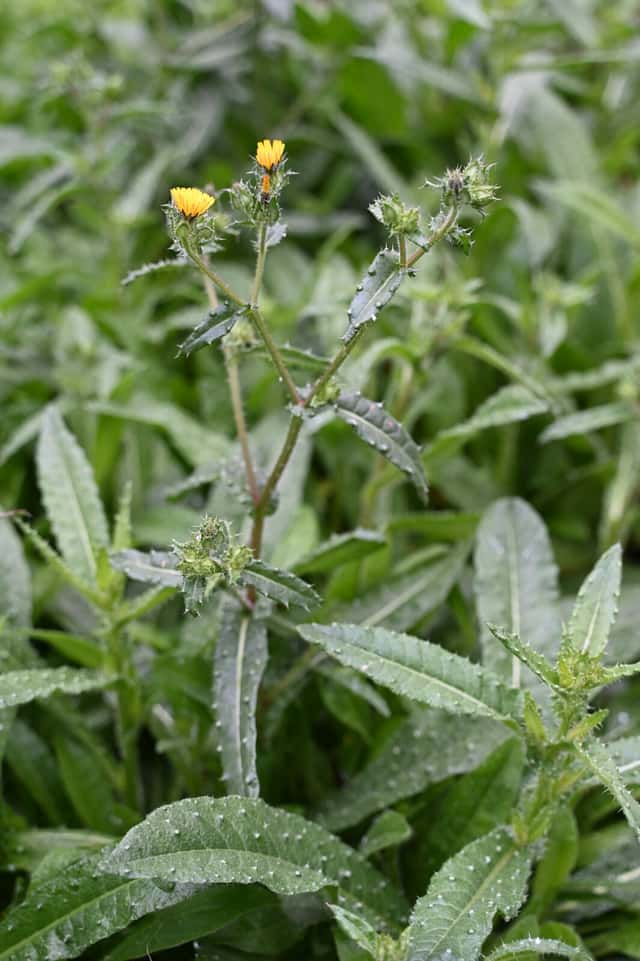
Bristly oxtongue (Helminthotheca echioides, syn. Picris echioides) is an annual or biennial herbaceous plant in the Asteraceae family, native to the Mediterranean region and now widespread as a ruderal plant throughout much of Europe and the world. It is easily recognized by its erect or prostrate, striated, and reddish stem, covered in stiff, hooked hairs that give it a bristly feel, and by its lanceolate leaves dotted with small pearly white spots at the base of the bristles. It produces yellow flower heads similar to small dandelions, which bloom from May to October. It grows spontaneously on uncultivated land, roadsides, field margins, and disturbed soils, where it is considered a fast-growing weed.
How to Propagate Bristly oxtongue?
Sowing
The plant self-seeds with great ease thanks to the feathery seeds carried by the wind, so in the garden or in pots, it tends to reappear spontaneously year after year without the need for re-sowing.
- 1 Collect the feathery seeds from the withered and dry flower heads, or obtain them from a wild herb seed supplier
- 2 Sow on the surface of loosened and drained soil, covering the seeds with only a thin layer of earth
- 3 Keep the substrate slightly moist until germination
- 4 Thin out the seedlings when they have 2-3 true leaves, leaving about 30-40 cm between each plant
Materials needed:
How Big Does Bristly oxtongue Grow?
TLDR: Bristly oxtongue can reach up to 90cm tall with Fast growth rate.
Max height
90cm
Growth rate
Fast
Foliage
Deciduous
Plant Uses
Edible
Can be consumed
Medicinal
Medicinal properties
Medicinal Uses
- Traditional use as an anthelmintic (dewormer)
- Decoction of the leaves used to cleanse wounds, abrasions, and minor scrapes
- Fresh leaf juice applied to stop minor superficial bleeding
Culinary Uses
- Young leaves of the basal rosette, harvested before flowering and cooked as a vegetable in the style of chicory
- Leaves preserved in vinegar
- Flowers occasionally used to flavor vinegar
Is your plant showing symptoms?
Click on the symptom to discover possible causes:
What Diseases Commonly Affect Bristly oxtongue?
TLDR: Bristly oxtongue is susceptible to 2 known diseases. Monitor regularly for early detection.
Verticillium Wilt
Verticillium wilt is a soil-borne fungal disease caused primarily by the fungi Verticillium dahliae and V. albo-atrum. These pathogens infect plant roots and grow within the vascular tissues, blocking water and nutrient transport, resulting in wilting and eventual plant death. The disease affects over 350 plant species including vegetables, fruits, ornamental flowers, and trees. The fungi can survive in soil for more than 10 years as resistant structures called microsclerotia.
Spider Mites
Spider mites are tiny arachnids (less than 1/20 inch long) related to spiders and ticks that feed on plant sap. They thrive in hot, dry conditions and can cause significant damage to ornamental and vegetable plants. During severe infestations, crop losses can reach 14% or higher as these pests disrupt vital plant processes including photosynthesis, carbon dioxide absorption, and transpiration.
Compare with similar plants
| Attribute | Difficulty | Light | Watering | Pet Safe |
|---|---|---|---|---|
| Field Maple | Easy | Bright indirect | 14d | ✓ |
| Silver Birch | Easy | Direct sun | 14d | ✓ |
| Common Blanketflower | Easy | Direct sun | 10d | ✓ |
| Cushion Bush | Easy | Direct sun | 14d | ✓ |
Choose & Compare
Sources & References
- Helminthotheca echioides - Wikipedia
- Aspraggine, erba spontanea commestibile - PolliceGreen
- Helminthotheca echioides (PICEC) [Pests] - EPPO Global Database
- Helminthotheca echioides (bristly oxtongue) - CABI Compendium / ResearchGate
- How To Grow Helminthotheca echioides - EarthOne
- Bristly Oxtongue (Helminthotheca echioides) Plant Care & Growing Guide - Plantiary





