Asteraceae
British yellowhead: Medicinal Uses & Care Tips
Pentanema britannica
A sun-loving, moisture-seeking perennial that requires constantly moist but not permanently waterlogged soil. It thrives best in full sun and loose, moderately nutrient-rich soil. The aerial shoots die back in winter, resprouting from rhizomes in the spring. It is low-maintenance and spreads quickly, so its growth may need to be contained in a garden setting.
Every 3 days
Bright indirect
5° - 30°C
50% - 80%
Categories
What is British yellowhead?
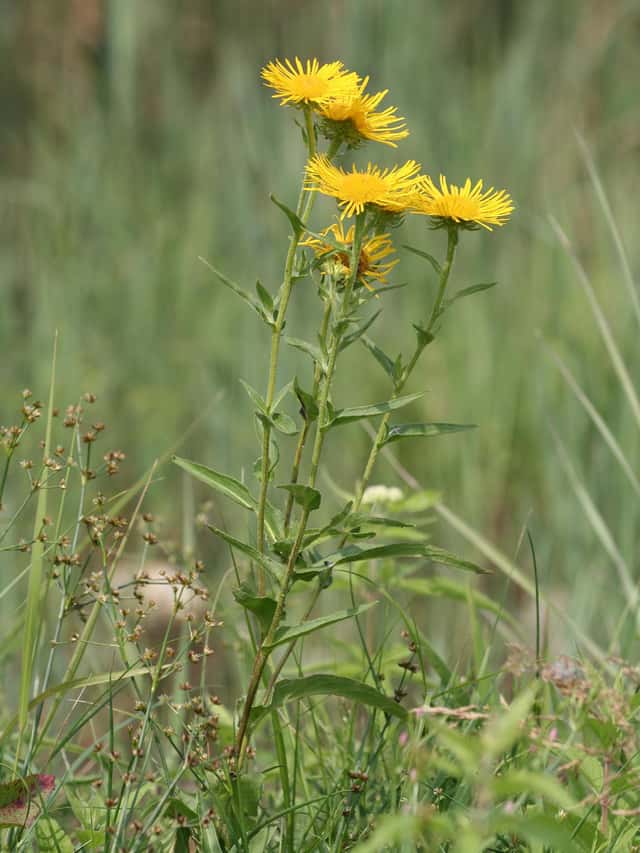
British yellowhead (Pentanema britannica) is a easy-care plant from the Asteraceae family. The British yellowhead (Pentanema britannica, formerly Inula britannica) is a perennial herbaceous plant in the Asteraceae family, native to damp habitats across Europe and temperate Asia, including riverbanks, stream edges, marshes, ditches, and wet meadows. It features erect, finely pubescent stem...
British yellowhead grows up to 80cm, spread of 50cm, watering every 3 days, 5°C – 30°C, 50–80% humidity. It is not suitable for indoor environments and safe for pets.
Unlike many tropical plants, British yellowhead tolerates watering mistakes. Best for beginners. Unlike many popular species, British yellowhead is safe to keep around pets.
How to Care for British yellowhead?
TLDR: British yellowhead needs Bright indirect, watering every 3 days, and temperatures between 5-30°C with 50-80% humidity.
How Often Should You Water British yellowhead?
Keep the soil consistently moist, especially during the summer flowering period; it can tolerate temporary flooding for short periods but does not handle prolonged drought well.
How Much Light Does British yellowhead Need?
Requires full sun and will not develop properly in shade; it can tolerate light shade only during the hottest summer afternoons.
What Is the Best Soil for British yellowhead?
Performs well in sandy, loamy, and clay soils alike, with a pH ranging from slightly acidic to alkaline; it shows the best growth in moderately nutrient-rich, moisture-retentive soil.
What Pot Should You Use for British yellowhead?
Primarily intended for open ground, meadow gardens, or pond edges; if grown in containers, a wide pot with a waterproof base is recommended to maintain constant soil moisture.
Care Schedule
Fertilize
Every 60 days
What Is British yellowhead and Where Does It Come From?
The British yellowhead (Pentanema britannica, formerly Inula britannica) is a perennial herbaceous plant in the Asteraceae family, native to damp habitats across Europe and temperate Asia, including riverbanks, stream edges, marshes, ditches, and wet meadows. It features erect, finely pubescent stems reaching 15-80 cm in height, topped with bright yellow sunflower-like flower heads that bloom from late summer to early autumn. Its lanceolate, entire leaves are sparsely hairy on top and more densely pubescent underneath. Due to its thick rhizomes, it spreads vigorously and rapidly, leading it to be considered an invasive weed in parts of North America.
How Big Does British yellowhead Grow?
TLDR: British yellowhead can reach up to 80cm tall with Fast growth rate.
Max height
80cm
Spread
50cm
Growth rate
Fast
Foliage
Deciduous
Plant Uses
Ornamental
Great for decoration
Medicinal
Medicinal properties
Medicinal Uses
- In Traditional Chinese Medicine, the dried flower (Flos Inulae) is used to treat coughs, phlegm, nausea, and bloating
- In Iranian folk medicine, it is applied to relieve arthritis and back pain
- The root is considered to have solvent and wound-healing properties in traditional medicine
Is your plant showing symptoms?
Click on the symptom to discover possible causes:
What Diseases Commonly Affect British yellowhead?
TLDR: British yellowhead is susceptible to 4 known diseases. Monitor regularly for early detection.
Aphids
Aphids are small, soft-bodied, pear-shaped insects (1/16 to 1/8 inch long) that feed by sucking nutrient-rich sap from plants. They reproduce rapidly and can quickly weaken plants, causing distorted growth and transmitting plant viruses. Aphids come in various colors including green, black, red, yellow, brown, and gray. They secrete honeydew, a sticky substance that attracts ants and encourages sooty mold growth.
Rust
Rust is a common fungal disease caused by fungi in the order Pucciniales that affects a wide variety of plants. The disease gets its name from the characteristic orange, yellow, or reddish-brown pustules that appear on leaves, resembling metal rust. This obligate fungal parasite requires living plants to survive and can cause significant economic losses in agricultural crops.
Powdery Mildew
Powdery mildew is a common fungal disease caused by various fungi species including Erysiphe, Podosphaera, Oïdium, and Leveillula. It affects over 10,000 plant species worldwide. The disease thrives in warm, dry climates with high humidity and appears as a distinctive white powdery coating on plant surfaces.
Slugs and Snails
Slugs and snails are mollusks that feed on plant tissue, causing irregular holes in leaves and damage to young seedlings. They are most active at night and in moist conditions, leaving characteristic silvery slime trails. These pests can quickly devastate gardens, especially during wet seasons.
Meaning & Symbolism
It has no widespread symbolic meaning in the West; in Traditional Chinese Medicine, its flower is associated with clearing the respiratory tract and healing.
Compare with similar plants
| Attribute | Difficulty | Light | Watering | Pet Safe |
|---|---|---|---|---|
| Field Maple | Easy | Bright indirect | 14d | ✓ |
| Silver Birch | Easy | Direct sun | 14d | ✓ |
| Common Blanketflower | Easy | Direct sun | 10d | ✓ |
| Cushion Bush | Easy | Direct sun | 14d | ✓ |
Choose & Compare
Sources & References
- Pentanema britannica - Wikipedia
- Inula britannica - Plants For A Future
- Inula britannica - British yellowhead (MA Noxious Weed)
- Inula britannica - NCSU Herbarium SLIKS
- Inula britannica (British yellowhead) - CABI Compendium
- Bioactivities, components, safety of Inula britannica
- Inula britannica L., Réti peremizs - PlantNet





