Cactaceae
Opuntia fragilis - Brittle Prickly Pear Care Guide
Opuntia fragilis
Give this cactus full, direct sun and very well-draining sandy or gritty soil. Water sparingly, letting the soil dry out completely between waterings, and reduce watering drastically in winter. It tolerates extreme cold but is highly sensitive to wet, poorly drained conditions, which quickly lead to rot.
Every 21 days
Direct sun
-34° - 38°C
20% - 40%
Categories
What is Brittle Prickly Pear?
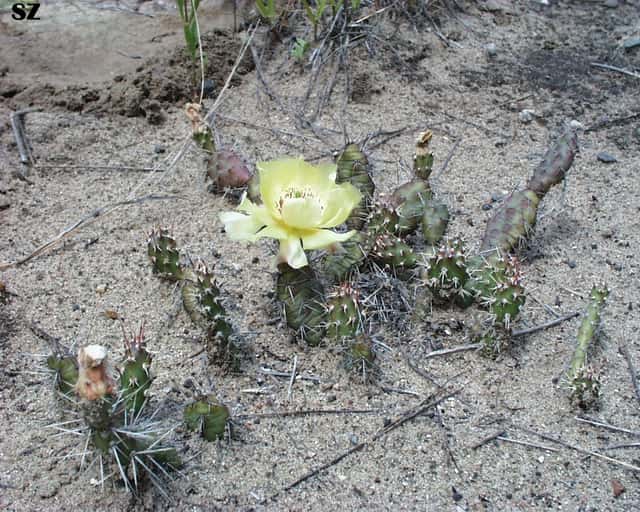
Brittle Prickly Pear (Opuntia fragilis) is a easy-care plant from the Cactaceae family. Opuntia fragilis, known as the brittle prickly pear, is a low-growing, mat-forming cactus native to prairies and rocky outcrops across western North America, from British Columbia to Texas. It is the most cold-hardy cactus species in North America, surviving winter temperatures below -30 C. Its smal...
Brittle Prickly Pear grows up to 10cm, spread of 30cm, watering every 21 days, -34°C – 38°C, 20–40% humidity. It is suitable for indoor environments and safe for pets.
Unlike many tropical plants, Brittle Prickly Pear tolerates watering mistakes. Best for beginners. Unlike many popular species, Brittle Prickly Pear is safe to keep around pets. Without adequate drainage, root rot can develop within 42 days.
How to Care for Brittle Prickly Pear?
TLDR: Brittle Prickly Pear needs Direct sun, watering every 21 days, and temperatures between -34-38°C with 20-40% humidity.
How Often Should You Water Brittle Prickly Pear?
Water deeply but infrequently, only when the soil is completely dry, roughly every 2-3 weeks during the growing season and rarely in winter.
How Much Light Does Brittle Prickly Pear Need?
Provide bright, direct sunlight for at least 6 hours a day; indoors, place within a foot of a sunny south-facing window.
What Is the Best Soil for Brittle Prickly Pear?
Use a fast-draining, sandy or gritty cactus mix; avoid heavy, moisture-retentive soils that can cause root rot.
What Pot Should You Use for Brittle Prickly Pear?
Unglazed terracotta pot with ample drainage holes
What Is Brittle Prickly Pear and Where Does It Come From?
Opuntia fragilis, known as the brittle prickly pear, is a low-growing, mat-forming cactus native to prairies and rocky outcrops across western North America, from British Columbia to Texas. It is the most cold-hardy cactus species in North America, surviving winter temperatures below -30 C. Its small, easily detached stem segments (cladodes) break off at the slightest touch and root readily wherever they land, giving the plant its "fragilis" name and its efficient means of vegetative spread.
How to Propagate Brittle Prickly Pear?
Pad (cladode) cutting
Handle segments with tongs or thick gloves to avoid glochids; overwatering before roots form is the most common cause of failure.
- 1 Twist or cut off a healthy, plump stem segment (pad) using clean tools.
- 2 Let the cut end callus over in a dry, shaded spot for 3-7 days.
- 3 Insert the callused end about a third of the way into sandy, well-draining cactus mix.
- 4 Withhold water for a week, then water sparingly only once roots have formed.
Materials needed:
Seed propagation
Germination is slow and irregular; stem cuttings are much faster and more reliable.
- 1 Extract seeds from ripe fruit and clean off the pulp.
- 2 Sow seeds on the surface of well-draining, sandy compost.
- 3 Keep in a warm, bright spot in a greenhouse or covered tray until germination.
- 4 Transplant seedlings once large enough to handle.
Materials needed:
How Big Does Brittle Prickly Pear Grow?
TLDR: Brittle Prickly Pear can reach up to 10cm tall with Slow growth rate.
Max height
10cm
Spread
30cm
Growth rate
Slow
Foliage
Evergreen
Plant Uses
Ornamental
Great for decoration
Edible
Can be consumed
Medicinal
Medicinal properties
Medicinal Uses
- Pad flesh used traditionally as a diuretic
- Poultice applied to skin sores and infections
Culinary Uses
- Young pads peeled and eaten cooked or raw
- Ripe fruit eaten raw, cooked, or dried
- Seeds roasted and ground into flour
Is your plant showing symptoms?
Click on the symptom to discover possible causes:
What Diseases Commonly Affect Brittle Prickly Pear?
TLDR: Brittle Prickly Pear is susceptible to 6 known diseases. Monitor regularly for early detection.
Root Rot
Root rot is a serious fungal disease that affects the root system of plants, causing them to decay and die. It is primarily caused by overwatering, poor drainage, or soil-borne fungi such as Pythium, Phytophthora, Rhizoctonia, and Fusarium. The disease thrives in waterlogged conditions where roots are deprived of oxygen, making them susceptible to fungal infection.
Mealybugs
Mealybugs are small, soft-bodied insects covered with a white, waxy, cottony material. They are common pests of houseplants and outdoor plants in mild climates. These sap-sucking insects feed on plant tissue, causing damage, stunted growth, and can lead to plant death if left untreated. They produce sticky honeydew which attracts sooty mold.
Spider Mites
Spider mites are tiny arachnids (less than 1/20 inch long) related to spiders and ticks that feed on plant sap. They thrive in hot, dry conditions and can cause significant damage to ornamental and vegetable plants. During severe infestations, crop losses can reach 14% or higher as these pests disrupt vital plant processes including photosynthesis, carbon dioxide absorption, and transpiration.
Scale Insects
Scale insects are small sap-sucking pests that appear as brown, shell-like bumps on plant stems and leaves. There are over 25 species, divided into armored (hard) and unarmored (soft) scales. They feed by piercing plant tissue and extracting sap, which weakens the plant and can lead to yellowing, stunted growth, and even death if left untreated. They also excrete honeydew, which attracts ants and promotes sooty mold growth.
Meaning & Symbolism
Endurance, resilience and survival against harsh, adverse conditions.
Fun Facts
It is the most cold-hardy cactus species in North America, found as far north as southern British Columbia.
Its species name "fragilis" refers to how easily its stem segments detach and root to form new plants.
Native peoples used its pads and fruit both as food and as a traditional remedy for skin ailments.
Despite its tiny size, it can survive winter temperatures that would kill most other cacti.
Frequently asked questions
Is Opuntia fragilis toxic to cats or dogs?
How cold-hardy is the brittle prickly pear?
Why do the pads fall off so easily?
Can I grow it indoors?
How often should I water it?
Compare with similar plants
| Attribute | Difficulty | Light | Watering | Pet Safe |
|---|---|---|---|---|
| Field Maple | Easy | Bright indirect | 14d | ✓ |
| Silver Birch | Easy | Direct sun | 14d | ✓ |
| Common Blanketflower | Easy | Direct sun | 10d | ✓ |
| Cushion Bush | Easy | Direct sun | 14d | ✓ |





