Potamogetonaceae
Broad-leaved Pondweed: Edible Plant
Potamogeton natans
It should be cultivated in calm water lakes or ponds, in full sun, with its roots anchored in rich substrate at the bottom.
Every 7-10 days
Bright indirect
4° - 28°C
70% - 90%
Categories
What is Broad-leaved Pondweed?
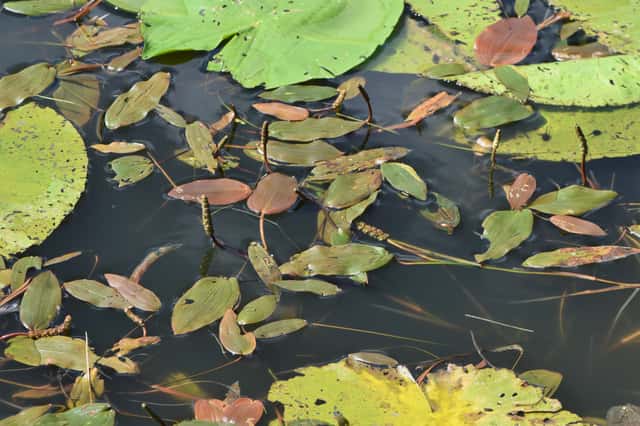
Broad-leaved Pondweed (Potamogeton natans) is a easy-care plant from the Potamogetonaceae family. Potamogeton natans, also known as broad-leaved pondweed, is a perennial aquatic plant that produces oval, leathery, olive-green floating leaves. Its submerged leaves are narrow and translucent, often disappearing as the plant matures. It is a fundamental species for freshwater ecosystems, providing...
Broad-leaved Pondweed grows up to 1.0m, spread of 100cm, 4°C – 28°C, 70–90% humidity. It is not suitable for indoor environments and safe for pets.
Unlike many tropical plants, Broad-leaved Pondweed tolerates watering mistakes. Best for beginners. Unlike many popular species, Broad-leaved Pondweed is safe to keep around pets.
How to Care for Broad-leaved Pondweed?
TLDR: Broad-leaved Pondweed needs Bright indirect, watering every 7 days, and temperatures between 4-28°C with 70-90% humidity.
How Often Should You Water Broad-leaved Pondweed?
As an aquatic plant, maintaining water level and quality is essential; avoid water with excessive chlorine.
How Much Light Does Broad-leaved Pondweed Need?
It requires direct sunlight for its floating leaves to develop fully and for the plant to flower.
What Is the Best Soil for Broad-leaved Pondweed?
It prefers a substrate rich in organic matter and clay at the bottom of the water body.
What Pot Should You Use for Broad-leaved Pondweed?
Aquatic planting baskets with heavy substrate to prevent them from floating.
What Is Broad-leaved Pondweed and Where Does It Come From?
Potamogeton natans, also known as broad-leaved pondweed, is a perennial aquatic plant that produces oval, leathery, olive-green floating leaves. Its submerged leaves are narrow and translucent, often disappearing as the plant matures. It is a fundamental species for freshwater ecosystems, providing shelter for fish and oxygenating the water.
How to Propagate Broad-leaved Pondweed?
Rhizome Division
- Keep rhizomes moist throughout the division process.
- Use stones to anchor the plant until the roots establish.
- 1 Extraction
Carefully remove a portion of the rhizome from the muddy substrate.
- 2 Division
Cut the rhizome into sections, ensuring each part has at least one growth node or bud.
- 3 Replanting
Anchor the divisions in aquatic baskets or directly into the lakebed.
Materials needed:
Aquatic Sowing
- Seeds should not dry out completely at any point.
- Water temperature should gradually rise to stimulate germination.
- 1 Collection
Harvest mature seeds from the spikes in late summer.
- 2 Stratification
Keep seeds in cold water during winter to simulate natural conditions.
- 3 Germination
Sow in containers with saturated soil and cover with a thin layer of water in spring.
Materials needed:
How Big Does Broad-leaved Pondweed Grow?
TLDR: Broad-leaved Pondweed can reach up to 1.0m tall with Fast growth rate.
Max height
1.0m
Spread
1.0m
Growth rate
Fast
Foliage
Deciduous
Plant Uses
Ornamental
Great for decoration
Edible
Can be consumed
Medicinal
Medicinal properties
Is your plant showing symptoms?
Click on the symptom to discover possible causes:
What Diseases Commonly Affect Broad-leaved Pondweed?
TLDR: Broad-leaved Pondweed is susceptible to 5 known diseases. Monitor regularly for early detection.
Root Rot
Root rot is a serious fungal disease that affects the root system of plants, causing them to decay and die. It is primarily caused by overwatering, poor drainage, or soil-borne fungi such as Pythium, Phytophthora, Rhizoctonia, and Fusarium. The disease thrives in waterlogged conditions where roots are deprived of oxygen, making them susceptible to fungal infection.
Leaf Spot
Leaf spot is a common fungal disease caused by various pathogens including Alternaria, Ascochyta, Colletotrichum, Septoria, and Venturia. It primarily affects leaves, causing discolored spots that can lead to premature leaf drop if left untreated.
Powdery Mildew
Powdery mildew is a common fungal disease caused by various fungi species including Erysiphe, Podosphaera, Oïdium, and Leveillula. It affects over 10,000 plant species worldwide. The disease thrives in warm, dry climates with high humidity and appears as a distinctive white powdery coating on plant surfaces.
Aphids
Aphids are small, soft-bodied, pear-shaped insects (1/16 to 1/8 inch long) that feed by sucking nutrient-rich sap from plants. They reproduce rapidly and can quickly weaken plants, causing distorted growth and transmitting plant viruses. Aphids come in various colors including green, black, red, yellow, brown, and gray. They secrete honeydew, a sticky substance that attracts ants and encourages sooty mold growth.
Meaning & Symbolism
It represents adaptation and the fluidity of life between two worlds: air and water.
Compare with similar plants
| Attribute | Difficulty | Light | Watering | Pet Safe |
|---|---|---|---|---|
| Field Maple | Easy | Bright indirect | 14d | ✓ |
| Silver Birch | Easy | Direct sun | 14d | ✓ |
| Common Blanketflower | Easy | Direct sun | 10d | ✓ |
| Cushion Bush | Easy | Direct sun | 14d | ✓ |





