Poaceae
Broadleaf carpet grass: Ground Cover Plant
Axonopus compressus
Prefers full sun to partial shade and tolerates filtered light under trees. Water regularly to keep the soil slightly moist, avoiding prolonged waterlogging—it has low drought tolerance. It grows best in fertile soil rich in organic matter and well-drained, with a slightly acidic pH (5.0 to 6.5). Mow when it reaches about 4 inches, maintaining a height between 1 and 2 inches. It is resistant to foot traffic and establishes quickly, making it ideal for high-use lawns.
Every 4 days
Partial shade
10° - 35°C
50% - 90%
Categories
What is Broadleaf carpet grass?
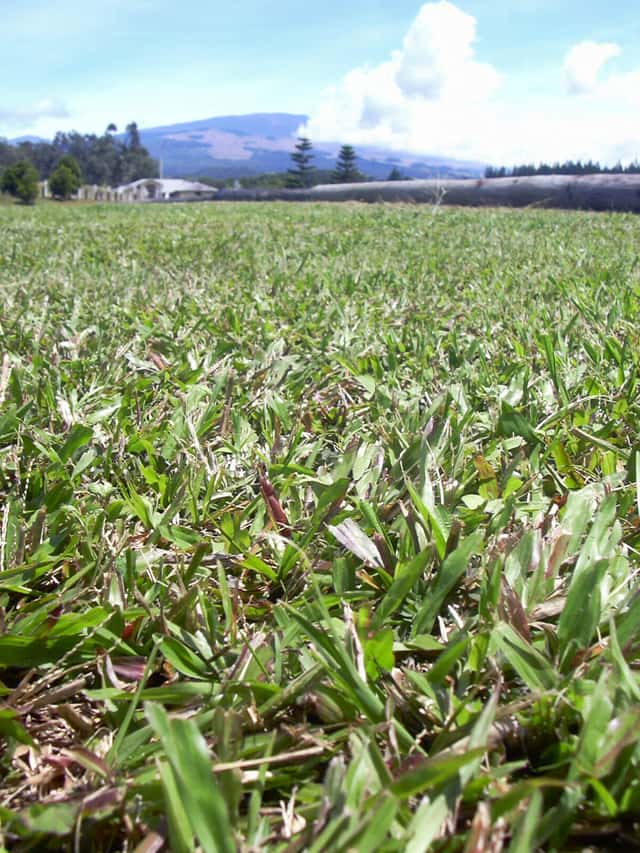
Broadleaf carpet grass (Axonopus compressus) is a easy-care plant from the Poaceae family. Broadleaf carpet grass (Axonopus compressus) is a perennial, stoloniferous, and rhizomatous grass native to the tropical and subtropical regions of the Americas. Its wide, deep green leaves form a dense and uniform mat, making it one of the most widely used species for residential lawns, parks, and...
Broadleaf carpet grass grows up to 45cm, watering every 4 days, 10°C – 35°C, 50–90% humidity. It is not suitable for indoor environments and safe for pets.
Unlike many tropical plants, Broadleaf carpet grass tolerates watering mistakes. Best for beginners. Unlike many popular species, Broadleaf carpet grass is safe to keep around pets.
How to Care for Broadleaf carpet grass?
TLDR: Broadleaf carpet grass needs Partial shade, watering every 4 days, and temperatures between 10-35°C with 50-90% humidity.
How Often Should You Water Broadleaf carpet grass?
Keep the soil consistently moist, especially in the first few weeks after planting, when it may be necessary to water up to twice a day. Once established, water 2 to 3 times a week, preferably in the morning or late afternoon, avoiding puddles and waterlogging that favor fungal growth.
How Much Light Does Broadleaf carpet grass Need?
It develops well in both full sun and partial shade, and is one of the few carpet grasses that performs well in partially shaded areas under trees. In dense and constant shade, growth becomes sparser.
What Is the Best Soil for Broadleaf carpet grass?
Prefers fertile soil, rich in organic matter and well-drained, with a pH between 5.0 and 6.5 (slightly acidic). It tolerates sandy to clay soils but avoids alkaline soils, which can cause leaf chlorosis. Aerate the soil periodically if compaction occurs.
What Pot Should You Use for Broadleaf carpet grass?
It is not a species typically grown in pots, as it is intended for lawns and garden beds in the ground. When used in planters or garden borders, prefer wide and shallow containers with drainage holes, filled with a light and well-drained substrate.
What Is Broadleaf carpet grass and Where Does It Come From?
Broadleaf carpet grass (Axonopus compressus) is a perennial, stoloniferous, and rhizomatous grass native to the tropical and subtropical regions of the Americas. Its wide, deep green leaves form a dense and uniform mat, making it one of the most widely used species for residential lawns, parks, and recreational areas. It grows close to the ground, reaching between 6 and 8 inches in height when left unmowed, and produces flowering stalks that can reach 12 to 18 inches. It tolerates shade well, forming thick carpets under tree canopies, and adapts to poor soils, although it prefers fertile, well-drained ground.
How to Propagate Broadleaf carpet grass?
Stolon division
Use clean tools to prevent the spread of fungal diseases between clumps.
- 1 Choose healthy clumps with well-rooted stolons.
- 2 Separate stolon segments with roots and at least 2-3 nodes, preferably in spring or early summer.
- 3 Prepare the destination soil by removing weeds and leveling the surface.
- 4 Plant the segments spaced about 8 to 12 inches apart, pressing them lightly into the soil.
- 5 Water daily for the first few weeks until rooting is established and the carpet closes.
Materials needed:
Sowing
Propagation by seeds is slower and less uniform than by stolons; prefer plugs or sprigs for faster results.
- 1 Prepare the soil by incorporating organic matter and leveling the surface.
- 2 Distribute the seeds evenly over the soil.
- 3 Cover lightly with a thin layer of soil or substrate.
- 4 Water daily, keeping the soil moist until germination.
- 5 Gradually reduce watering frequency as the grass establishes itself.
Materials needed:
How Big Does Broadleaf carpet grass Grow?
TLDR: Broadleaf carpet grass can reach up to 45cm tall with Fast growth rate.
Max height
45cm
Growth rate
Fast
Foliage
Evergreen
Plant Uses
Ground Cover
Soil coverage
Ornamental
Great for decoration
Is your plant showing symptoms?
Click on the symptom to discover possible causes:
What Diseases Commonly Affect Broadleaf carpet grass?
TLDR: Broadleaf carpet grass is susceptible to 7 known diseases. Monitor regularly for early detection.
Anthracnose
Anthracnose is a fungal disease caused by fungi in the genus Colletotrichum that affects many plants, including vegetables, fruits, and trees. The disease thrives in cool, wet conditions, causing dark, sunken lesions on leaves, stems, flowers, and fruits.
Leaf Spot
Leaf spot is a common fungal disease caused by various pathogens including Alternaria, Ascochyta, Colletotrichum, Septoria, and Venturia. It primarily affects leaves, causing discolored spots that can lead to premature leaf drop if left untreated.
Powdery Mildew
Powdery mildew is a common fungal disease caused by various fungi species including Erysiphe, Podosphaera, Oïdium, and Leveillula. It affects over 10,000 plant species worldwide. The disease thrives in warm, dry climates with high humidity and appears as a distinctive white powdery coating on plant surfaces.
Aphids
Aphids are small, soft-bodied, pear-shaped insects (1/16 to 1/8 inch long) that feed by sucking nutrient-rich sap from plants. They reproduce rapidly and can quickly weaken plants, causing distorted growth and transmitting plant viruses. Aphids come in various colors including green, black, red, yellow, brown, and gray. They secrete honeydew, a sticky substance that attracts ants and encourages sooty mold growth.
Meaning & Symbolism
As a hardy grass resistant to foot traffic, broadleaf carpet grass is associated in popular culture with the idea of hospitality and community—it is the grass of backyards, squares, and family gathering areas. It symbolizes simplicity, resilience, and the daily care of shared spaces.
Compare with similar plants
| Attribute | Difficulty | Light | Watering | Pet Safe |
|---|---|---|---|---|
| Field Maple | Easy | Bright indirect | 14d | ✓ |
| Muriel's Bamboo | Medium | Partial shade | 3d | ✓ |
| Silver Birch | Easy | Direct sun | 14d | ✓ |
| Common Blanketflower | Easy | Direct sun | 10d | ✓ |
Choose & Compare
Sources & References
- Grama São Carlos - Axonopus compressus - Jardineiro.net
- Grama-são-carlos (Axonopus compressus): O Guia Completo para Seu Jardim
- Axonopus compressus - Tropical Forages (CABI)
- Anthracnose Disease of Carpetgrass (Axonopus compressus) Caused by Colletotrichum hainanense sp. nov.
- Carpet Grass Care: Learn Tips On Growing Axonopus
- Grama-São-Carlos (Axonopus compressus) – Cultivando





