Typhaceae
Broadleaf cattail: Edible Plant
Typha latifolia
An easy-to-grow plant, provided it is given constant water coverage or continuously moist soil and plenty of sunlight. It thrives best in nutrient-rich, heavy, clay-loam soil, in shallow water (up to 20-30 cm deep) or in muddy areas along the water's edge. Pests and diseases rarely cause problems; the main focus of care is containing its aggressive spreading.
Every 1 days
Direct sun
-30° - 40°C
70% - 100%
Categories
What is Broadleaf cattail?
Broadleaf cattail (Typha latifolia) is a easy-care plant from the Typhaceae family. The broadleaf cattail (Typha latifolia) is a perennial, rhizomatous aquatic and marsh plant common in canals, reed beds, marshes, and along the shores of standing waters. It can grow up to 2.5–3 meters tall, with pale bluish-green, parallel-veined, ribbon-like leaves that are 8–20 mm wide. Its chara...
Broadleaf cattail grows up to 3.0m, spread of 180cm, watering every 1 days, -30°C – 40°C, 70–100% humidity. It is not suitable for indoor environments and safe for pets.
Unlike many tropical plants, Broadleaf cattail tolerates watering mistakes. Best for beginners. Unlike many popular species, Broadleaf cattail is safe to keep around pets.
How to Care for Broadleaf cattail?
TLDR: Broadleaf cattail needs Direct sun, watering every 1 days, and temperatures between -30-40°C with 70-100% humidity.
How Often Should You Water Broadleaf cattail?
The cattail is an aquatic plant: its roots must be constantly underwater or in permanently saturated soil. Do not allow the soil or pond basket to dry out; when planting in a pond, maintain a water level of 5–20 cm around the root zone.
How Much Light Does Broadleaf cattail Need?
Requires full sun to achieve the most beautiful, dense growth and flowering (6–8 hours of direct light daily), but can tolerate short periods of partial shade, especially on hot summer afternoons.
What Is the Best Soil for Broadleaf cattail?
Prefers nutrient-rich, organic-heavy, dense (clay-loam) soil that can be permanently wet or water-saturated—good drainage is not a consideration here; in fact, standing water is perfectly suitable.
What Pot Should You Use for Broadleaf cattail?
Not suitable for potted indoor cultivation. For garden pond planting, it is advisable to use solid-walled, water-permeable pond baskets or planting barriers to prevent the rapidly spreading rhizomes from taking over the entire pond.
Care Schedule
Fertilize
Every 60 days
What Is Broadleaf cattail and Where Does It Come From?
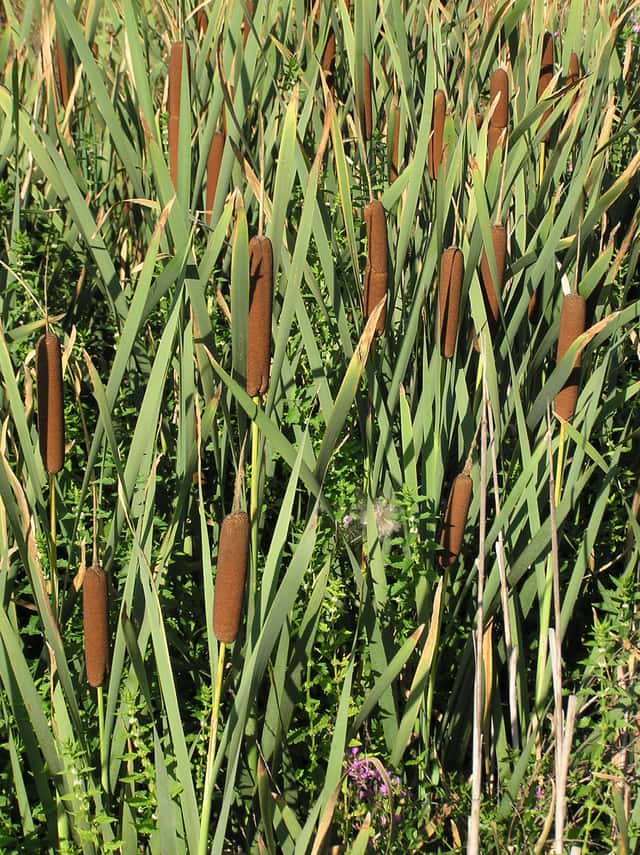
The broadleaf cattail (Typha latifolia) is a perennial, rhizomatous aquatic and marsh plant common in canals, reed beds, marshes, and along the shores of standing waters. It can grow up to 2.5–3 meters tall, with pale bluish-green, parallel-veined, ribbon-like leaves that are 8–20 mm wide. Its characteristic brown, "cigar-shaped" inflorescence consists of two parts: the brown female spike at the bottom and the yellow male portion above it, which falls off after flowering. Through its vigorously spreading rhizomes, it forms dense stands and provides important habitat and food sources for wetland wildlife.
How to Propagate Broadleaf cattail?
How Big Does Broadleaf cattail Grow?
TLDR: Broadleaf cattail can reach up to 3.0m tall with Fast growth rate.
Max height
3.0m
Spread
1.8m
Growth rate
Fast
Foliage
Deciduous
Plant Uses
Ornamental
Great for decoration
Edible
Can be consumed
Medicinal
Medicinal properties
Medicinal Uses
- Diuretic effect using the leaves and pollen
- Hemostatic and wound-healing properties by applying the root and pollen
- Anti-inflammatory and astringent effects
- Relief of digestive complaints using the inflorescence
- Alleviation of respiratory issues (e.g., coughs) with a drink made from a decoction of the stem
Culinary Uses
- Young spring shoots used in salads or as an asparagus substitute, cooked or raw
- Rhizomes can be eaten raw, baked, boiled, or ground into flour
- Immature green flower spikes cooked, with a flavor profile similar to corn
- Pollen used as a protein-rich flour supplement for baking
- Roasted seeds as a nutty-flavored snack
Is your plant showing symptoms?
Click on the symptom to discover possible causes:
What Diseases Commonly Affect Broadleaf cattail?
TLDR: Broadleaf cattail is susceptible to 3 known diseases. Monitor regularly for early detection.
Rust
Rust is a common fungal disease caused by fungi in the order Pucciniales that affects a wide variety of plants. The disease gets its name from the characteristic orange, yellow, or reddish-brown pustules that appear on leaves, resembling metal rust. This obligate fungal parasite requires living plants to survive and can cause significant economic losses in agricultural crops.
Leaf Spot
Leaf spot is a common fungal disease caused by various pathogens including Alternaria, Ascochyta, Colletotrichum, Septoria, and Venturia. It primarily affects leaves, causing discolored spots that can lead to premature leaf drop if left untreated.
Aphids
Aphids are small, soft-bodied, pear-shaped insects (1/16 to 1/8 inch long) that feed by sucking nutrient-rich sap from plants. They reproduce rapidly and can quickly weaken plants, causing distorted growth and transmitting plant viruses. Aphids come in various colors including green, black, red, yellow, brown, and gray. They secrete honeydew, a sticky substance that attracts ants and encourages sooty mold growth.
Meaning & Symbolism
Cattails are traditionally regarded as symbols of a close connection to wetlands, adaptability, and renewal. Its stems and leaves have been used for centuries for rush-bottoming, basketry, weaving, and thatching, symbolizing the close, beneficial coexistence between humans and the natural aquatic environment.
Compare with similar plants
| Attribute | Difficulty | Light | Watering | Pet Safe |
|---|---|---|---|---|
| Field Maple | Easy | Bright indirect | 14d | ✓ |
| Silver Birch | Easy | Direct sun | 14d | ✓ |
| Common Blanketflower | Easy | Direct sun | 10d | ✓ |
| Cushion Bush | Easy | Direct sun | 14d | ✓ |
Choose & Compare
Sources & References
- Typha latifolia (Broadleaf Cattail) - NC State Extension Gardener Plant Toolbox
- Typha latifolia - Plants For A Future (PFAF)
- Széleslevelű Gyékény (Typha latifolia) gondozása, szaporítása - Botanikaland
- Typha latifolia – széleslevelű gyékény - Ehető vadnövényeink
- Typha latifolia (Broadleaf cattail) - Native Plants of North America





