Poaceae
Kallar grass: Ground Cover Plant
Diplachne fusca
A very low-maintenance outdoor plant. It requires full sun and tolerates extreme conditions: saline, waterlogged, or low-fertility soils. Moderate watering every 4-7 days; in humid environments or near bodies of water, it can survive without additional irrigation. Not suitable for indoors. Ideal for rain gardens, pond margins, or revegetation of degraded soils.
Every 5 days
Direct sun
5° - 40°C
40% - 95%
Categories
What is Kallar grass?
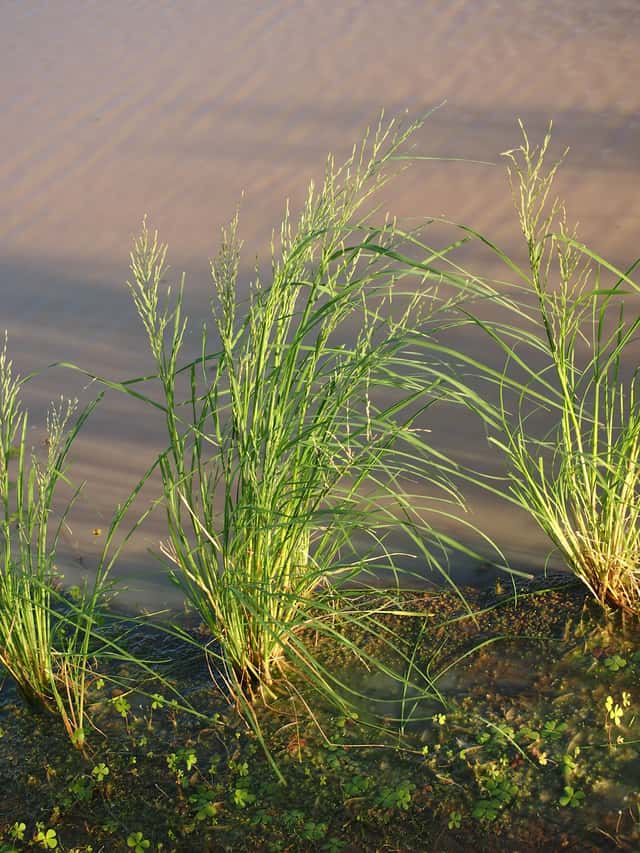
Kallar grass (Diplachne fusca) is a easy-care plant from the Poaceae family. Diplachne fusca (syn. Leptochloa fusca) is a robust, fast-growing grass, either annual or short-lived perennial, native to tropical and subtropical regions of the Americas, Africa, Asia, and Australia. It grows in dense, erect clumps that can reach up to 1.5 m in height. Its leaves are long, narrow,...
Kallar grass grows up to 1.5m, spread of 50cm, watering every 5 days, 5°C – 40°C, 40–95% humidity. It is not suitable for indoor environments and safe for pets.
Unlike many tropical plants, Kallar grass tolerates watering mistakes. Best for beginners. Unlike many popular species, Kallar grass is safe to keep around pets.
How to Care for Kallar grass?
TLDR: Kallar grass needs Direct sun, watering every 5 days, and temperatures between 5-40°C with 40-95% humidity.
How Often Should You Water Kallar grass?
Water every 4-7 days, keeping the soil moist but not waterlogged when in a pot. In open fields, it tolerates temporary flooding and even benefits from irrigation with slightly saline water. Reduce watering in winter if temperatures drop below 10°C (50°F).
How Much Light Does Kallar grass Need?
Requires full sun for at least 6 hours a day. Partial shade reduces the vigor and density of the foliage. Place it in the sunniest location available, especially in temperate climates.
What Is the Best Soil for Kallar grass?
Adapts to clay, silty, or clay-loam soils with a pH between 5.5 and 9. It stands out for its tolerance to saline, sodic, and alkaline soils. Improve heavily compacted soils with organic matter when planting; once established, it does not require additional amendments.
What Pot Should You Use for Kallar grass?
Although primarily an outdoor plant, if grown in a container, use large pots (at least 12 inches in diameter) with a clay-sandy substrate. Avoid very porous pots that dry out quickly. In a pot, it does not tolerate prolonged waterlogging; ensure some drainage.
Care Schedule
Fertilize
Every 45 days
What Is Kallar grass and Where Does It Come From?
Diplachne fusca (syn. Leptochloa fusca) is a robust, fast-growing grass, either annual or short-lived perennial, native to tropical and subtropical regions of the Americas, Africa, Asia, and Australia. It grows in dense, erect clumps that can reach up to 1.5 m in height. Its leaves are long, narrow, and slightly rough in texture, with a prominent midrib. The floral panicles are airy, branched, and take on green, brown, and yellow tones as they mature. It is a notable halophyte, capable of thriving in saline, sodic, and waterlogged soils where most grasses cannot survive. It is widely used in bioremediation programs to recover agricultural lands degraded by excess salt.
How to Propagate Kallar grass?
Seed sowing
- Lightly scarify the seeds to improve germination.
- Keep the substrate constantly moist during germination.
- They germinate best at temperatures of 25-35°C (77-95°F).
- 1 Collection
Collect mature spikes (dark brown) in late summer or early fall. Shake the seeds into a paper bag.
- 2 Bed preparation
Prepare a moist substrate of clay soil or a peat-sand mix. Keep it very moist but without standing water.
- 3 Sowing
Distribute the seeds on the surface of the substrate without burying them; light facilitates germination. Press down gently and water with a sprayer.
- 4 Maintenance
Place in a warm, sunny location. Seedlings emerge in 7-14 days. Transplant when they reach 10-15 cm (4-6 inches).
Materials needed:
Clump division
- Divide in spring when the plant resumes active growth.
- Do not allow the roots to dry out during the process.
- Replant immediately in well-moistened soil.
- 1 Extraction
Dig up the entire clump or cut a perimeter section with a sharp shovel, ensuring it includes roots and rhizomes.
- 2 Division
Divide the clump into 15-20 cm (6-8 inch) sections using a shovel or pruning knife. Each section should have several stems and a good root system.
- 3 Replanting
Plant the divisions at the same original depth in moist soil. Water thoroughly and provide light shade during the first week.
Materials needed:
How Big Does Kallar grass Grow?
TLDR: Kallar grass can reach up to 1.5m tall with Fast growth rate.
Max height
1.5m
Spread
50cm
Growth rate
Fast
Foliage
Deciduous
Plant Uses
Ornamental
Great for decoration
Ground Cover
Soil coverage
Is your plant showing symptoms?
Click on the symptom to discover possible causes:
What Diseases Commonly Affect Kallar grass?
TLDR: Kallar grass is susceptible to 4 known diseases. Monitor regularly for early detection.
Rust
Rust is a common fungal disease caused by fungi in the order Pucciniales that affects a wide variety of plants. The disease gets its name from the characteristic orange, yellow, or reddish-brown pustules that appear on leaves, resembling metal rust. This obligate fungal parasite requires living plants to survive and can cause significant economic losses in agricultural crops.
Leaf Spot
Leaf spot is a common fungal disease caused by various pathogens including Alternaria, Ascochyta, Colletotrichum, Septoria, and Venturia. It primarily affects leaves, causing discolored spots that can lead to premature leaf drop if left untreated.
Root Rot
Root rot is a serious fungal disease that affects the root system of plants, causing them to decay and die. It is primarily caused by overwatering, poor drainage, or soil-borne fungi such as Pythium, Phytophthora, Rhizoctonia, and Fusarium. The disease thrives in waterlogged conditions where roots are deprived of oxygen, making them susceptible to fungal infection.
Overwatering
Overwatering occurs when plants receive too much water, depriving roots of oxygen and causing root rot. This environmental stress is one of the most common causes of houseplant death, as waterlogged soil prevents roots from breathing and functioning properly.
Meaning & Symbolism
In South Asian cultures, Kallar grass symbolizes resilience and the ability to transform arid lands into productive soil. It is an emblem of ecological recovery and adaptation to adverse conditions.
Compare with similar plants
| Attribute | Difficulty | Light | Watering | Pet Safe |
|---|---|---|---|---|
| Field Maple | Easy | Bright indirect | 14d | ✓ |
| Muriel's Bamboo | Medium | Partial shade | 3d | ✓ |
| Silver Birch | Easy | Direct sun | 14d | ✓ |
| Common Blanketflower | Easy | Direct sun | 10d | ✓ |





