Aizoaceae
Bunny ear succulent: Low Water Needs
Monilaria moniliformis
A specialized succulent with an inverted growth cycle: it requires regular watering in fall and winter (its growing season) and almost no water during its summer dormancy. It requires high light levels, an extremely mineral substrate, and excellent drainage to prevent root rot.
Every 14 days
Bright indirect
5° - 35°C
20% - 50%
Categories
What is Bunny ear succulent?
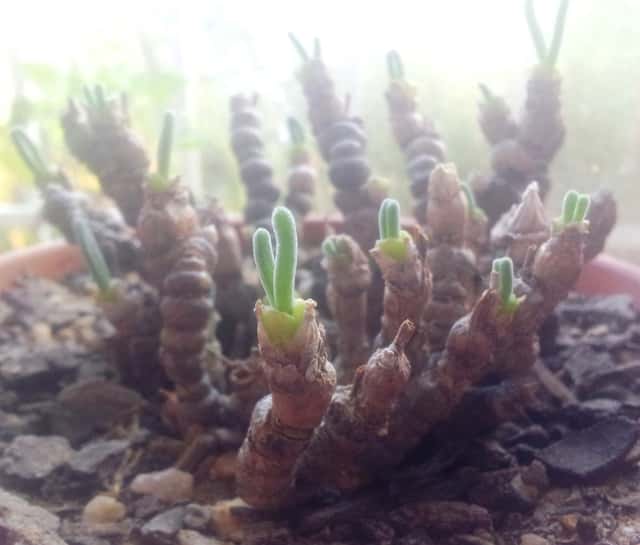
Bunny ear succulent (Monilaria moniliformis) is a medium-care plant from the Aizoaceae family. Monilaria moniliformis is a small succulent from the Aizoaceae family, endemic to the quartz fields of the Knersvlakte in the Western Cape province of South Africa. It owes its popular name to its striking young leaves, which are short and rounded, growing in upright pairs that resemble a pair of bu...
Bunny ear succulent grows up to 15cm, spread of 10cm, watering every 14 days, 5°C – 35°C, 20–50% humidity. It is suitable for indoor environments and safe for pets.
Unlike many popular species, Bunny ear succulent is safe to keep around pets. Without adequate drainage, root rot can develop within 28 days.
How to Care for Bunny ear succulent?
TLDR: Bunny ear succulent needs Bright indirect, watering every 14 days, and temperatures between 5-35°C with 20-50% humidity.
How Often Should You Water Bunny ear succulent?
Use the soak-and-dry method only during its growing season (fall and winter), allowing the substrate to dry out completely between waterings. In summer, when the plant is dormant and appears shriveled or dry, reduce watering to an occasional splash (once or twice a month) only if it is very hot; never overwater during this stage, as it is the most common cause of rot.
How Much Light Does Bunny ear succulent Need?
Needs full sun or very intense light to maintain its compact shape. Indoors, place it next to the brightest window in the house or supplement with grow lights, especially in fall and winter when it is in active growth.
What Is the Best Soil for Bunny ear succulent?
Use a highly mineral, fast-draining substrate, such as a mix of pumice or perlite, orchid bark, and cactus/succulent soil (approximately 50-25-25). In humid climates, increase the proportion of pumice and reduce the organic matter.
What Pot Should You Use for Bunny ear succulent?
Terracotta or clay pot without a water saucer, with large drainage holes; the porous material helps the substrate dry quickly between waterings, which is essential during summer dormancy.
Care Schedule
Fertilize
Every 30 days
Rotate
Every 15 days
Repot
Every 730 days
What Is Bunny ear succulent and Where Does It Come From?
Monilaria moniliformis is a small succulent from the Aizoaceae family, endemic to the quartz fields of the Knersvlakte in the Western Cape province of South Africa. It owes its popular name to its striking young leaves, which are short and rounded, growing in upright pairs that resemble a pair of bunny ears; over time, these are replaced by elongated cylindrical leaves. It has an inverted growth cycle: it grows actively in fall and winter and enters dormancy during the summer, when it may appear dry or lifeless. In late winter to spring, it produces small, solitary white flowers.
How to Propagate Bunny ear succulent?
How Big Does Bunny ear succulent Grow?
TLDR: Bunny ear succulent can reach up to 15cm tall with Slow growth rate.
Max height
15cm
Spread
10cm
Growth rate
Slow
Foliage
Deciduous
Plant Uses
Ornamental
Great for decoration
Is your plant showing symptoms?
Click on the symptom to discover possible causes:
What Diseases Commonly Affect Bunny ear succulent?
TLDR: Bunny ear succulent is susceptible to 5 known diseases. Monitor regularly for early detection.
Root Rot
Root rot is a serious fungal disease that affects the root system of plants, causing them to decay and die. It is primarily caused by overwatering, poor drainage, or soil-borne fungi such as Pythium, Phytophthora, Rhizoctonia, and Fusarium. The disease thrives in waterlogged conditions where roots are deprived of oxygen, making them susceptible to fungal infection.
Overwatering
Overwatering occurs when plants receive too much water, depriving roots of oxygen and causing root rot. This environmental stress is one of the most common causes of houseplant death, as waterlogged soil prevents roots from breathing and functioning properly.
Mealybugs
Mealybugs are small, soft-bodied insects covered with a white, waxy, cottony material. They are common pests of houseplants and outdoor plants in mild climates. These sap-sucking insects feed on plant tissue, causing damage, stunted growth, and can lead to plant death if left untreated. They produce sticky honeydew which attracts sooty mold.
Scale Insects
Scale insects are small sap-sucking pests that appear as brown, shell-like bumps on plant stems and leaves. There are over 25 species, divided into armored (hard) and unarmored (soft) scales. They feed by piercing plant tissue and extracting sap, which weakens the plant and can lead to yellowing, stunted growth, and even death if left untreated. They also excrete honeydew, which attracts ants and promotes sooty mold growth.
Meaning & Symbolism
Symbolizes resilience and patience: it survives long periods of apparent inactivity (summer dormancy) to be reborn with strength in fall and winter.
Compare with similar plants
| Attribute | Difficulty | Light | Watering | Pet Safe |
|---|---|---|---|---|
| Dark Fieldcap | Medium | Low light | 2d | ⚠️ |
| Azalea | Medium | Partial shade | 3d | ⚠️ |
| Muriel's Bamboo | Medium | Partial shade | 3d | ✓ |
| Bougainvillea | Medium | Direct sun | 7d | ⚠️ |




