Lentibulariaceae
Butterwort (Pinguicula): Complete Care Guide
Pinguicula
Keep the substrate constantly moist using only distilled water, rainwater, or reverse osmosis water; never use tap water. Provide bright indirect light or artificial light for 14-16 hours a day, and use a mineral-poor substrate based on peat moss, perlite, and sand. Never fertilize the substrate.
Every 3 days
Bright indirect
10° - 32°C
45% - 70%
Categories
What is Butterwort?
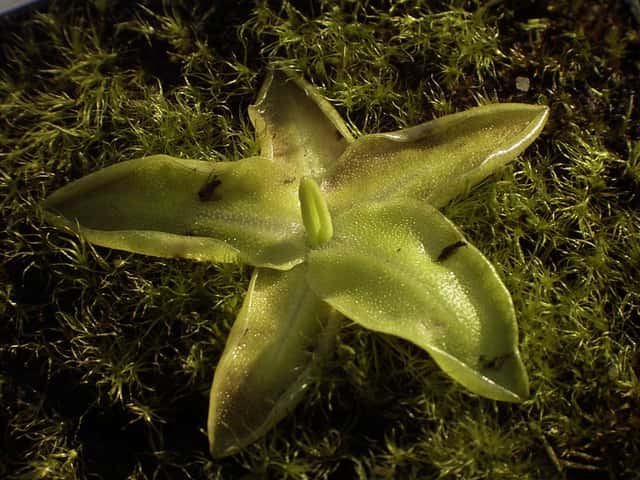
Butterwort (Pinguicula) is a medium-care plant from the Lentibulariaceae family. Pinguicula, commonly known as butterwort, is a genus of over 100 species of carnivorous plants in the Lentibulariaceae family, native to temperate and tropical regions of America, Europe, and Asia. Their leaves form rosettes with a greasy, shiny surface (hence the common name) covered in mucilaginou...
Butterwort grows up to 15cm, spread of 10cm, watering every 3 days, 10°C – 32°C, 45–70% humidity. It is suitable for indoor environments and safe for pets.
Unlike many popular species, Butterwort is safe to keep around pets. Without adequate drainage, root rot can develop within 7 days.
How to Care for Butterwort?
TLDR: Butterwort needs Bright indirect, watering every 3 days, and temperatures between 10-32°C with 45-70% humidity.
How Often Should You Water Butterwort?
Water using the tray method: place the pot on a saucer with about 2-3 cm of distilled or rainwater, allowing the substrate to absorb it from below. Mexican species tolerate the tray drying out between waterings; temperate bog species prefer to remain constantly waterlogged, as in their natural habitat.
How Much Light Does Butterwort Need?
Prefers bright indirect light near a north-facing window, or artificial light of 30-200 PPFD for 14-16 hours daily. Intense direct sun can burn the leaves and reduce the production of sticky mucilage.
What Is the Best Soil for Butterwort?
Use a nutrient-poor mix: 1 part peat moss to 1-2 parts perlite or sand. Never use potting soil, compost, or fertilizer, as excess minerals damage the roots.
What Pot Should You Use for Butterwort?
Unglazed plastic pots with drainage holes, placed on a tray with distilled water.
Care Schedule
Repot
Every 365 days
What Is Butterwort and Where Does It Come From?
Pinguicula, commonly known as butterwort, is a genus of over 100 species of carnivorous plants in the Lentibulariaceae family, native to temperate and tropical regions of America, Europe, and Asia. Their leaves form rosettes with a greasy, shiny surface (hence the common name) covered in mucilaginous glands that trap, digest, and absorb nutrients from small insects, supplementing the scarce nutrients of the peaty soil where they grow. Some Mexican species maintain succulent leaves year-round; others from temperate climates form a winter bud (hibernaculum) during dormancy.
How to Propagate Butterwort?
Leaf propagation
Use distilled water to keep the substrate moist without waterlogging it; plantlets may take several weeks to appear.
- 1 Gently pull a healthy leaf from the base of the rosette, keeping the white basal part intact
- 2 Place the leaf on moist peat and perlite substrate, with the upper side facing up
- 3 Keep in a humid location with indirect light until plantlets appear at the base of the leaf
Materials needed:
Rosette division
Ideal for mature plants with multiple rosettes.
- 1 Remove the plant from the pot and carefully separate the daughter rosettes that have their own roots
- 2 Replant each rosette in new, moist substrate
Materials needed:
Seed propagation
Seeds need light to germinate; do not bury them.
- 1 Scatter the seeds over the surface of the moist substrate without covering them
- 2 Keep moist and with good light until germination
Materials needed:
How Big Does Butterwort Grow?
TLDR: Butterwort can reach up to 15cm tall with Slow growth rate.
Max height
15cm
Spread
10cm
Growth rate
Slow
Foliage
Evergreen
Plant Uses
Ornamental
Great for decoration
Is your plant showing symptoms?
Click on the symptom to discover possible causes:
What Diseases Commonly Affect Butterwort?
TLDR: Butterwort is susceptible to 14 known diseases. Monitor regularly for early detection.
Root Rot
Root rot is a serious fungal disease that affects the root system of plants, causing them to decay and die. It is primarily caused by overwatering, poor drainage, or soil-borne fungi such as Pythium, Phytophthora, Rhizoctonia, and Fusarium. The disease thrives in waterlogged conditions where roots are deprived of oxygen, making them susceptible to fungal infection.
Grey Mould
Powdery Mildew
Powdery mildew is a common fungal disease caused by various fungi species including Erysiphe, Podosphaera, Oïdium, and Leveillula. It affects over 10,000 plant species worldwide. The disease thrives in warm, dry climates with high humidity and appears as a distinctive white powdery coating on plant surfaces.
Southern Blight
Southern blight is a devastating soilborne fungal disease caused by Athelia rolfsii (formerly Sclerotium rolfsii), affecting over 500 plant species including vegetables, ornamentals, and fruit crops. The fungus survives in soil through resting structures called sclerotia that resemble mustard seeds and can remain viable for years.
Meaning & Symbolism
As a carnivorous plant, the butterwort is often associated with curiosity, adaptability, and resilience in hostile and nutrient-poor environments.
Fun Facts
Butterwort leaves produce a sticky mucilage that acts as natural glue to trap insects, a mechanism known as a passive flypaper trap.
Some Mexican species completely change appearance between growing season and dormancy, forming compact succulent rosettes in winter.
Besides trapping insects, butterwort mucilage has antimicrobial properties that help prevent prey from rotting before it is digested.
Frequently asked questions
What water should I use for butterwort?
Does butterwort need fertilizer?
Is butterwort toxic to cats or dogs?
Why did my butterwort leaves stop being sticky?
Compare with similar plants
| Attribute | Difficulty | Light | Watering | Pet Safe |
|---|---|---|---|---|
| Dark Fieldcap | Medium | Low light | 2d | ⚠️ |
| Azalea | Medium | Partial shade | 3d | ⚠️ |
| Muriel's Bamboo | Medium | Partial shade | 3d | ✓ |
| Bougainvillea | Medium | Direct sun | 7d | ⚠️ |




