Araceae
Caladium schomburgkii Care
Caladium schomburgkii
It needs warmth and filtered light, with soil that stays moist but never soggy. When the leaves die it is usually resting, not necessarily sick: store the tuber dry and warm, then replant in the warm season. It can harm children and pets if chewed.
Every 3 days
Partial shade
10° - °C
% - %
Categories
What is Caladium schomburgkii?
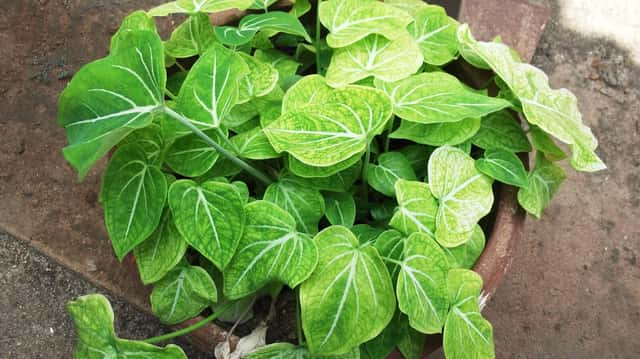
Caladium schomburgkii (Caladium schomburgkii) is a medium-care plant from the Araceae family. Caladium schomburgkii is a tropical foliage plant native to Venezuela, northwestern Brazil and the Guianas. It grows from a tuber with no visible stem: the leaves rise straight from the soil on long stalks. Known plants have light green leaves with bold white veins. Like other caladiums it rests in...
Caladium schomburgkii grows up to 90cm, watering every 3 days. It is suitable for indoor environments and not safe for pets.
Without precautions, ingestion can cause irritation in pets. Keep out of reach of cats and dogs. Without adequate drainage, root rot can develop within 7 days.
How to Care for Caladium schomburgkii?
TLDR: Caladium schomburgkii needs Partial shade, watering every 3 days, and temperatures between 10-30°C with 40-70% humidity.
How Often Should You Water Caladium schomburgkii?
Keep the soil moist to the touch while it has leaves, watering about every 3 days. Soggy soil rots the tuber, so make sure the pot drains well. Stop watering when the leaves die back.
How Much Light Does Caladium schomburgkii Need?
Bright shade or filtered light. Avoid hot afternoon sun, which scorches the leaves.
What Is the Best Soil for Caladium schomburgkii?
Fertile soil, high in organic matter, slightly acidic and well drained. Do not plant in cold soil: wait until it is above 21 °C.
What Pot Should You Use for Caladium schomburgkii?
A pot with a drainage hole and room for the tuber. Do not leave it standing in a saucer of water.
Care Schedule
Fertilize
Every 14 days
Repot
Every 365 days
What Is Caladium schomburgkii and Where Does It Come From?
Caladium schomburgkii is a tropical foliage plant native to Venezuela, northwestern Brazil and the Guianas. It grows from a tuber with no visible stem: the leaves rise straight from the soil on long stalks. Known plants have light green leaves with bold white veins. Like other caladiums it rests in the dry season, when the leaves die and only the tuber stays alive. Many narrow-leaved caladiums sold today descend from this species. Very little has been published about it alone, so the care below follows what applies to the genus.
How to Propagate Caladium schomburgkii?
Tuber division
Wear gloves when handling the tuber, and store pieces somewhere dry without touching each other.
- 1 Lift the tuber while it is resting
- 2 Cut it into pieces, each with at least one bud
- 3 Let them dry for a day or two
- 4 Plant in warm, moist soil
Materials needed:
How Big Does Caladium schomburgkii Grow?
TLDR: Caladium schomburgkii can reach up to 90cm tall with Fast growth rate.
Max height
90cm
Growth rate
Fast
Foliage
Deciduous
Warning: Toxic Plant
This plant can be toxic if ingested. Keep out of reach of:
Plant Uses
Ornamental
Great for decoration
Is your plant showing symptoms?
Click on the symptom to discover possible causes:
What Diseases Commonly Affect Caladium schomburgkii?
TLDR: Caladium schomburgkii is susceptible to 4 known diseases. Monitor regularly for early detection.
Overwatering
Overwatering occurs when plants receive too much water, depriving roots of oxygen and causing root rot. This environmental stress is one of the most common causes of houseplant death, as waterlogged soil prevents roots from breathing and functioning properly.
Leaf Spot
Leaf spot is a common fungal disease caused by various pathogens including Alternaria, Ascochyta, Colletotrichum, Septoria, and Venturia. It primarily affects leaves, causing discolored spots that can lead to premature leaf drop if left untreated.
Sunburn (Sun Scorch)
Sunburn or sun scorch is an environmental condition that occurs when plants are exposed to intense, direct sunlight beyond their tolerance level. This causes the breakdown of chlorophyll in the leaves, resulting in bleached, dried, and damaged foliage. The damage can happen rapidly, sometimes within just a few hours of exposure.
Slugs and Snails
Slugs and snails are mollusks that feed on plant tissue, causing irregular holes in leaves and damage to young seedlings. They are most active at night and in moist conditions, leaving characteristic silvery slime trails. These pests can quickly devastate gardens, especially during wet seasons.
Fun Facts
The narrow-leaved caladiums sold today are linked to this species.
It comes from northern South America, where the plant vanishes in the dry season and returns with the rain.
Frequently asked questions
My caladium's leaves died. Is it gone?
Is it dangerous for cats and dogs?
How do I store the tuber?
Why are the leaf edges burned?
Compare with similar plants
| Attribute | Difficulty | Light | Watering | Pet Safe |
|---|---|---|---|---|
| Dark Fieldcap | Medium | Low light | 2d | ⚠️ |
| Azalea | Medium | Partial shade | 3d | ⚠️ |
| Muriel's Bamboo | Medium | Partial shade | 3d | ✓ |
| Bougainvillea | Medium | Direct sun | 7d | ⚠️ |




