Arecaceae
California Fan Palm (Washingtonia filifera) Care Guide
Washingtonia filifera
Extremely tough and low-maintenance once established, California fan palm thrives in full sun and tolerates extreme heat, drought and alkaline soil. Plant it in well-draining, sandy or gravelly soil, water deeply but infrequently, and prune only dead fronds once a year. It is one of the most cold-hardy fan palms, surviving brief drops below freezing.
Every 14 days
Direct sun
-9° - 45°C
20% - 60%
Categories
What is California Fan Palm?
California Fan Palm (Washingtonia filifera) is a easy-care plant from the Arecaceae family. Washingtonia filifera, the California fan palm (also called desert fan palm), is a massive, single-trunked palm native to desert oases of the southwestern United States. It is the only palm species native to the western United States and forms dense groves around natural springs in the Colorado and...
California Fan Palm grows up to 25.0m, spread of 600cm, watering every 14 days, -9°C – 45°C, 20–60% humidity. It is not suitable for indoor environments and safe for pets.
Unlike many tropical plants, California Fan Palm tolerates watering mistakes. Best for beginners. Unlike many popular species, California Fan Palm is safe to keep around pets.
How to Care for California Fan Palm?
TLDR: California Fan Palm needs Direct sun, watering every 14 days, and temperatures between -9-45°C with 20-60% humidity.
How Often Should You Water California Fan Palm?
Water young palms regularly to establish a deep root system, letting the top few centimeters of soil dry between waterings. Established palms are highly drought-tolerant and only need a deep soak every 3-4 weeks, more often during extreme summer heat.
How Much Light Does California Fan Palm Need?
Give this palm full sun - at least 6 hours of direct light daily. It will not thrive in shade and grows best in open, sun-drenched locations.
What Is the Best Soil for California Fan Palm?
Use sandy, gravelly or rocky well-draining soil. This palm tolerates poor, alkaline soils (pH up to about 9) but will develop root rot in heavy clay or waterlogged ground.
What Pot Should You Use for California Fan Palm?
Best grown in the ground once past the seedling stage; if containerized while young, use a deep, well-draining pot with generous drainage holes to accommodate its long taproot.
Care Schedule
Fertilize
Every 90 days
What Is California Fan Palm and Where Does It Come From?
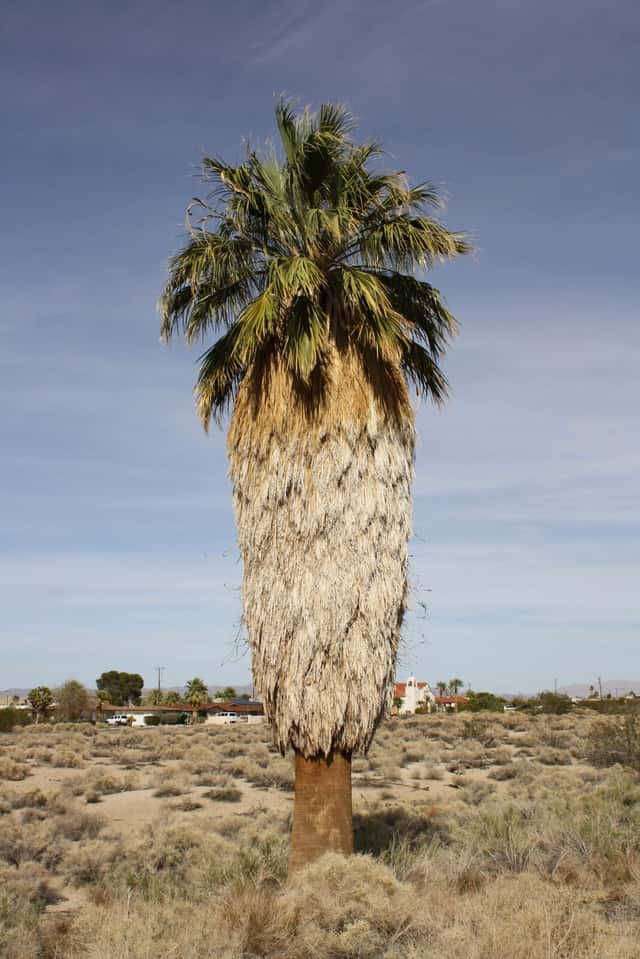
Washingtonia filifera, the California fan palm (also called desert fan palm), is a massive, single-trunked palm native to desert oases of the southwestern United States. It is the only palm species native to the western United States and forms dense groves around natural springs in the Colorado and Mojave deserts. Mature palms develop a thick, fibrous gray-brown trunk topped with a crown of large, fan-shaped (palmate) leaves that can reach 1.5-2 m across, each armed with curling filaments along the leaf margins that give the species its epithet "filifera" (thread-bearing). Older, uncultivated specimens often retain a skirt of dead fronds hanging down the trunk, earning it the nickname "petticoat palm."
How to Propagate California Fan Palm?
Seed germination
Bottom heat significantly speeds up germination; be patient, as palm seeds can take one to two months to sprout.
- 1 Soak fresh seeds in warm water for 2-4 days, changing the water daily
- 2 Lightly nick or scarify the hard seed coat to speed germination
- 3 Sow seeds about 1 cm deep in a well-draining seed mix
- 4 Keep the mix consistently moist and warm, around 27-30C (80-86F)
- 5 Transplant seedlings once they have 2-3 true leaves
Materials needed:
How Big Does California Fan Palm Grow?
TLDR: California Fan Palm can reach up to 25.0m tall with Slow growth rate.
Max height
25.0m
Spread
6.0m
Growth rate
Slow
Foliage
Evergreen
Plant Uses
Ornamental
Great for decoration
Edible
Can be consumed
Culinary Uses
- edible fruit (fresh or dried)
- ground into flour by Indigenous peoples
Is your plant showing symptoms?
Click on the symptom to discover possible causes:
What Diseases Commonly Affect California Fan Palm?
TLDR: California Fan Palm is susceptible to 5 known diseases. Monitor regularly for early detection.
Root Rot
Root rot is a serious fungal disease that affects the root system of plants, causing them to decay and die. It is primarily caused by overwatering, poor drainage, or soil-borne fungi such as Pythium, Phytophthora, Rhizoctonia, and Fusarium. The disease thrives in waterlogged conditions where roots are deprived of oxygen, making them susceptible to fungal infection.
Fusarium Wilt
Fusarium wilt is a serious fungal disease caused by the soil-borne fungus Fusarium oxysporum. The fungus invades roots and blocks the water-conducting vessels (xylem) of the plant, causing progressive wilting and eventual death. Host-specific forms of the pathogen exist that attack different plant species.
Scale Insects
Scale insects are small sap-sucking pests that appear as brown, shell-like bumps on plant stems and leaves. There are over 25 species, divided into armored (hard) and unarmored (soft) scales. They feed by piercing plant tissue and extracting sap, which weakens the plant and can lead to yellowing, stunted growth, and even death if left untreated. They also excrete honeydew, which attracts ants and promotes sooty mold growth.
Overwatering
Overwatering occurs when plants receive too much water, depriving roots of oxygen and causing root rot. This environmental stress is one of the most common causes of houseplant death, as waterlogged soil prevents roots from breathing and functioning properly.
Meaning & Symbolism
A living emblem of desert oases and the American Southwest, the California fan palm represents endurance, shelter and resilience in harsh, arid environments.
Fun Facts
It is the only palm species native to the western United States.
Its fan-shaped leaves can measure up to 2 meters (6.5 ft) across.
Uncultivated specimens keep a thick skirt of dead fronds, earning the nickname petticoat palm.
Indigenous Cahuilla people used its fibers for weaving and ate its small black fruits.
Frequently asked questions
How fast does California fan palm grow?
Is Washingtonia filifera toxic to cats or dogs?
How cold-hardy is the California fan palm?
Why is my California fan palm covered in dead fronds?
Does the California fan palm need fertilizer?
Compare with similar plants
| Attribute | Difficulty | Light | Watering | Pet Safe |
|---|---|---|---|---|
| Field Maple | Easy | Bright indirect | 14d | ✓ |
| Silver Birch | Easy | Direct sun | 14d | ✓ |
| Common Blanketflower | Easy | Direct sun | 10d | ✓ |
| Cushion Bush | Easy | Direct sun | 14d | ✓ |





