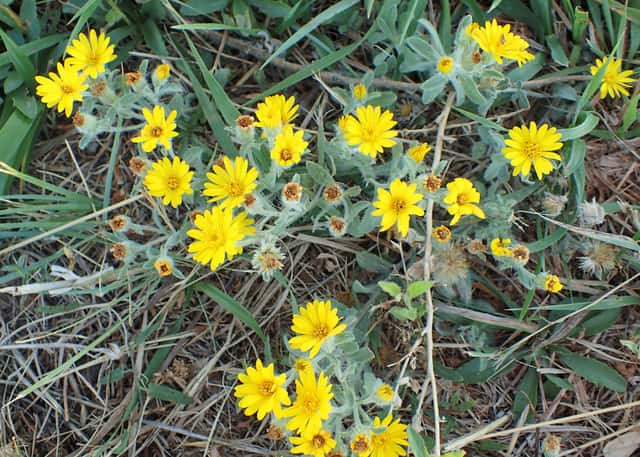
Asteraceae
Golden aster: Aromatic Plant
Heterotheca
A very low-maintenance plant that thrives in full sun and tolerates drought exceptionally well once established. It prefers poor, well-drained soils; the main risk to its health is overwatering, which causes root rot.
Every 12 days
Direct sun
-30° - 38°C
20% - 50%
Categories
What is Golden aster?
Golden aster (Heterotheca) is a easy-care plant from the Asteraceae family. Heterotheca is a genus of about 25 to 30 species of perennial herbs and subshrubs, native to North America, from Canada to Mexico, belonging to the aster family (Asteraceae). It is commonly known as "golden aster" or "camphorweed" due to the camphor-like aroma released by some species when their lea...
Golden aster grows up to 91cm, spread of 61cm, watering every 12 days, -30°C – 38°C, 20–50% humidity. It is not suitable for indoor environments and safe for pets.
Unlike many tropical plants, Golden aster tolerates watering mistakes. Best for beginners. Unlike many popular species, Golden aster is safe to keep around pets.
How to Care for Golden aster?
TLDR: Golden aster needs Direct sun, watering every 12 days, and temperatures between -30-38°C with 20-50% humidity.
How Often Should You Water Golden aster?
Water sparingly, allowing the substrate to dry out completely between waterings. Once established, it needs almost no additional watering except during prolonged and extreme droughts.
How Much Light Does Golden aster Need?
Requires full, direct sun, between 6 and 8 hours daily, for abundant flowering and a compact growth habit; excessive shade makes it leggy and weak.
What Is the Best Soil for Golden aster?
Thrives in sandy, stony, or infertile soils with excellent drainage. Avoid clayey, heavy, or moisture-retaining soils, as they promote root rot.
What Pot Should You Use for Golden aster?
Not ideal for pots unless they are very large and have excellent drainage (for example, terracotta with multiple holes); it develops better directly in the garden soil.
What Is Golden aster and Where Does It Come From?
Heterotheca is a genus of about 25 to 30 species of perennial herbs and subshrubs, native to North America, from Canada to Mexico, belonging to the aster family (Asteraceae). It is commonly known as "golden aster" or "camphorweed" due to the camphor-like aroma released by some species when their leaves are crushed. It produces bright yellow daisy-like flowers throughout much of the year and lanceolate leaves covered in rough hairs. It is a pioneer plant, extremely drought-tolerant, and typical of poor, sandy, or rocky soils.
How to Propagate Golden aster?
Sowing by seeds
- Seeds often self-sow easily in the garden once the plant is established.
- They need some light to germinate; do not bury them deeply.
- 1 Substrate preparation
Use a sandy, well-drained soil mix; ensure the area is free of weeds.
- 2 Sowing
Scatter the seeds over the surface and press lightly without covering them completely.
- 3 Initial watering
Maintain light and constant moisture until germination.
Materials needed:
Clump division
- Perform the division in early spring, before strong new growth begins.
- Water well after transplanting to help with rooting.
- 1 Extract the mother plant
Carefully dig up an established clump, trying to preserve as many roots as possible.
- 2 Divide
Separate the clump into smaller sections, each with its own roots and shoots.
- 3 Replant
Plant each division immediately in well-drained soil and in full sun.
Materials needed:
How Big Does Golden aster Grow?
TLDR: Golden aster can reach up to 91cm tall with Medium growth rate.
Max height
91cm
Spread
61cm
Growth rate
Medium
Foliage
Deciduous
Plant Uses
Ornamental
Great for decoration
Medicinal
Medicinal properties
Aromatic
Pleasant fragrance
Medicinal Uses
- Traditional use in poultices for bruises and muscle pain (Native North American peoples)
- Infusion of leaves and flowers traditionally used for chest pains
- Topical anti-inflammatory properties in traditional use
Is your plant showing symptoms?
Click on the symptom to discover possible causes:
What Diseases Commonly Affect Golden aster?
TLDR: Golden aster is susceptible to 4 known diseases. Monitor regularly for early detection.
Overwatering
Overwatering occurs when plants receive too much water, depriving roots of oxygen and causing root rot. This environmental stress is one of the most common causes of houseplant death, as waterlogged soil prevents roots from breathing and functioning properly.
Root Rot
Root rot is a serious fungal disease that affects the root system of plants, causing them to decay and die. It is primarily caused by overwatering, poor drainage, or soil-borne fungi such as Pythium, Phytophthora, Rhizoctonia, and Fusarium. The disease thrives in waterlogged conditions where roots are deprived of oxygen, making them susceptible to fungal infection.
Aphids
Aphids are small, soft-bodied, pear-shaped insects (1/16 to 1/8 inch long) that feed by sucking nutrient-rich sap from plants. They reproduce rapidly and can quickly weaken plants, causing distorted growth and transmitting plant viruses. Aphids come in various colors including green, black, red, yellow, brown, and gray. They secrete honeydew, a sticky substance that attracts ants and encourages sooty mold growth.
Slugs and Snails
Slugs and snails are mollusks that feed on plant tissue, causing irregular holes in leaves and damage to young seedlings. They are most active at night and in moist conditions, leaving characteristic silvery slime trails. These pests can quickly devastate gardens, especially during wet seasons.
Meaning & Symbolism
A symbol of resilience and vitality: it blooms in the poorest and most arid soils where other plants fail to survive, representing the ability to thrive in adversity.
Compare with similar plants
| Attribute | Difficulty | Light | Watering | Pet Safe |
|---|---|---|---|---|
| Field Maple | Easy | Bright indirect | 14d | ✓ |
| Silver Birch | Easy | Direct sun | 14d | ✓ |
| Common Blanketflower | Easy | Direct sun | 10d | ✓ |
| Cushion Bush | Easy | Direct sun | 14d | ✓ |





