Asteraceae
Candle Plant: Low Water Needs
Baculellum articulatum
An easy, drought-tolerant succulent that wants bright light, gritty well-draining soil, and infrequent watering. Let the soil dry out between waterings and go easy in summer, when the plant is semi-dormant and often leafless.
Every 14 days
Bright indirect
° - °C
% - %
Categories
What is Candle Plant?
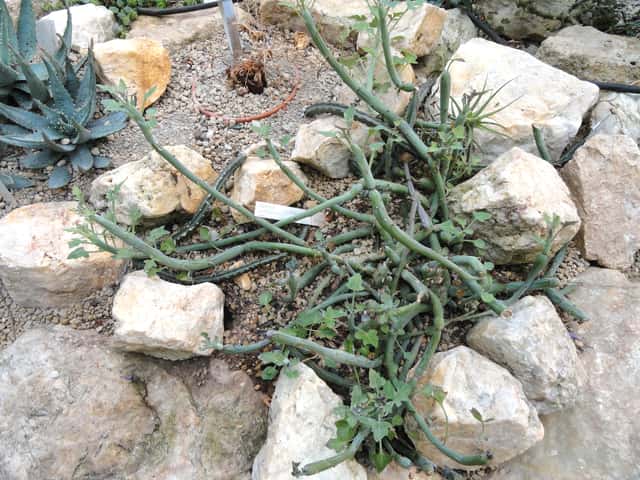
Candle Plant (Baculellum articulatum) is a easy-care plant from the Asteraceae family. Baculellum articulatum, long sold under its older names Senecio articulatus and Curio articulatus, is a quirky South African succulent subshrub prized for its pale grey-green, jointed, sausage-like stems. Native to rocky slopes of the Little and Great Karoo, it stores water in swollen stem segments...
Candle Plant grows up to 60cm, spread of 25cm, watering every 14 days. It is suitable for indoor environments and not safe for pets.
Unlike many tropical plants, Candle Plant tolerates watering mistakes. Best for beginners. Without precautions, ingestion can cause irritation in pets. Keep out of reach of cats and dogs. Without adequate drainage, root rot can develop within 28 days.
How to Care for Candle Plant?
TLDR: Candle Plant needs Bright indirect, watering every 14 days, and temperatures between 15-30°C with 40-70% humidity.
How Often Should You Water Candle Plant?
Water moderately during the active growing season (fall to spring) and let the soil dry out completely between waterings; cut back drastically in summer dormancy to avoid rot.
How Much Light Does Candle Plant Need?
Give it bright light to a few hours of direct sun daily -- the stems flush purple under strong light, a normal and healthy response.
What Is the Best Soil for Candle Plant?
Use a gritty, fast-draining cactus/succulent mix (sand, perlite, pumice) to keep the roots from sitting in moisture.
What Pot Should You Use for Candle Plant?
A shallow terracotta or unglazed clay pot with a drainage hole suits it best -- porous walls help excess moisture evaporate.
Care Schedule
Fertilize
Every 42 days
What Is Candle Plant and Where Does It Come From?
Baculellum articulatum, long sold under its older names Senecio articulatus and Curio articulatus, is a quirky South African succulent subshrub prized for its pale grey-green, jointed, sausage-like stems. Native to rocky slopes of the Little and Great Karoo, it stores water in swollen stem segments and produces small arrowhead-shaped leaves that emerge in the cooler months and drop again in summer. In winter, mature plants send up clusters of small white-to-yellow discoid flowers with purple anthers.
How to Propagate Candle Plant?
Stem cutting
Avoid watering right after planting; wait until the cutting shows resistance when gently tugged, signaling root growth.
- 1 Cut a healthy stem segment just below a joint using clean, sharp scissors.
- 2 Let the cutting dry and callus over for 1-2 days in a warm, shaded spot.
- 3 Insert the callused end into a well-draining succulent soil mix.
- 4 Keep in bright indirect light and water sparingly until roots establish.
Materials needed:
How Big Does Candle Plant Grow?
TLDR: Candle Plant can reach up to 60cm tall with Slow growth rate.
Max height
60cm
Spread
25cm
Growth rate
Slow
Foliage
Deciduous
Warning: Toxic Plant
This plant can be toxic if ingested. Keep out of reach of:
Plant Uses
Ornamental
Great for decoration
Is your plant showing symptoms?
Click on the symptom to discover possible causes:
What Diseases Commonly Affect Candle Plant?
TLDR: Candle Plant is susceptible to 7 known diseases. Monitor regularly for early detection.
Root Rot
Root rot is a serious fungal disease that affects the root system of plants, causing them to decay and die. It is primarily caused by overwatering, poor drainage, or soil-borne fungi such as Pythium, Phytophthora, Rhizoctonia, and Fusarium. The disease thrives in waterlogged conditions where roots are deprived of oxygen, making them susceptible to fungal infection.
Mealybugs
Mealybugs are small, soft-bodied insects covered with a white, waxy, cottony material. They are common pests of houseplants and outdoor plants in mild climates. These sap-sucking insects feed on plant tissue, causing damage, stunted growth, and can lead to plant death if left untreated. They produce sticky honeydew which attracts sooty mold.
Scale Insects
Scale insects are small sap-sucking pests that appear as brown, shell-like bumps on plant stems and leaves. There are over 25 species, divided into armored (hard) and unarmored (soft) scales. They feed by piercing plant tissue and extracting sap, which weakens the plant and can lead to yellowing, stunted growth, and even death if left untreated. They also excrete honeydew, which attracts ants and promotes sooty mold growth.
Spider Mites
Spider mites are tiny arachnids (less than 1/20 inch long) related to spiders and ticks that feed on plant sap. They thrive in hot, dry conditions and can cause significant damage to ornamental and vegetable plants. During severe infestations, crop losses can reach 14% or higher as these pests disrupt vital plant processes including photosynthesis, carbon dioxide absorption, and transpiration.
Meaning & Symbolism
As a hardy plant that stores its own resources and thrives on neglect, the candle plant is often associated with resilience and self-sufficiency.
Compare with similar plants
| Attribute | Difficulty | Light | Watering | Pet Safe |
|---|---|---|---|---|
| Field Maple | Easy | Bright indirect | 14d | ✓ |
| Silver Birch | Easy | Direct sun | 14d | ✓ |
| Common Blanketflower | Easy | Direct sun | 10d | ✓ |
| Cushion Bush | Easy | Direct sun | 14d | ✓ |
Choose & Compare
Sources & References
- Baculellum articulatum (Candle Plant) - World of Succulents
- Baculellum articulatum - PlantZAfrica (SANBI)
- How to care for Senecio articulatus Candle Plant - Succulents Box
- Senecio Articulatus Care: Growing The Candle Plant - Plant Care Today
- Curio articulatus - Wikipedia
- Pyrrolizidine Alkaloidosis in Animals - Merck Veterinary Manual





