Malvaceae
Cape Mallow: Full Sun Plant
Anisodontea capensis
This heat-loving plant thrives in sunny to full-sun locations with well-draining, sandy loam soil. While drought-tolerant, it requires regular watering, especially when container-grown. Cape mallow is not frost-hardy and must be overwintered in a frost-free environment at a minimum of 50°F (10°C). Pruning back hard in early spring encourages compact growth and more prolific blooming.
Every 3 days
Direct sun
-5° - 28°C
40% - 60%
Categories
What is Cape Mallow?
Cape Mallow (Anisodontea capensis) is a medium-care plant from the Malvaceae family. Anisodontea capensis, known as Cape mallow or false mallow, is an evergreen shrub native to South Africa and a member of the Malvaceae family. The plant is characterized by its gray-green, deeply lobed leaves and delicate, hibiscus-like flowers that bloom from spring to fall in shades ranging from p...
Cape Mallow grows up to 1.0m, spread of 80cm, watering every 3 days, -5°C – 28°C, 40–60% humidity. It is suitable for indoor environments and safe for pets.
Unlike many popular species, Cape Mallow is safe to keep around pets. Without adequate drainage, root rot can develop within 7 days.
How to Care for Cape Mallow?
TLDR: Cape Mallow needs Direct sun, watering every 3 days, and temperatures between -5-28°C with 40-60% humidity.
How Often Should You Water Cape Mallow?
Water regularly, but only after the top layer of soil has dried out. Avoid waterlogging at all costs, as the plant is highly susceptible to root rot. It requires more water during the active growing season but becomes quite drought-tolerant once established.
How Much Light Does Cape Mallow Need?
Sunny to full-sun locations are preferred for maximum flower production. Morning sun with light partial shade in the afternoon is acceptable. In shade, flowering decreases significantly and the stems may become leggy.
What Is the Best Soil for Cape Mallow?
Well-draining, sandy loam soil is ideal, preferably fertile and rich in organic matter. It tolerates a pH range of 6.0-7.5. Waterlogging is the most common cause of plant failure; use a high-quality, well-draining potting mix.
What Pot Should You Use for Cape Mallow?
Use containers with drainage holes; 8-12 inches (20-30 cm) in diameter for young plants, and 12-16 inches (30-40 cm) for mature specimens. Use high-quality, well-draining potting soil.
Care Schedule
Fertilize
Every 30 days
Repot
Every 550 days
What Is Cape Mallow and Where Does It Come From?
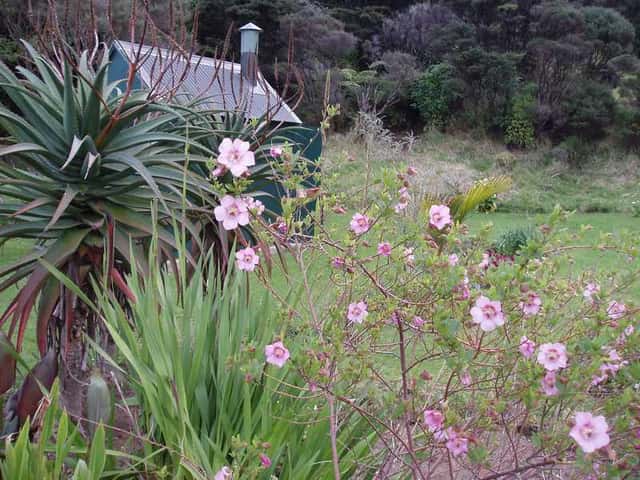
Anisodontea capensis, known as Cape mallow or false mallow, is an evergreen shrub native to South Africa and a member of the Malvaceae family. The plant is characterized by its gray-green, deeply lobed leaves and delicate, hibiscus-like flowers that bloom from spring to fall in shades ranging from pink to dark reddish-purple. Growing 24-40 inches (60-100 cm) tall, it is an elegant ornamental plant for balconies and gardens.
How Big Does Cape Mallow Grow?
TLDR: Cape Mallow can reach up to 1.0m tall with Fast growth rate.
Max height
1.0m
Spread
80cm
Growth rate
Fast
Foliage
Evergreen
Plant Uses
Ornamental
Great for decoration
Is your plant showing symptoms?
Click on the symptom to discover possible causes:
What Diseases Commonly Affect Cape Mallow?
TLDR: Cape Mallow is susceptible to 6 known diseases. Monitor regularly for early detection.
Rust
Rust is a common fungal disease caused by fungi in the order Pucciniales that affects a wide variety of plants. The disease gets its name from the characteristic orange, yellow, or reddish-brown pustules that appear on leaves, resembling metal rust. This obligate fungal parasite requires living plants to survive and can cause significant economic losses in agricultural crops.
Powdery Mildew
Powdery mildew is a common fungal disease caused by various fungi species including Erysiphe, Podosphaera, Oïdium, and Leveillula. It affects over 10,000 plant species worldwide. The disease thrives in warm, dry climates with high humidity and appears as a distinctive white powdery coating on plant surfaces.
Aphids
Aphids are small, soft-bodied, pear-shaped insects (1/16 to 1/8 inch long) that feed by sucking nutrient-rich sap from plants. They reproduce rapidly and can quickly weaken plants, causing distorted growth and transmitting plant viruses. Aphids come in various colors including green, black, red, yellow, brown, and gray. They secrete honeydew, a sticky substance that attracts ants and encourages sooty mold growth.
Spider Mites
Spider mites are tiny arachnids (less than 1/20 inch long) related to spiders and ticks that feed on plant sap. They thrive in hot, dry conditions and can cause significant damage to ornamental and vegetable plants. During severe infestations, crop losses can reach 14% or higher as these pests disrupt vital plant processes including photosynthesis, carbon dioxide absorption, and transpiration.
Meaning & Symbolism
The Cape mallow symbolizes delicacy, resilience, and Mediterranean elegance.
Compare with similar plants
| Attribute | Difficulty | Light | Watering | Pet Safe |
|---|---|---|---|---|
| Dark Fieldcap | Medium | Low light | 2d | ⚠️ |
| Azalea | Medium | Partial shade | 3d | ⚠️ |
| Muriel's Bamboo | Medium | Partial shade | 3d | ✓ |
| Bougainvillea | Medium | Direct sun | 7d | ⚠️ |




