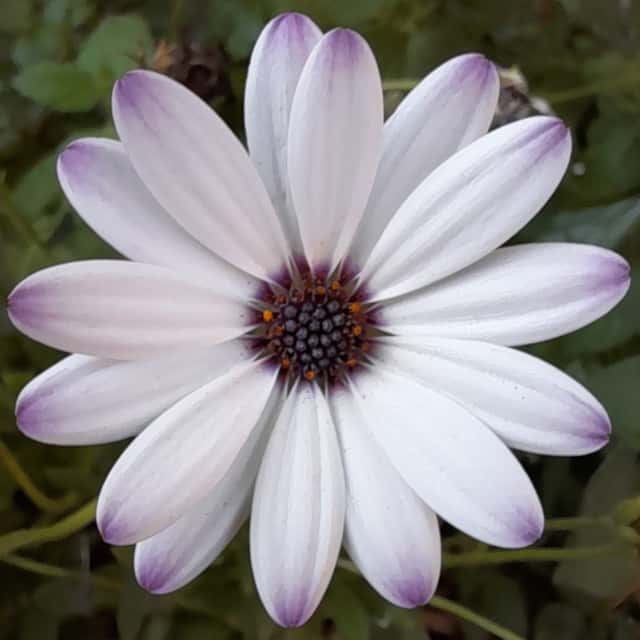
Asteraceae
Cape Marigold (Dimorphotheca pluvialis)
Dimorphotheca pluvialis
Plant in full sun with sandy, well-draining soil. Water once a week, allowing soil to dry between waterings. Drought-tolerant; never let it sit in waterlogged soil. Fertilize every 3 months with a balanced fertilizer. No regular pruning needed.
Every 7 days
Direct sun
5° - 35°C
30% - 60%
Categories
What is Cape Marigold?
Cape Marigold (Dimorphotheca pluvialis) is a easy-care plant from the Asteraceae family. Dimorphotheca pluvialis, commonly known as Cape Marigold or Rain Daisy, is a South African annual daisy with striking white ray flowers, yellow-brown disc centers, and purple-tinged petal bases. True to its common name, the flowers close before rain and at dusk, making it a natural weather indicator...
Cape Marigold grows up to 45cm, spread of 30cm, watering every 7 days, 5°C – 35°C, 30–60% humidity. It is not suitable for indoor environments and safe for pets.
Unlike many tropical plants, Cape Marigold tolerates watering mistakes. Best for beginners. Unlike many popular species, Cape Marigold is safe to keep around pets.
How to Care for Cape Marigold?
TLDR: Cape Marigold needs Direct sun, watering every 7 days, and temperatures between 5-35°C with 30-60% humidity.
How Often Should You Water Cape Marigold?
Water deeply once a week, checking that the top inch of soil is dry before watering again. Avoid wetting foliage and never allow standing water around roots — root rot is the main risk.
How Much Light Does Cape Marigold Need?
Requires full sun with at least 6 hours of direct sunlight daily. Flowers are heliotropic — they only open in bright, direct sun and close at night and on overcast days.
What Is the Best Soil for Cape Marigold?
Prefers sandy, poor to moderately fertile, well-draining soil. Avoid clay or compacted soils. Ideal pH range is 6.0–7.5. Tolerates drought but not waterlogging.
What Pot Should You Use for Cape Marigold?
Terracotta or ceramic pots with drainage holes. Avoid plastic pots that retain excess moisture.
Care Schedule
Fertilize
Every 90 days
What Is Cape Marigold and Where Does It Come From?
Dimorphotheca pluvialis, commonly known as Cape Marigold or Rain Daisy, is a South African annual daisy with striking white ray flowers, yellow-brown disc centers, and purple-tinged petal bases. True to its common name, the flowers close before rain and at dusk, making it a natural weather indicator. It is drought-tolerant and thrives in full sun with poor, well-drained soils.
How to Propagate Cape Marigold?
Direct seeding
This species produces two seed morphs with different germination timing. Sow in full sun for best flowering results.
- 1 Sow seeds directly outdoors after the last frost, or start indoors 6-8 weeks earlier
- 2 Do not cover seeds — press lightly onto the soil surface
- 3 Keep soil lightly moist until germination
- 4 Thin or transplant seedlings to 12 inches apart when they have 2-3 true leaves
Materials needed:
How Big Does Cape Marigold Grow?
TLDR: Cape Marigold can reach up to 45cm tall with Medium growth rate.
Max height
45cm
Spread
30cm
Growth rate
Medium
Foliage
Deciduous
Plant Uses
Ornamental
Great for decoration
Ground Cover
Soil coverage
Is your plant showing symptoms?
Click on the symptom to discover possible causes:
What Diseases Commonly Affect Cape Marigold?
TLDR: Cape Marigold is susceptible to 4 known diseases. Monitor regularly for early detection.
Powdery Mildew
Powdery mildew is a common fungal disease caused by various fungi species including Erysiphe, Podosphaera, Oïdium, and Leveillula. It affects over 10,000 plant species worldwide. The disease thrives in warm, dry climates with high humidity and appears as a distinctive white powdery coating on plant surfaces.
Root Rot
Root rot is a serious fungal disease that affects the root system of plants, causing them to decay and die. It is primarily caused by overwatering, poor drainage, or soil-borne fungi such as Pythium, Phytophthora, Rhizoctonia, and Fusarium. The disease thrives in waterlogged conditions where roots are deprived of oxygen, making them susceptible to fungal infection.
Aphids
Aphids are small, soft-bodied, pear-shaped insects (1/16 to 1/8 inch long) that feed by sucking nutrient-rich sap from plants. They reproduce rapidly and can quickly weaken plants, causing distorted growth and transmitting plant viruses. Aphids come in various colors including green, black, red, yellow, brown, and gray. They secrete honeydew, a sticky substance that attracts ants and encourages sooty mold growth.
Spider Mites
Spider mites are tiny arachnids (less than 1/20 inch long) related to spiders and ticks that feed on plant sap. They thrive in hot, dry conditions and can cause significant damage to ornamental and vegetable plants. During severe infestations, crop losses can reach 14% or higher as these pests disrupt vital plant processes including photosynthesis, carbon dioxide absorption, and transpiration.
Fun Facts
Cape Marigold flowers close before rainfall, acting as a natural weather barometer
It produces two distinct seed types (dimorphic achenes) on the same flower head, each with different germination timing
Native to the semi-arid regions of South Africa and Namibia, it thrives in poor, dry soils where few plants compete
The genus name Dimorphotheca literally means 'two-shaped container', referring to its dimorphic seeds
Frequently asked questions
How often should I water Cape Marigold?
Is Cape Marigold toxic to pets?
Why do my Cape Marigold flowers close?
Can I grow Cape Marigold in a container?
When should I sow Cape Marigold seeds?
Compare with similar plants
| Attribute | Difficulty | Light | Watering | Pet Safe |
|---|---|---|---|---|
| Field Maple | Easy | Bright indirect | 14d | ✓ |
| Silver Birch | Easy | Direct sun | 14d | ✓ |
| Common Blanketflower | Easy | Direct sun | 10d | ✓ |
| Cushion Bush | Easy | Direct sun | 14d | ✓ |





