Droseraceae
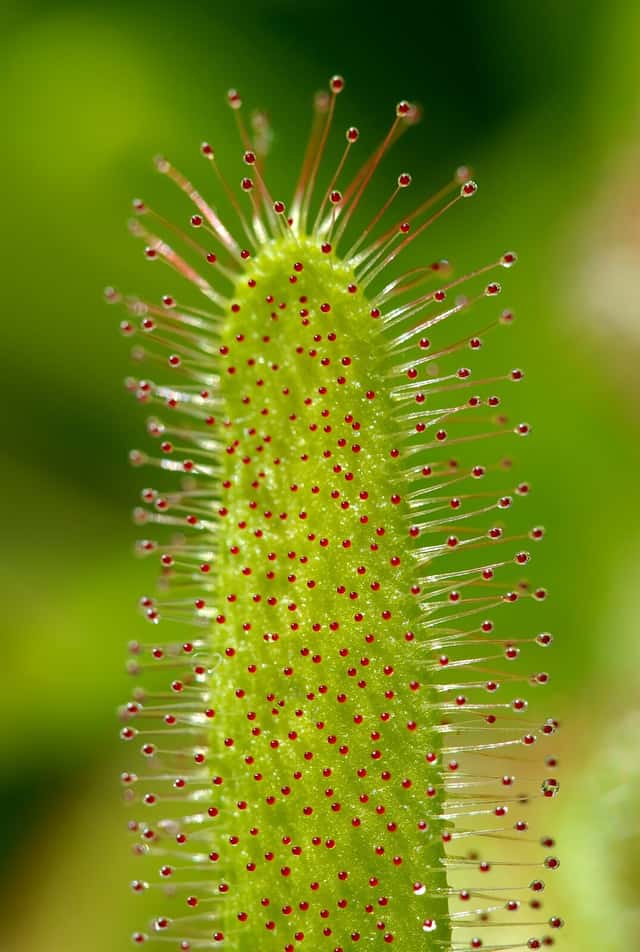
Cape Sundew (Drosera capensis)
Drosera capensis
One of the easiest carnivorous plants to grow: give it bright, direct light, keep its peaty soil constantly wet with pure water, and let it catch its own insects. No fertilizer, no dormancy, minimal fuss.
Every 3 days
Direct sun
10° - 35°C
50% - 70%
Categories
What is Cape Sundew?
Cape Sundew (Drosera capensis) is a easy-care plant from the Droseraceae family. Drosera capensis, or Cape Sundew, is a carnivorous perennial native to the fynbos wetlands of the Western Cape, South Africa. Its narrow, strap-shaped leaves are covered in reddish tentacles tipped with sparkling, sticky mucilage that lure, trap, and digest small insects, supplying the plant with ni...
Cape Sundew grows up to 45cm, spread of 20cm, watering every 3 days, 10°C – 35°C, 50–70% humidity. It is suitable for indoor environments and safe for pets.
Unlike many tropical plants, Cape Sundew tolerates watering mistakes. Best for beginners. Unlike many popular species, Cape Sundew is safe to keep around pets. Without adequate drainage, root rot can develop within 7 days.
How to Care for Cape Sundew?
TLDR: Cape Sundew needs Direct sun, watering every 3 days, and temperatures between 10-35°C with 50-70% humidity.
How Often Should You Water Cape Sundew?
Stand the pot in a tray holding 1-2cm of water at all times and only ever use distilled, reverse-osmosis, or rainwater -- tap water minerals will damage the roots over time.
How Much Light Does Cape Sundew Need?
Give it at least 6-8 hours of bright, direct sunlight (a sunny windowsill or a full-spectrum grow light); low light stops dew production and the plant loses its ability to trap prey.
What Is the Best Soil for Cape Sundew?
Use a nutrient-free mix of 50% peat moss and 50% perlite or silica sand -- never garden soil, compost, or fertilizer, which can kill the roots.
What Pot Should You Use for Cape Sundew?
Plastic pots without added fertilizer glazing work best; avoid terracotta, which leaches minerals into the moist substrate.
Care Schedule
Repot
Every 365 days
What Is Cape Sundew and Where Does It Come From?
Drosera capensis, or Cape Sundew, is a carnivorous perennial native to the fynbos wetlands of the Western Cape, South Africa. Its narrow, strap-shaped leaves are covered in reddish tentacles tipped with sparkling, sticky mucilage that lure, trap, and digest small insects, supplying the plant with nitrogen and phosphorus that its nutrient-poor native soil lacks. Prized by beginners for its resilience and rapid growth, it produces small pink, self-pollinating flowers on tall stalks and readily self-seeds, often popping up as a friendly weed in other carnivorous plant pots.
How to Propagate Cape Sundew?
Leaf cutting
Keep humidity high and the substrate constantly damp with pure water; do not bury the leaf.
- 1 Select a healthy, mature leaf and cut it at the base with clean scissors.
- 2 Lay the leaf flat, sticky side up, on top of a moist peat and perlite mix.
- 3 Keep it in a humid enclosure (propagator lid or plastic bag) under bright indirect light.
- 4 Tiny plantlets emerge along the leaf edges within 3-6 weeks.
Materials needed:
Seed sowing
Seeds need light to germinate, so never bury them; capensis self-seeds readily and can become a friendly weed in other pots.
- 1 Collect dry black seeds from spent flower stalks.
- 2 Sprinkle seeds on the surface of a moist peat and sand mix without covering them.
- 3 Keep under bright light and high humidity until germination.
- 4 Thin seedlings once they develop several leaves.
Materials needed:
Division of offsets
Only divide plants with multiple established crowns to avoid stressing a single rosette.
- 1 Remove the plant from its pot and gently rinse excess substrate from the roots.
- 2 Separate natural offsets or crowded rosettes by hand.
- 3 Repot each division into a fresh peat and perlite mix.
- 4 Water from below and keep humidity high until new growth appears.
Materials needed:
How Big Does Cape Sundew Grow?
TLDR: Cape Sundew can reach up to 45cm tall with Fast growth rate.
Max height
45cm
Spread
20cm
Growth rate
Fast
Foliage
Evergreen
Plant Uses
Ornamental
Great for decoration
Is your plant showing symptoms?
Click on the symptom to discover possible causes:
What Diseases Commonly Affect Cape Sundew?
TLDR: Cape Sundew is susceptible to 6 known diseases. Monitor regularly for early detection.
Gray Mold (Botrytis Blight)
Gray mold, caused by the fungus Botrytis cinerea, is a widespread necrotrophic pathogen affecting over 1,400 plant species. It thrives in cool, humid conditions and attacks weakened or aging plant tissues, causing soft rot and characteristic gray fuzzy growth.
Root Rot
Root rot is a serious fungal disease that affects the root system of plants, causing them to decay and die. It is primarily caused by overwatering, poor drainage, or soil-borne fungi such as Pythium, Phytophthora, Rhizoctonia, and Fusarium. The disease thrives in waterlogged conditions where roots are deprived of oxygen, making them susceptible to fungal infection.
Aphids
Aphids are small, soft-bodied, pear-shaped insects (1/16 to 1/8 inch long) that feed by sucking nutrient-rich sap from plants. They reproduce rapidly and can quickly weaken plants, causing distorted growth and transmitting plant viruses. Aphids come in various colors including green, black, red, yellow, brown, and gray. They secrete honeydew, a sticky substance that attracts ants and encourages sooty mold growth.
Spider Mites
Spider mites are tiny arachnids (less than 1/20 inch long) related to spiders and ticks that feed on plant sap. They thrive in hot, dry conditions and can cause significant damage to ornamental and vegetable plants. During severe infestations, crop losses can reach 14% or higher as these pests disrupt vital plant processes including photosynthesis, carbon dioxide absorption, and transpiration.
Fun Facts
Its genus name Drosera comes from the Greek word drosos, meaning dew, for the glistening drops on its leaves.
A single Cape Sundew leaf can curl around a trapped insect in under an hour to begin digestion.
It is considered a beginner weed among carnivorous plant growers because it self-seeds so easily.
Despite trapping insects, it produces delicate, self-pollinating pink flowers on tall stalks.
Frequently asked questions
Do I need to feed my Cape Sundew insects?
Why did my Cape Sundew stop producing dew?
Is Drosera capensis toxic to pets?
Can I use tap water for my Cape Sundew?
Compare with similar plants
| Attribute | Difficulty | Light | Watering | Pet Safe |
|---|---|---|---|---|
| Field Maple | Easy | Bright indirect | 14d | ✓ |
| Silver Birch | Easy | Direct sun | 14d | ✓ |
| Common Blanketflower | Easy | Direct sun | 10d | ✓ |
| Cushion Bush | Easy | Direct sun | 14d | ✓ |
Choose & Compare
Sources & References
- Cape Sundew (Drosera Capensis) Care Sheet - Mikes Carnivores
- Drosera Capensis Care Instructions with Care Sheet - Venus Flytrap World
- Drosera capensis - Wikipedia
- Sundew Help Page - growsundews.com
- Drosera capensis (Cape Sundew): All You Need To Know - Gardenia.net
- Drosera capensis: A Planta Carnivora Que Encanta e Fascina - Blog das Flores
- Orvalinha - Drosera capensis - Jardineiro.net
- Drosera capensis: caracteristicas, habitat, cultivo, cuidados - Lifeder
- Cuidados e informacion de Drosera capensis - Rocio del Cabo - Cuidar Plantas





