Scrophulariaceae
Cape Jewels: Fast Growing
Nemesia strumosa
Grow Cape jewels in full sun with fertile, well-draining soil kept evenly moist. Deadhead regularly and feed every two weeks during the growing season to keep the compact mounds flowering from spring into fall; expect a lull once summer heat arrives.
Every 5 days
Bright indirect
5° - 24°C
% - %
Categories
What is Cape Jewels?
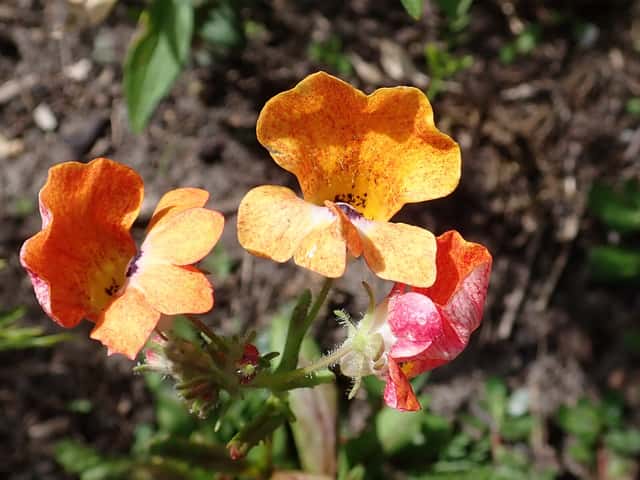
Cape Jewels (Nemesia strumosa) is a easy-care plant from the Scrophulariaceae family. Nemesia strumosa, commonly known as Cape jewels, is a compact, cool-season flowering annual native to the southwestern Cape provinces of South Africa. A relative of snapdragons, it produces masses of small, pouch-shaped, often bicolored flowers in shades of white, cream, yellow, orange, pink, red, a...
Cape Jewels grows up to 30cm, spread of 25cm, watering every 5 days, 5°C – 24°C. It is not suitable for indoor environments and safe for pets.
Unlike many tropical plants, Cape Jewels tolerates watering mistakes. Best for beginners. Unlike many popular species, Cape Jewels is safe to keep around pets.
How to Care for Cape Jewels?
TLDR: Cape Jewels needs Bright indirect, watering every 5 days, and temperatures between 5-24°C with 40-70% humidity.
How Often Should You Water Cape Jewels?
Keep the soil evenly moist but never soggy, watering when the top couple of centimeters feel dry. Poor drainage quickly leads to root rot, so never let pots sit in standing water.
How Much Light Does Cape Jewels Need?
Give it at least 6 hours of full sun daily for the best bloom. In hot climates, afternoon shade helps prolong flowering into summer.
What Is the Best Soil for Cape Jewels?
Plant in fertile, well-draining loam or sandy soil enriched with organic matter, at a near-neutral to slightly alkaline pH of 6.0-8.0.
What Pot Should You Use for Cape Jewels?
Use a wide, shallow container or hanging basket with ample drainage holes; terracotta helps prevent waterlogging in line with this plant's need for well-drained soil.
Care Schedule
Fertilize
Every 14 days
What Is Cape Jewels and Where Does It Come From?
Nemesia strumosa, commonly known as Cape jewels, is a compact, cool-season flowering annual native to the southwestern Cape provinces of South Africa. A relative of snapdragons, it produces masses of small, pouch-shaped, often bicolored flowers in shades of white, cream, yellow, orange, pink, red, and purple from spring through fall. Its fast growth and mounding habit make it a popular choice for borders, containers, and hanging baskets, though it tends to decline once summer heat sets in.
How Big Does Cape Jewels Grow?
TLDR: Cape Jewels can reach up to 30cm tall with Fast growth rate.
Max height
30cm
Spread
25cm
Growth rate
Fast
Foliage
Deciduous
Plant Uses
Ornamental
Great for decoration
Is your plant showing symptoms?
Click on the symptom to discover possible causes:
What Diseases Commonly Affect Cape Jewels?
TLDR: Cape Jewels is susceptible to 6 known diseases. Monitor regularly for early detection.
Root Rot
Root rot is a serious fungal disease that affects the root system of plants, causing them to decay and die. It is primarily caused by overwatering, poor drainage, or soil-borne fungi such as Pythium, Phytophthora, Rhizoctonia, and Fusarium. The disease thrives in waterlogged conditions where roots are deprived of oxygen, making them susceptible to fungal infection.
Powdery Mildew
Powdery mildew is a common fungal disease caused by various fungi species including Erysiphe, Podosphaera, Oïdium, and Leveillula. It affects over 10,000 plant species worldwide. The disease thrives in warm, dry climates with high humidity and appears as a distinctive white powdery coating on plant surfaces.
Aphids
Aphids are small, soft-bodied, pear-shaped insects (1/16 to 1/8 inch long) that feed by sucking nutrient-rich sap from plants. They reproduce rapidly and can quickly weaken plants, causing distorted growth and transmitting plant viruses. Aphids come in various colors including green, black, red, yellow, brown, and gray. They secrete honeydew, a sticky substance that attracts ants and encourages sooty mold growth.
Whiteflies
Whiteflies are small, soft-bodied, winged insects closely related to aphids and mealybugs. They are moth-like in appearance, about 1/16 inch long, triangular in shape, and gray-white in color. These sap-sucking pests feed on plant tissue, causing yellowing, stunted growth, and wilting. They also excrete honeydew, which attracts ants and promotes sooty mold growth. Whiteflies can transmit serious plant viruses.
Compare with similar plants
| Attribute | Difficulty | Light | Watering | Pet Safe |
|---|---|---|---|---|
| Field Maple | Easy | Bright indirect | 14d | ✓ |
| Silver Birch | Easy | Direct sun | 14d | ✓ |
| Common Blanketflower | Easy | Direct sun | 10d | ✓ |
| Cushion Bush | Easy | Direct sun | 14d | ✓ |





