Arecaceae
Carnauba Palm: Edible Plant
Copernicia prunifera
A tough, slow-growing palm built for heat, full sun and poor soil. It establishes best in the ground -- where its deep taproot can access moisture -- and needs little beyond an occasional deep watering while young and removal of dead fronds twice a year. Waterlogged, heavy soil is its main weakness and can lead to root rot.
Every 7 days
Direct sun
10° - 40°C
50% - 80%
Categories
What is Carnauba Palm?
Carnauba Palm (Copernicia prunifera) is a medium-care plant from the Arecaceae family. Copernicia prunifera, the carnauba palm, is a fan palm endemic to the semi-arid Caatinga of northeastern Brazil (Ceara, Piaui, Maranhao, Rio Grande do Norte and Bahia), where it grows along rivers and in seasonally flooded ground that receives only about 800mm of poorly distributed rainfall a year....
Carnauba Palm grows up to 20.0m, spread of 500cm, watering every 7 days, 10°C – 40°C, 50–80% humidity. It is not suitable for indoor environments and safe for pets.
Unlike many popular species, Carnauba Palm is safe to keep around pets.
How to Care for Carnauba Palm?
TLDR: Carnauba Palm needs Direct sun, watering every 7 days, and temperatures between 10-40°C with 50-80% humidity.
How Often Should You Water Carnauba Palm?
Water deeply and regularly for the first couple of years while the root system establishes, letting the top layer of soil dry between waterings. Once mature it is markedly drought-tolerant and only needs supplemental water in extended dry spells; avoid letting it sit in waterlogged soil.
How Much Light Does Carnauba Palm Need?
Needs full, direct sun for 8 hours or more a day -- it will not thrive in shade or bright indirect light. Outdoor, open-sky positions give the best frond color and wax development.
What Is the Best Soil for Carnauba Palm?
Plant in loose, well-draining sandy or loamy soil; it tolerates the mildly saline, alkaline soils typical of riverbanks and floodplains in its native range but will not tolerate heavy, waterlogged clay.
What Pot Should You Use for Carnauba Palm?
Best planted directly in the ground given its deep taproot and eventual size; if grown in a container while young, use a deep pot with generous drainage holes and repot every 2-3 years as it outgrows the root space.
Care Schedule
Fertilize
Every 90 days
Repot
Every 730 days
What Is Carnauba Palm and Where Does It Come From?
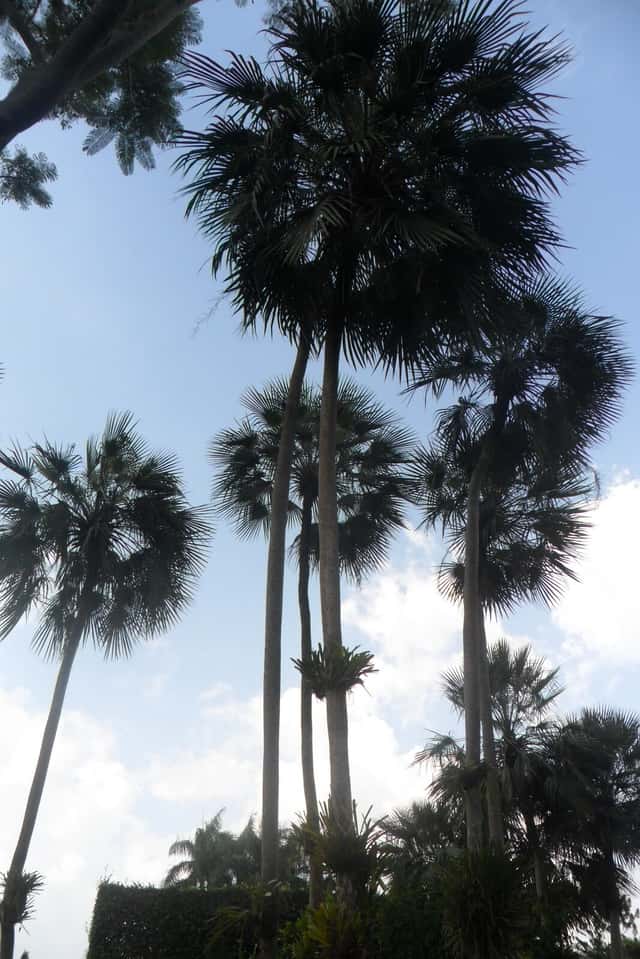
Copernicia prunifera, the carnauba palm, is a fan palm endemic to the semi-arid Caatinga of northeastern Brazil (Ceara, Piaui, Maranhao, Rio Grande do Norte and Bahia), where it grows along rivers and in seasonally flooded ground that receives only about 800mm of poorly distributed rainfall a year. Mature specimens reach up to 20m tall on a slim, ringed trunk topped by a dense crown of stiff, blue-green fan leaves, and can live for two centuries. It is nicknamed "arvore da vida" (tree of life) in Brazil because almost every part is used, most famously the fine wax coating its fronds, harvested and refined into carnauba wax -- the hardest natural wax in commercial use, prized for polishes, cosmetics and coatings.
How to Propagate Carnauba Palm?
Seed Germination
- 1 Clean and test seeds
Remove all fruit pulp (it contains germination inhibitors), scrub seeds clean, then float-test in water -- viable seeds sink.
- 2 Pre-soak
Soak cleaned seeds in warm water for 24-48 hours, changing the water daily to soften the hard seed coat.
- 3 Sow
Sow about 2cm deep in a sandy, well-draining seed-starting mix.
- 4 Incubate
Keep at a constant 30-35C (a heat mat helps outside the tropics) and consistently moist but not waterlogged until sprouting, which is slow and uneven.
Materials needed:
How Big Does Carnauba Palm Grow?
TLDR: Carnauba Palm can reach up to 20.0m tall with Slow growth rate.
Max height
20.0m
Spread
5.0m
Growth rate
Slow
Foliage
Evergreen
Plant Uses
Ornamental
Great for decoration
Edible
Can be consumed
Medicinal
Medicinal properties
Medicinal Uses
- Root decoctions used traditionally as a diuretic and depurative (blood purifier)
- Root preparations applied in folk treatment of arthritis, rheumatism and skin conditions
- Wax from the fronds used in traditional ointments and poultices
Culinary Uses
- Ripe fruit pulp eaten raw or processed into flour
- Starchy trunk pith processed into a sago-like starch
- Roasted, ground seed used as a coffee substitute
- Apical bud harvested as palm heart (palmito), though this kills the tree
Is your plant showing symptoms?
Click on the symptom to discover possible causes:
What Diseases Commonly Affect Carnauba Palm?
TLDR: Carnauba Palm is susceptible to 5 known diseases. Monitor regularly for early detection.
Phytophthora Root Rot
Disease caused by fungus-like organisms (oomycetes) that live in soil and can survive for years. It affects roots, stem, and crown of plants, being especially severe in waterlogged or poorly drained soils. It is the second most common cause of root rot in trees and shrubs.
Leaf Spot
Leaf spot is a common fungal disease caused by various pathogens including Alternaria, Ascochyta, Colletotrichum, Septoria, and Venturia. It primarily affects leaves, causing discolored spots that can lead to premature leaf drop if left untreated.
Spider Mites
Spider mites are tiny arachnids (less than 1/20 inch long) related to spiders and ticks that feed on plant sap. They thrive in hot, dry conditions and can cause significant damage to ornamental and vegetable plants. During severe infestations, crop losses can reach 14% or higher as these pests disrupt vital plant processes including photosynthesis, carbon dioxide absorption, and transpiration.
Scale Insects
Scale insects are small sap-sucking pests that appear as brown, shell-like bumps on plant stems and leaves. There are over 25 species, divided into armored (hard) and unarmored (soft) scales. They feed by piercing plant tissue and extracting sap, which weakens the plant and can lead to yellowing, stunted growth, and even death if left untreated. They also excrete honeydew, which attracts ants and promotes sooty mold growth.
Meaning & Symbolism
Known across Brazil as the "arvore da vida" (tree of life), the carnauba palm symbolizes resourcefulness and endurance -- a single tree traditionally supplies wax, food, fiber, and building material to communities in one of the country's harshest, driest regions.
Compare with similar plants
| Attribute | Difficulty | Light | Watering | Pet Safe |
|---|---|---|---|---|
| Dark Fieldcap | Medium | Low light | 2d | ⚠️ |
| Azalea | Medium | Partial shade | 3d | ⚠️ |
| Muriel's Bamboo | Medium | Partial shade | 3d | ✓ |
| Bougainvillea | Medium | Direct sun | 7d | ⚠️ |




