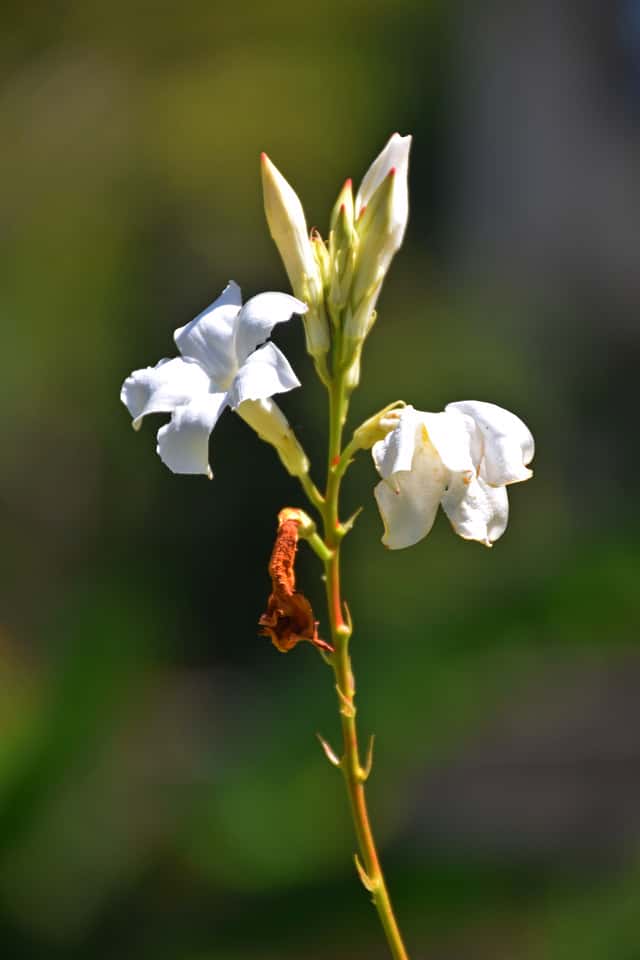
Apocynaceae
Chilean Jasmine (Mandevilla laxa): The Fragrant Summer Vine
Mandevilla laxa
Plant in full sun with well-draining soil. Water weekly, allowing the topsoil to dry slightly between waterings. Fertilize monthly during the growing season. Prune in late winter to encourage vigorous new growth. Provide a trellis or support for the vine to climb.
Every 7 days
Direct sun
5° - 35°C
40% - 70%
Categories
What is Chilean Jasmine?
Chilean Jasmine (Mandevilla laxa) is a medium-care plant from the Apocynaceae family. Chilean Jasmine (Mandevilla laxa) is a vigorous deciduous twining vine native to Bolivia, northwestern Argentina, and Peru. It produces clusters of funnel-shaped, creamy-white flowers with an intense vanilla fragrance — especially noticeable in the evenings — throughout summer and into fall. The mil...
Chilean Jasmine grows up to 4.6m, spread of 150cm, watering every 7 days, 5°C – 35°C, 40–70% humidity. It is not suitable for indoor environments and not safe for pets.
Without precautions, ingestion can cause irritation in pets. Keep out of reach of cats and dogs.
How to Care for Chilean Jasmine?
TLDR: Chilean Jasmine needs Direct sun, watering every 7 days, and temperatures between 5-35°C with 40-70% humidity.
How Often Should You Water Chilean Jasmine?
Water thoroughly once a week, letting the top 2–3 cm of soil dry out between sessions. In very hot weather, check soil every 3–4 days. Avoid waterlogging — root rot is the most common issue.
How Much Light Does Chilean Jasmine Need?
Requires full sun, at least 6 hours of direct sunlight daily. In very hot climates, light afternoon shade can prevent leaf scorch.
What Is the Best Soil for Chilean Jasmine?
Use well-draining, organically rich soil. A mix of potting soil with added perlite works well. Ideal pH range is 6.0–7.5.
What Pot Should You Use for Chilean Jasmine?
Terracotta or ceramic pot with drainage holes. For outdoor garden use, pair with a trellis, pergola, or sturdy fence.
Care Schedule
Fertilize
Every 30 days
Repot
Every 730 days
What Is Chilean Jasmine and Where Does It Come From?
Chilean Jasmine (Mandevilla laxa) is a vigorous deciduous twining vine native to Bolivia, northwestern Argentina, and Peru. It produces clusters of funnel-shaped, creamy-white flowers with an intense vanilla fragrance — especially noticeable in the evenings — throughout summer and into fall. The milky white sap can irritate skin on contact.
How to Propagate Chilean Jasmine?
Stem cutting
Bottom heat speeds up rooting significantly. Keep humidity high by covering with a plastic bag or propagator lid.
- 1 Take a semi-ripe stem cutting of 10-15 cm with 2-3 leaf pairs.
- 2 Remove lower leaves and dip the base in rooting hormone.
- 3 Plant in moist, well-draining propagation mix.
- 4 Keep in a warm (22-25°C) and humid environment until roots develop.
- 5 Transplant once roots are 3-5 cm long.
Materials needed:
Seed propagation
Seeds require consistent warmth to germinate well. Use a heated propagator for best results.
- 1 Sow seeds in spring with consistent heat (20-25°C).
- 2 Lightly cover seeds with fine propagation mix.
- 3 Keep substrate moist until germination.
- 4 Transplant seedlings when they have 2-3 true leaves.
Materials needed:
How Big Does Chilean Jasmine Grow?
TLDR: Chilean Jasmine can reach up to 4.6m tall with Fast growth rate.
Max height
4.6m
Spread
1.5m
Growth rate
Fast
Foliage
Deciduous
Warning: Toxic Plant
This plant can be toxic if ingested. Keep out of reach of:
Plant Uses
Ornamental
Great for decoration
Aromatic
Pleasant fragrance
Is your plant showing symptoms?
Click on the symptom to discover possible causes:
What Diseases Commonly Affect Chilean Jasmine?
TLDR: Chilean Jasmine is susceptible to 8 known diseases. Monitor regularly for early detection.
Aphids
Aphids are small, soft-bodied, pear-shaped insects (1/16 to 1/8 inch long) that feed by sucking nutrient-rich sap from plants. They reproduce rapidly and can quickly weaken plants, causing distorted growth and transmitting plant viruses. Aphids come in various colors including green, black, red, yellow, brown, and gray. They secrete honeydew, a sticky substance that attracts ants and encourages sooty mold growth.
Spider Mites
Spider mites are tiny arachnids (less than 1/20 inch long) related to spiders and ticks that feed on plant sap. They thrive in hot, dry conditions and can cause significant damage to ornamental and vegetable plants. During severe infestations, crop losses can reach 14% or higher as these pests disrupt vital plant processes including photosynthesis, carbon dioxide absorption, and transpiration.
Mealybugs
Mealybugs are small, soft-bodied insects covered with a white, waxy, cottony material. They are common pests of houseplants and outdoor plants in mild climates. These sap-sucking insects feed on plant tissue, causing damage, stunted growth, and can lead to plant death if left untreated. They produce sticky honeydew which attracts sooty mold.
Whiteflies
Whiteflies are small, soft-bodied, winged insects closely related to aphids and mealybugs. They are moth-like in appearance, about 1/16 inch long, triangular in shape, and gray-white in color. These sap-sucking pests feed on plant tissue, causing yellowing, stunted growth, and wilting. They also excrete honeydew, which attracts ants and promotes sooty mold growth. Whiteflies can transmit serious plant viruses.
Meaning & Symbolism
Symbol of elegance, freedom, and romantic passion. Associated with warm summer evenings and the sweet fragrance that makes gardens unforgettable.
Fun Facts
Chilean Jasmine flowers emit an intense vanilla-like fragrance, especially on warm summer evenings.
Despite its common name, it is not a true jasmine — it belongs to the Apocynaceae family, the same as oleander.
It is deer-resistant, making it an excellent choice for gardens where deer browsing is a problem.
A single vine can reach up to 4.5 metres in height when given a suitable trellis or pergola to climb.
Frequently asked questions
How often should I water Chilean Jasmine?
Is Chilean Jasmine toxic to pets?
When does Chilean Jasmine bloom?
Does Chilean Jasmine lose its leaves in winter?
How do I propagate Chilean Jasmine?
Compare with similar plants
| Attribute | Difficulty | Light | Watering | Pet Safe |
|---|---|---|---|---|
| Dark Fieldcap | Medium | Low light | 2d | ⚠️ |
| Azalea | Medium | Partial shade | 3d | ⚠️ |
| Muriel's Bamboo | Medium | Partial shade | 3d | ✓ |
| Bougainvillea | Medium | Direct sun | 7d | ⚠️ |




