Orchidaceae
Bletilla striata: Chinese Ground Orchid Care Guide
Bletilla striata
Grow in partial shade with rich, well-draining soil kept consistently moist during the growing season. Reduce watering in winter when the plant goes dormant. Feed lightly during summer and protect with mulch in colder zones.
Every 4 days
Partial shade
5° - 29°C
% - %
Categories
What is Chinese Ground Orchid?
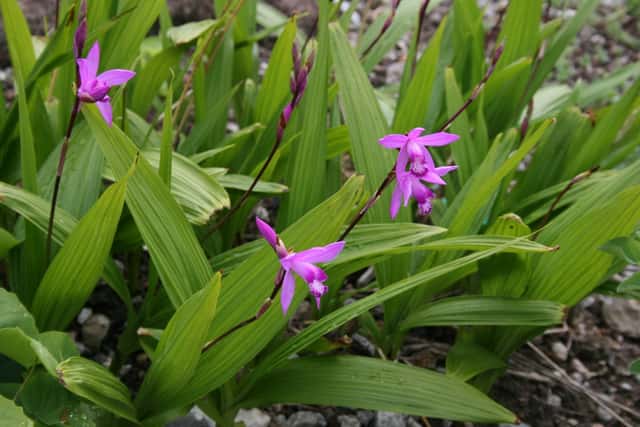
Chinese Ground Orchid (Bletilla striata) is a easy-care plant from the Orchidaceae family. Bletilla striata, known as the Chinese ground orchid or hyacinth orchid, is a hardy deciduous terrestrial orchid native to China, Japan, and Korea. Unlike tropical orchids, it grows directly in garden soil, producing pleated, lance-shaped leaves and upright spikes of purple-pink, hyacinth-like flowe...
Chinese Ground Orchid grows up to 45cm, spread of 30cm, watering every 4 days, 5°C – 29°C. It is suitable for indoor environments and safe for pets.
Unlike many tropical plants, Chinese Ground Orchid tolerates watering mistakes. Best for beginners. Unlike many popular species, Chinese Ground Orchid is safe to keep around pets. Without adequate drainage, root rot can develop within 8 days.
How to Care for Chinese Ground Orchid?
TLDR: Chinese Ground Orchid needs Partial shade, watering every 4 days, and temperatures between 5-29°C with 40-70% humidity.
How Often Should You Water Chinese Ground Orchid?
Keep the soil evenly moist throughout spring and summer, but let it dry out between waterings in winter to prevent rot.
How Much Light Does Chinese Ground Orchid Need?
Provide morning sun with afternoon shade; too much direct sun can scorch the leaves, while too little reduces flowering.
What Is the Best Soil for Chinese Ground Orchid?
Use a humus-rich, well-draining soil amended with compost; avoid heavy clay that retains excess water.
What Pot Should You Use for Chinese Ground Orchid?
A wide, shallow terracotta or unglazed ceramic pot with drainage holes suits its shallow rhizome growth.
Care Schedule
Fertilize
Every 14 days
Repot
Every 730 days
What Is Chinese Ground Orchid and Where Does It Come From?
Bletilla striata, known as the Chinese ground orchid or hyacinth orchid, is a hardy deciduous terrestrial orchid native to China, Japan, and Korea. Unlike tropical orchids, it grows directly in garden soil, producing pleated, lance-shaped leaves and upright spikes of purple-pink, hyacinth-like flowers in spring and early summer.
How to Propagate Chinese Ground Orchid?
Pseudobulb Division
Divide only every 2-3 years to avoid stressing the plant; avoid dividing right before winter in cold climates.
- 1 Wait until the plant is dormant in late fall or early spring before flowering.
- 2 Dig up the clump carefully, keeping the pseudobulbs and roots intact.
- 3 Separate the pseudobulbs by hand, ensuring each division has at least 2-3 pseudobulbs and healthy roots.
- 4 Replant divisions immediately in well-draining, humus-rich soil at the same depth as before.
- 5 Water lightly and keep in partial shade until new growth appears.
Materials needed:
How Big Does Chinese Ground Orchid Grow?
TLDR: Chinese Ground Orchid can reach up to 45cm tall with Medium growth rate.
Max height
45cm
Spread
30cm
Growth rate
Medium
Foliage
Deciduous
Plant Uses
Ornamental
Great for decoration
Medicinal
Medicinal properties
Medicinal Uses
- Traditional Chinese medicine (Bai Ji) uses the dried rhizome to stop bleeding, heal wounds, and soothe stomach ulcers
Is your plant showing symptoms?
Click on the symptom to discover possible causes:
What Diseases Commonly Affect Chinese Ground Orchid?
TLDR: Chinese Ground Orchid is susceptible to 13 known diseases. Monitor regularly for early detection.
Root Rot
Root rot is a serious fungal disease that affects the root system of plants, causing them to decay and die. It is primarily caused by overwatering, poor drainage, or soil-borne fungi such as Pythium, Phytophthora, Rhizoctonia, and Fusarium. The disease thrives in waterlogged conditions where roots are deprived of oxygen, making them susceptible to fungal infection.
Powdery Mildew
Powdery mildew is a common fungal disease caused by various fungi species including Erysiphe, Podosphaera, Oïdium, and Leveillula. It affects over 10,000 plant species worldwide. The disease thrives in warm, dry climates with high humidity and appears as a distinctive white powdery coating on plant surfaces.
Rust
Rust is a common fungal disease caused by fungi in the order Pucciniales that affects a wide variety of plants. The disease gets its name from the characteristic orange, yellow, or reddish-brown pustules that appear on leaves, resembling metal rust. This obligate fungal parasite requires living plants to survive and can cause significant economic losses in agricultural crops.
Leaf Spot
Leaf spot is a common fungal disease caused by various pathogens including Alternaria, Ascochyta, Colletotrichum, Septoria, and Venturia. It primarily affects leaves, causing discolored spots that can lead to premature leaf drop if left untreated.
Meaning & Symbolism
In Chinese culture, Bletilla striata symbolizes resilience, refinement, and scholarly virtue.
Fun Facts
Despite looking tropical, Bletilla striata is one of the hardiest orchids and can survive freezing winters outdoors.
Its dried rhizome, called Bai Ji, has been used in traditional Chinese medicine for centuries to stop bleeding and heal wounds.
Unlike most orchids, it grows in ordinary garden soil rather than as an epiphyte on trees.
Frequently asked questions
Is Bletilla striata toxic to cats or dogs?
Can Bletilla striata survive winter outdoors?
Why is my Bletilla striata not flowering?
How often should I water Chinese ground orchid?
Compare with similar plants
| Attribute | Difficulty | Light | Watering | Pet Safe |
|---|---|---|---|---|
| Field Maple | Easy | Bright indirect | 14d | ✓ |
| Silver Birch | Easy | Direct sun | 14d | ✓ |
| Common Blanketflower | Easy | Direct sun | 10d | ✓ |
| Cushion Bush | Easy | Direct sun | 14d | ✓ |





