Rosaceae
Chinese Photinia: Low Water Needs
Photinia serratifolia
Plant in full sun to partial shade in well-drained, slightly acidic soil. Water regularly, especially when young, but avoid waterlogged conditions. Tolerates hard pruning which encourages the ornamental red new growth. Hardy to -15°C (USDA Zone 6).
Every 14 days
Bright indirect
-15° - 38°C
40% - 70%
Categories
What is Chinese Photinia?
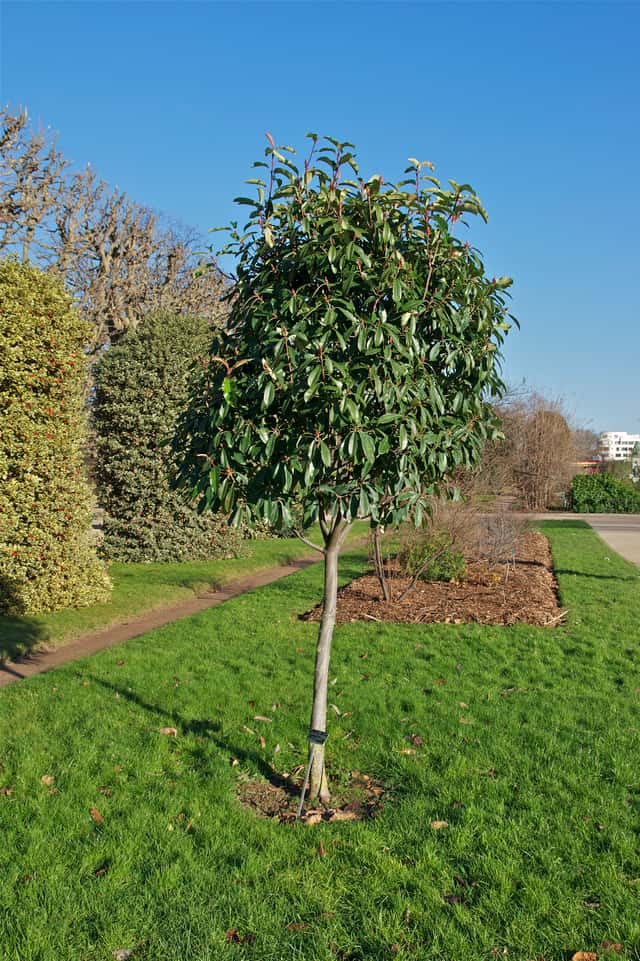
Chinese Photinia (Photinia serratifolia) is a easy-care plant from the Rosaceae family. Photinia serratifolia, commonly known as Chinese Photinia or Oriental Photinia, is a broadleaf evergreen shrub or small tree in the Rosaceae family, native to China and Taiwan. It is prized for its striking new growth that emerges apple green to bronze or reddish-purple before maturing to glossy dar...
Chinese Photinia grows up to 9.0m, spread of 610cm, watering every 14 days, -15°C – 38°C, 40–70% humidity. It is not suitable for indoor environments and safe for pets.
Unlike many tropical plants, Chinese Photinia tolerates watering mistakes. Best for beginners. Unlike many popular species, Chinese Photinia is safe to keep around pets.
How to Care for Chinese Photinia?
TLDR: Chinese Photinia needs Bright indirect, watering every 14 days, and temperatures between -15-38°C with 40-70% humidity.
How Often Should You Water Chinese Photinia?
Water deeply every 7–14 days, adjusting for climate and soil drainage. Established plants are drought-tolerant but appreciate consistent moisture during summer heat. Always water at the base — wet foliage promotes fungal leaf spot disease.
How Much Light Does Chinese Photinia Need?
Chinese Photinia thrives in full sun (at least 6 hours of direct sun daily), which intensifies the ornamental red color of new growth and promotes flowering. It tolerates partial shade but produces less vibrant foliage color and fewer blooms.
What Is the Best Soil for Chinese Photinia?
Prefers well-drained, fertile loamy or sandy soil with a slightly acidic to neutral pH of 5.5–7.0. Intolerant of chalky or alkaline soils and poorly drained clay. Amend heavy clay soils with organic compost to improve drainage and prevent root rot.
Care Schedule
Fertilize
Every 14 days
Misting
Every 3 days
Rotate
Every 7 days
Repot
Every 365 days
What Is Chinese Photinia and Where Does It Come From?
Photinia serratifolia, commonly known as Chinese Photinia or Oriental Photinia, is a broadleaf evergreen shrub or small tree in the Rosaceae family, native to China and Taiwan. It is prized for its striking new growth that emerges apple green to bronze or reddish-purple before maturing to glossy dark green. In spring, it bears terminal clusters of small, white, mildly fragrant flowers followed by small red pome fruits that persist into winter, providing wildlife value. A fast-growing, adaptable plant widely used for hedging, screening, and ornamental planting in temperate gardens worldwide.
How Big Does Chinese Photinia Grow?
TLDR: Chinese Photinia can reach up to 9.0m tall with Medium growth rate.
Max height
9.0m
Spread
6.1m
Growth rate
Medium
Foliage
Evergreen
Warning: Toxic Plant
This plant can be toxic if ingested. Keep out of reach of:
Plant Uses
Ornamental
Great for decoration
Is your plant showing symptoms?
Click on the symptom to discover possible causes:
What Diseases Commonly Affect Chinese Photinia?
TLDR: Chinese Photinia is susceptible to 7 known diseases. Monitor regularly for early detection.
Fire Blight
Fire blight is a highly destructive and contagious bacterial disease caused by Erwinia amylovora. It primarily affects plants in the Rosaceae family, including apple, pear, quince trees, and various ornamental plants. The disease can destroy an entire orchard in a single growing season under ideal conditions, with the bacterium moving approximately 11 inches per week in new growth.
Powdery Mildew
Powdery mildew is a common fungal disease caused by various fungi species including Erysiphe, Podosphaera, Oïdium, and Leveillula. It affects over 10,000 plant species worldwide. The disease thrives in warm, dry climates with high humidity and appears as a distinctive white powdery coating on plant surfaces.
Root Rot
Root rot is a serious fungal disease that affects the root system of plants, causing them to decay and die. It is primarily caused by overwatering, poor drainage, or soil-borne fungi such as Pythium, Phytophthora, Rhizoctonia, and Fusarium. The disease thrives in waterlogged conditions where roots are deprived of oxygen, making them susceptible to fungal infection.
Anthracnose
Anthracnose is a fungal disease caused by fungi in the genus Colletotrichum that affects many plants, including vegetables, fruits, and trees. The disease thrives in cool, wet conditions, causing dark, sunken lesions on leaves, stems, flowers, and fruits.
Meaning & Symbolism
Represents vitality and renewal due to its striking red new growth in spring.
Fun Facts
The genus name 'Photinia' derives from the Greek 'photeinos', meaning shining — a nod to the glossy, lustrous mature leaves.
Chinese Photinia flowers have a notably pungent odor, often likened to almonds or apple seeds, caused by the presence of cyanogenic glycosides in the plant tissues.
It is one of the most disease-resistant Photinia species, particularly regarding Entomosporium leaf spot — a major disease that devastates the popular Fraser's Photinia hybrid.
In China, it is called 石楠 (Shí Nán) and has been cultivated in imperial and classical gardens for centuries.
The red berries persist well into winter and are an important food source for birds such as thrushes and waxwings.
Frequently asked questions
Is Chinese Photinia toxic to pets?
How often should I water my Chinese Photinia?
Why does my Photinia have red or brown spots on the leaves?
How tall does Chinese Photinia grow?
Compare with similar plants
| Attribute | Difficulty | Light | Watering | Pet Safe |
|---|---|---|---|---|
| Field Maple | Easy | Bright indirect | 14d | ✓ |
| Silver Birch | Easy | Direct sun | 14d | ✓ |
| Common Blanketflower | Easy | Direct sun | 10d | ✓ |
| Cushion Bush | Easy | Direct sun | 14d | ✓ |





