Fabaceae
Chinese Redbud (Cercis chinensis) Care Guide
Cercis chinensis
Plant Chinese redbud in full sun to partial shade with well-draining, slightly acidic to neutral soil. Water regularly during the first two years to establish a deep root system, then reduce to occasional deep watering during dry spells. Fertilize lightly once a year in early spring and prune after flowering to shape.
Every 7 days
Bright indirect
-20° - 35°C
30% - 70%
Categories
What is Chinese Redbud?
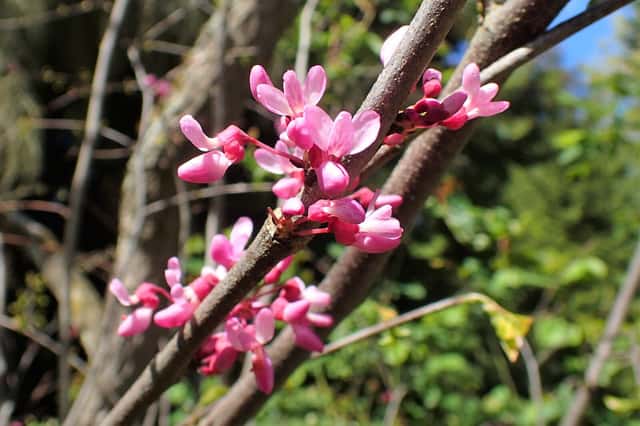
Chinese Redbud (Cercis chinensis) is a medium-care plant from the Fabaceae family. Cercis chinensis, commonly known as Chinese redbud, is a deciduous flowering shrub or small tree native to central China. Prized for its spectacular display of rosy-pink to magenta flowers that cover bare branches in early to mid-spring before the heart-shaped leaves emerge, it is a popular ornament...
Chinese Redbud grows up to 4.5m, spread of 450cm, watering every 7 days, -20°C – 35°C, 30–70% humidity. It is not suitable for indoor environments and safe for pets.
Unlike many popular species, Chinese Redbud is safe to keep around pets.
How to Care for Chinese Redbud?
TLDR: Chinese Redbud needs Bright indirect, watering every 7 days, and temperatures between -20-35°C with 30-70% humidity.
How Often Should You Water Chinese Redbud?
Water young plants once a week during the growing season, soaking the root zone deeply. Established plants are moderately drought tolerant and only need supplemental water during prolonged dry periods.
How Much Light Does Chinese Redbud Need?
Best flowering occurs in full sun, though Chinese redbud tolerates partial shade, especially in hot climates where some afternoon shade prevents leaf scorch.
What Is the Best Soil for Chinese Redbud?
Use well-draining, loamy soil enriched with organic matter. Avoid heavy, waterlogged clay; a slightly acidic to neutral pH (6.0-7.5) is ideal.
What Pot Should You Use for Chinese Redbud?
If grown in a container while young, choose a wide, deep pot with drainage holes to accommodate the taproot; terracotta helps prevent waterlogging.
Care Schedule
Fertilize
Every 365 days
What Is Chinese Redbud and Where Does It Come From?
Cercis chinensis, commonly known as Chinese redbud, is a deciduous flowering shrub or small tree native to central China. Prized for its spectacular display of rosy-pink to magenta flowers that cover bare branches in early to mid-spring before the heart-shaped leaves emerge, it is a popular ornamental in gardens, courtyards, and as a specimen plant. Left unpruned it typically grows as a multi-stemmed shrub reaching 2-4.5 m tall, though it can be trained into a small single-trunk tree.
How to Propagate Chinese Redbud?
Seed propagation
Fresh seed germinates far better than old seed; scarification and cold stratification are both essential to break dormancy.
- 1 Collect ripe seed pods in autumn and extract the seeds
- 2 Scarify the seed coat lightly with sandpaper or a file
- 3 Cold-stratify the seeds in moist sand in the refrigerator for 8-10 weeks
- 4 Sow the stratified seeds in well-draining potting mix in early spring
- 5 Keep the soil consistently moist until germination
Materials needed:
Softwood cutting
Rooting success is inconsistent; using rooting hormone and bottom heat improves the odds significantly.
- 1 Take a 10-15 cm softwood cutting from new growth in early summer
- 2 Remove the lower leaves and dip the cut end in rooting hormone
- 3 Insert the cutting into a moist, well-draining rooting medium
- 4 Cover with a plastic bag or place in a propagator to keep humidity high
- 5 Keep in bright, indirect light until roots form
Materials needed:
How Big Does Chinese Redbud Grow?
TLDR: Chinese Redbud can reach up to 4.5m tall with Medium growth rate.
Max height
4.5m
Spread
4.5m
Growth rate
Medium
Foliage
Deciduous
Plant Uses
Ornamental
Great for decoration
Medicinal Uses
- Traditional bark decoction for blood circulation (folk use only, not clinically verified)
Culinary Uses
- Edible flowers used in salads or fritters in some regional cuisines
Is your plant showing symptoms?
Click on the symptom to discover possible causes:
What Diseases Commonly Affect Chinese Redbud?
TLDR: Chinese Redbud is susceptible to 2 known diseases. Monitor regularly for early detection.
Canker
Canker is a disease caused by various fungi and bacteria that create necrotic, sunken areas on bark of branches, stems, and trunks. Pathogens enter through wounds and natural openings, especially when plants are stressed. Canker can gradually weaken or kill branches by disrupting water and nutrient flow.
Verticillium Wilt
Verticillium wilt is a soil-borne fungal disease caused primarily by the fungi Verticillium dahliae and V. albo-atrum. These pathogens infect plant roots and grow within the vascular tissues, blocking water and nutrient transport, resulting in wilting and eventual plant death. The disease affects over 350 plant species including vegetables, fruits, ornamental flowers, and trees. The fungi can survive in soil for more than 10 years as resistant structures called microsclerotia.
Meaning & Symbolism
In Chinese culture, Cercis chinensis is closely associated with brotherhood and family unity, since its clusters of blossoms growing directly from old wood are seen as a symbol of siblings staying close together.
Fun Facts
Its flowers emerge directly from old wood and even the trunk, a trait called cauliflory.
It belongs to the legume family (Fabaceae), the same family as peas and beans.
In China it has long symbolized family unity and brotherly love.
Frequently asked questions
When does Chinese redbud bloom?
Is Cercis chinensis toxic to pets?
How much sun does Chinese redbud need?
What diseases affect Chinese redbud?
How fast does Chinese redbud grow?
Compare with similar plants
| Attribute | Difficulty | Light | Watering | Pet Safe |
|---|---|---|---|---|
| Dark Fieldcap | Medium | Low light | 2d | ⚠️ |
| Azalea | Medium | Partial shade | 3d | ⚠️ |
| Muriel's Bamboo | Medium | Partial shade | 3d | ✓ |
| Bougainvillea | Medium | Direct sun | 7d | ⚠️ |




