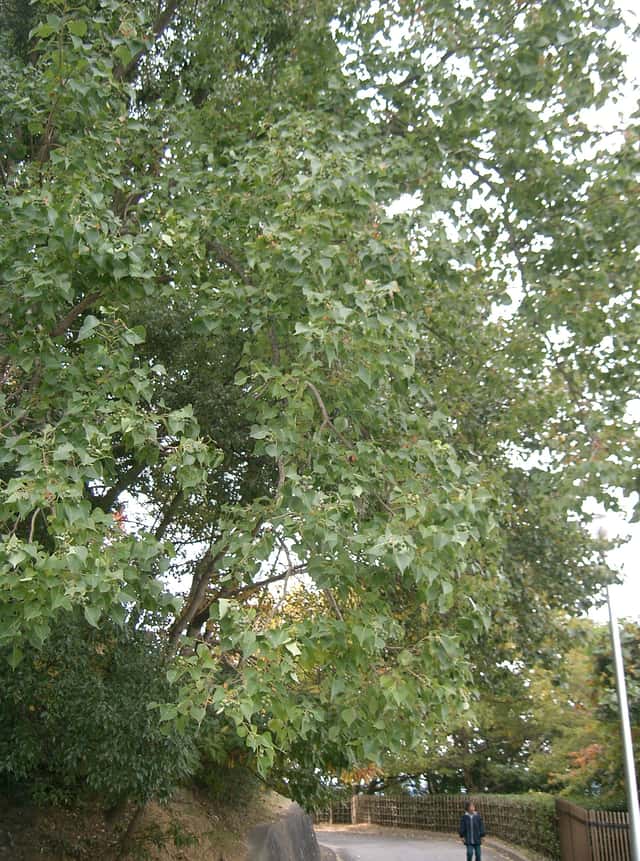
Euphorbiaceae
Chinese Tallow Tree (Triadica sebifera)
Triadica sebifera
A hardy, easy-to-grow outdoor tree. Prefers full sun, tolerates a wide range of soils, and is drought-tolerant once established. Annual spring pruning helps manage vigorous growth. Fertilize monthly during the growing season.
Every 10 days
Direct sun
-5° - 38°C
40% - 80%
Categories
What is Chinese Tallow Tree?
Chinese Tallow Tree (Triadica sebifera) is a easy-care plant from the Euphorbiaceae family. The Chinese tallow tree (Triadica sebifera) is a fast-growing deciduous tree native to China and Japan, belonging to the Euphorbiaceae family. It is widely cultivated for its spectacular autumn foliage — leaves turn brilliant shades of red, orange, and yellow — and for its waxy white seeds that rese...
Chinese Tallow Tree grows up to 12.0m, spread of 900cm, watering every 10 days, -5°C – 38°C, 40–80% humidity. It is not suitable for indoor environments and not safe for pets.
Unlike many tropical plants, Chinese Tallow Tree tolerates watering mistakes. Best for beginners. Without precautions, ingestion can cause irritation in pets. Keep out of reach of cats and dogs.
How to Care for Chinese Tallow Tree?
TLDR: Chinese Tallow Tree needs Direct sun, watering every 10 days, and temperatures between -5-38°C with 40-80% humidity.
How Often Should You Water Chinese Tallow Tree?
Water regularly during the first 1–2 years of establishment. Mature trees tolerate moderate drought; water every 10 days during dry spells. Avoid waterlogged soil.
How Much Light Does Chinese Tallow Tree Need?
Plant in full sun (minimum 6 hours of direct sunlight per day). Tolerates partial shade, but growth is more vigorous and autumn color more intense in full sun.
What Is the Best Soil for Chinese Tallow Tree?
Adapts to clay, sandy, or loamy soils. Prefers well-draining soil with a pH of 5.5–8.0. Tolerates saline and compacted soils.
What Pot Should You Use for Chinese Tallow Tree?
Not recommended for container growing due to its tree-like stature. For ornamental use, plant directly in the ground.
Care Schedule
Fertilize
Every 30 days
Misting
Every 3 days
Rotate
Every 7 days
Repot
Every 365 days
What Is Chinese Tallow Tree and Where Does It Come From?
The Chinese tallow tree (Triadica sebifera) is a fast-growing deciduous tree native to China and Japan, belonging to the Euphorbiaceae family. It is widely cultivated for its spectacular autumn foliage — leaves turn brilliant shades of red, orange, and yellow — and for its waxy white seeds that resemble popcorn. The tree is considered invasive in subtropical regions, particularly the southeastern United States. All parts of the plant are toxic if ingested.
How to Propagate Chinese Tallow Tree?
Seed Propagation
No cold stratification required. Germination occurs within 2–4 weeks at temperatures above 64°F (18°C).
- 1 Collect mature seeds in autumn or winter
- 2 Sow in moist, well-draining substrate
- 3 Keep in a warm, bright location
- 4 Transplant when seedlings reach 6–8 inches tall
Materials needed:
Stem Cutting
Keep substrate consistently moist without waterlogging. Avoid direct sunlight until roots form.
- 1 Take semi-hardwood cuttings 6–8 inches long
- 2 Remove lower leaves
- 3 Dip the base in rooting hormone
- 4 Plant in moist substrate in a shaded location
Materials needed:
How Big Does Chinese Tallow Tree Grow?
TLDR: Chinese Tallow Tree can reach up to 12.0m tall with Fast growth rate.
Max height
12.0m
Spread
9.0m
Growth rate
Fast
Foliage
Deciduous
Warning: Toxic Plant
This plant can be toxic if ingested. Keep out of reach of:
Plant Uses
Ornamental
Great for decoration
Edible
Can be consumed
Medicinal
Medicinal properties
Medicinal Uses
- Leaves used topically in traditional Chinese medicine to treat boils
- Roots used to treat edema and constipation
Culinary Uses
- Seeds yield a vegetable tallow used as a cocoa butter substitute in the food industry
Is your plant showing symptoms?
Click on the symptom to discover possible causes:
What Diseases Commonly Affect Chinese Tallow Tree?
TLDR: Chinese Tallow Tree is susceptible to 7 known diseases. Monitor regularly for early detection.
Cercospora Leaf Spot
Cercospora leaf spot is a common fungal disease caused by Cercospora species that affects many plant types, particularly beets, roses, and leafy vegetables. The disease thrives in warm, humid conditions and can cause significant defoliation, reducing plant vigor and yield. It spreads rapidly through water splash, wind, and contaminated tools.
Aphids
Aphids are small, soft-bodied, pear-shaped insects (1/16 to 1/8 inch long) that feed by sucking nutrient-rich sap from plants. They reproduce rapidly and can quickly weaken plants, causing distorted growth and transmitting plant viruses. Aphids come in various colors including green, black, red, yellow, brown, and gray. They secrete honeydew, a sticky substance that attracts ants and encourages sooty mold growth.
Scale Insects
Scale insects are small sap-sucking pests that appear as brown, shell-like bumps on plant stems and leaves. There are over 25 species, divided into armored (hard) and unarmored (soft) scales. They feed by piercing plant tissue and extracting sap, which weakens the plant and can lead to yellowing, stunted growth, and even death if left untreated. They also excrete honeydew, which attracts ants and promotes sooty mold growth.
Leaf Spot
Leaf spot is a common fungal disease caused by various pathogens including Alternaria, Ascochyta, Colletotrichum, Septoria, and Venturia. It primarily affects leaves, causing discolored spots that can lead to premature leaf drop if left untreated.
Meaning & Symbolism
Symbol of resilience and adaptability; in invasive contexts, it represents the power of nature to cross boundaries.
Fun Facts
Its waxy white seeds resemble popcorn, earning it the popular nickname 'Popcorn Tree'
A single tree can produce over 100,000 seeds per year, explaining its invasive spread
Seed wax has been used for centuries in China to make candles and soap
It produces vibrant autumn foliage even in warm subtropical climates
Frequently asked questions
Is the Chinese tallow tree toxic to pets?
How often should I water the Chinese tallow tree?
Can the Chinese tallow tree grow in a container?
When does the autumn color appear?
Is the Chinese tallow tree invasive?
Compare with similar plants
| Attribute | Difficulty | Light | Watering | Pet Safe |
|---|---|---|---|---|
| Field Maple | Easy | Bright indirect | 14d | ✓ |
| Silver Birch | Easy | Direct sun | 14d | ✓ |
| Common Blanketflower | Easy | Direct sun | 10d | ✓ |
| Cushion Bush | Easy | Direct sun | 14d | ✓ |





