Fabaceae
Chinese Wisteria: Complete Care Guide
Wisteria sinensis
Thrives in full sun (at least 6 hours daily), fertile well-draining soil, and regular watering while establishing — once mature, it tolerates dry spells well. Twice-yearly pruning (summer and winter) is essential to control its vigorous growth and encourage flowering.
Every 7 days
Direct sun
-15° - 35°C
40% - 70%
Categories
What is Chinese Wisteria?
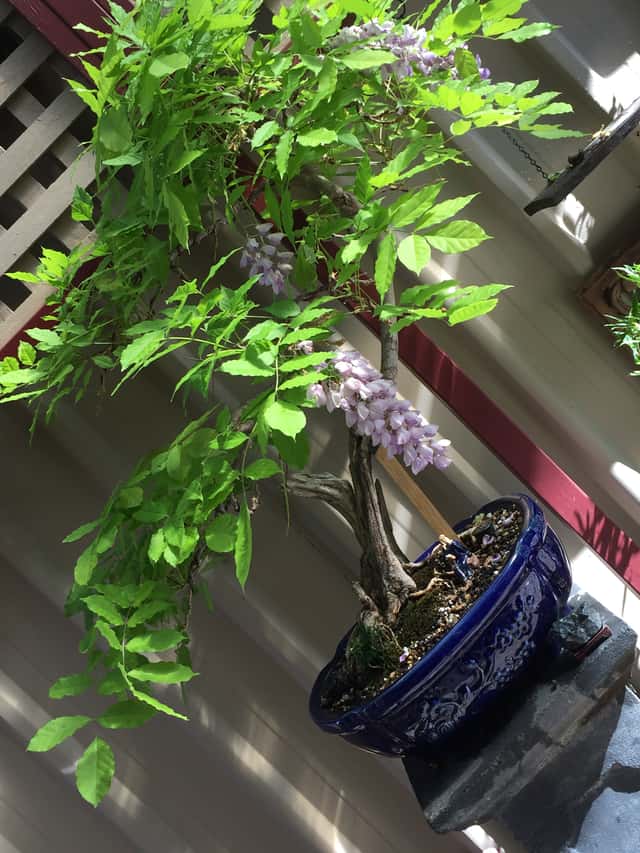
Chinese Wisteria (Wisteria sinensis) is a medium-care plant from the Fabaceae family. Chinese Wisteria (Wisteria sinensis) is a vigorous, woody deciduous climber native to China, belonging to the Fabaceae family. Widely grown on pergolas, arbors, and walls for its spectacular cascading racemes of fragrant flowers — up to 30 cm long, in shades of purple, violet, and lavender — that ap...
Chinese Wisteria grows up to 9.0m, spread of 900cm, watering every 7 days, -15°C – 35°C, 40–70% humidity. It is not suitable for indoor environments and not safe for pets.
Without precautions, ingestion can cause irritation in pets. Keep out of reach of cats and dogs.
How to Care for Chinese Wisteria?
TLDR: Chinese Wisteria needs Direct sun, watering every 7 days, and temperatures between -15-35°C with 40-70% humidity.
How Often Should You Water Chinese Wisteria?
Water deeply at the base, avoiding wetting the leaves and flowers, and let the topsoil dry out between waterings. Young plants need consistent moisture; established plants are quite drought tolerant.
How Much Light Does Chinese Wisteria Need?
Plant in full direct sun — at least 6 hours of sunlight a day. In partial shade it will grow but flower much less.
What Is the Best Soil for Chinese Wisteria?
Prefers fertile, slightly acidic to neutral soil (pH 6.0-7.5) with good drainage. Tolerates clay but will not tolerate waterlogging.
What Pot Should You Use for Chinese Wisteria?
Not well suited to small pots given its vigorous size; if container-grown, use a large, sturdy pot with excellent drainage and train it onto a strong support.
Care Schedule
Fertilize
Every 180 days
What Is Chinese Wisteria and Where Does It Come From?
Chinese Wisteria (Wisteria sinensis) is a vigorous, woody deciduous climber native to China, belonging to the Fabaceae family. Widely grown on pergolas, arbors, and walls for its spectacular cascading racemes of fragrant flowers — up to 30 cm long, in shades of purple, violet, and lavender — that appear in spring before the leaves emerge. Fast-growing and twining, it can reach many meters if left unchecked, so training it on sturdy structures is essential. Every part of the plant, especially the seeds and pods, is toxic to humans, dogs, and cats, potentially causing nausea, vomiting, and abdominal pain if ingested.
How to Propagate Chinese Wisteria?
Layering (ground layering)
The most reliable method for propagating specific cultivars, because it preserves the traits of the parent plant.
- 1 Choose a flexible, healthy branch close to the ground
- 2 Make a small cut in the bark where it will touch the soil
- 3 Bury that section of the branch, leaving the tip exposed, and secure it with a stake
- 4 Keep the soil moist until roots form
- 5 Once rooted, cut the branch from the parent plant and transplant it
Materials needed:
Semi-hardwood stem cutting
Success rate is lower than layering; use a humidity dome to keep moisture high.
- 1 Cut a 15-20 cm semi-hardwood stem in summer
- 2 Remove the lower leaves and apply rooting hormone
- 3 Plant in a light, well-draining potting mix
- 4 Keep in a humid environment with bottom heat until roots form
Materials needed:
How Big Does Chinese Wisteria Grow?
TLDR: Chinese Wisteria can reach up to 9.0m tall with Fast growth rate.
Max height
9.0m
Spread
9.0m
Growth rate
Fast
Foliage
Deciduous
Warning: Toxic Plant
This plant can be toxic if ingested. Keep out of reach of:
Plant Uses
Ornamental
Great for decoration
Aromatic
Pleasant fragrance
Is your plant showing symptoms?
Click on the symptom to discover possible causes:
What Diseases Commonly Affect Chinese Wisteria?
TLDR: Chinese Wisteria is susceptible to 10 known diseases. Monitor regularly for early detection.
Powdery Mildew
Powdery mildew is a common fungal disease caused by various fungi species including Erysiphe, Podosphaera, Oïdium, and Leveillula. It affects over 10,000 plant species worldwide. The disease thrives in warm, dry climates with high humidity and appears as a distinctive white powdery coating on plant surfaces.
Crown Gall
Crown gall is a bacterial disease caused by Agrobacterium tumefaciens that affects over 140 species of plants. The bacteria insert DNA into plant cells, causing them to divide uncontrollably and form large tumor-like growths (galls) primarily on roots, stems, and at the soil line. These galls restrict water and nutrient flow, severely impacting plant health and potentially killing the plant.
Phytophthora Root Rot
Disease caused by fungus-like organisms (oomycetes) that live in soil and can survive for years. It affects roots, stem, and crown of plants, being especially severe in waterlogged or poorly drained soils. It is the second most common cause of root rot in trees and shrubs.
Leaf Spot
Leaf spot is a common fungal disease caused by various pathogens including Alternaria, Ascochyta, Colletotrichum, Septoria, and Venturia. It primarily affects leaves, causing discolored spots that can lead to premature leaf drop if left untreated.
Meaning & Symbolism
In East Asian culture, wisteria symbolizes longevity, enduring love, and elegance, often associated with resilience due to its twisting, vigorous vine.
Fun Facts
A single wisteria vine can live for over a hundred years, becoming more spectacular with age.
The largest wisteria in the world, in Sierra Madre, California, covers over 4,000 square meters and weighs about 250 tons.
The genus Wisteria honors American anatomist Caspar Wistar.
Despite its beautiful flowers, every part of the plant — especially seeds and pods — is toxic if ingested.
Frequently asked questions
Is wisteria toxic to cats and dogs?
How long does it take for wisteria to bloom?
How often should I prune wisteria?
Does wisteria need support to grow?
Compare with similar plants
| Attribute | Difficulty | Light | Watering | Pet Safe |
|---|---|---|---|---|
| Dark Fieldcap | Medium | Low light | 2d | ⚠️ |
| Azalea | Medium | Partial shade | 3d | ⚠️ |
| Muriel's Bamboo | Medium | Partial shade | 3d | ✓ |
| Bougainvillea | Medium | Direct sun | 7d | ⚠️ |
Choose & Compare
Sources & References
- NC State Extension Gardener Plant Toolbox - Wisteria sinensis
- Gardenia.net - Wisteria: Plant Care and Growing Guide
- Gardening Know How - Wisteria Diseases
- RHS - Wisteria problems: frequently asked questions
- Terracota Jardinagem - Glicínia (Wisteria sp): Beleza e Cuidados Essenciais
- Plant Addicts - Blue Chinese Wisteria Tree




