Lardizabalaceae
Chocolate Vine (Akebia quinata) Care Guide
Akebia quinata
Easy to grow in well-drained, loamy soil with average moisture. Tolerates partial shade to full sun and is drought tolerant once established, but dislikes waterlogged soil. Prune after flowering to control its vigorous spread.
Every 7 days
Partial shade
-29° - 35°C
40% - 70%
Categories
What is Chocolate Vine?
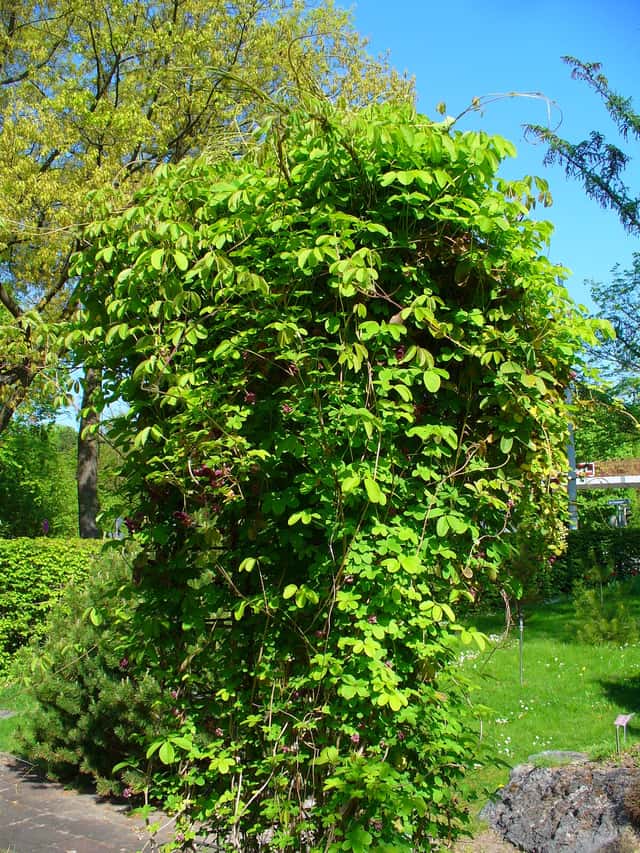
Chocolate Vine (Akebia quinata) is a easy-care plant from the Lardizabalaceae family. Akebia quinata, commonly known as chocolate vine, is a vigorous, twining, semi-evergreen to deciduous climber native to Japan, Korea and China. In spring, it produces clusters of small, fragrant, chocolate-scented flowers in shades of deep purple and maroon, followed in autumn by sausage-shaped, edi...
Chocolate Vine grows up to 12.0m, spread of 400cm, watering every 7 days, -29°C – 35°C, 40–70% humidity. It is not suitable for indoor environments and safe for pets.
Unlike many tropical plants, Chocolate Vine tolerates watering mistakes. Best for beginners. Unlike many popular species, Chocolate Vine is safe to keep around pets.
How to Care for Chocolate Vine?
TLDR: Chocolate Vine needs Partial shade, watering every 7 days, and temperatures between -29-35°C with 40-70% humidity.
How Often Should You Water Chocolate Vine?
Water regularly during the first two to three years to help the vine establish; afterwards it tolerates short dry spells well. Let the topsoil dry out between waterings and avoid soggy, waterlogged ground.
How Much Light Does Chocolate Vine Need?
Grows best in partial shade with some direct morning or evening sun; tolerates full sun in cooler climates and light shade in hotter regions.
What Is the Best Soil for Chocolate Vine?
Prefers loamy, well-draining soil rich in organic matter with a slightly acidic to neutral pH (6.0-7.0). Good drainage is essential to prevent root rot.
What Pot Should You Use for Chocolate Vine?
Best grown in the ground or a large container with excellent drainage and a sturdy trellis or support structure for climbing.
Care Schedule
Fertilize
Every 30 days
What Is Chocolate Vine and Where Does It Come From?
Akebia quinata, commonly known as chocolate vine, is a vigorous, twining, semi-evergreen to deciduous climber native to Japan, Korea and China. In spring, it produces clusters of small, fragrant, chocolate-scented flowers in shades of deep purple and maroon, followed in autumn by sausage-shaped, edible purple seed pods. Its five-lobed leaflets and rapid growth make it a popular choice for covering fences, pergolas and trellises, though it can become invasive in mild climates if left unchecked.
How to Propagate Chocolate Vine?
Semi-hardwood stem cuttings
Keep the growing medium consistently moist but not soggy, and mist occasionally to maintain humidity around the cutting.
- 1 Cut a 10-15 cm semi-hardwood stem section with two or three leaf nodes in mid to late summer
- 2 Remove the lower leaves and dip the cut end in rooting hormone
- 3 Insert the cutting into a moist, well-draining potting mix
- 4 Cover with a clear plastic bag or propagator lid to keep humidity high
- 5 Keep in bright, indirect light until new growth appears, then transplant
Materials needed:
Simple layering
Wounding the underside of the buried stem slightly can encourage faster root formation.
- 1 Choose a flexible, low-growing stem in spring
- 2 Bend the stem down and bury a section of it in the soil, leaving the tip exposed
- 3 Secure the buried section with a stake or wire pin
- 4 Keep the soil consistently moist until roots form
- 5 Once rooted, cut the new plant free from the parent vine and transplant
Materials needed:
How Big Does Chocolate Vine Grow?
TLDR: Chocolate Vine can reach up to 12.0m tall with Fast growth rate.
Max height
12.0m
Spread
4.0m
Growth rate
Fast
Foliage
Semi-evergreen
Plant Uses
Ornamental
Great for decoration
Edible
Can be consumed
Culinary Uses
- Ripe fruit pulp eaten raw
- Young shoots and leaves used in salads in some regions
Is your plant showing symptoms?
Click on the symptom to discover possible causes:
What Diseases Commonly Affect Chocolate Vine?
TLDR: Chocolate Vine is susceptible to 3 known diseases. Monitor regularly for early detection.
Root Rot
Root rot is a serious fungal disease that affects the root system of plants, causing them to decay and die. It is primarily caused by overwatering, poor drainage, or soil-borne fungi such as Pythium, Phytophthora, Rhizoctonia, and Fusarium. The disease thrives in waterlogged conditions where roots are deprived of oxygen, making them susceptible to fungal infection.
Aphids
Aphids are small, soft-bodied, pear-shaped insects (1/16 to 1/8 inch long) that feed by sucking nutrient-rich sap from plants. They reproduce rapidly and can quickly weaken plants, causing distorted growth and transmitting plant viruses. Aphids come in various colors including green, black, red, yellow, brown, and gray. They secrete honeydew, a sticky substance that attracts ants and encourages sooty mold growth.
Caterpillars
Caterpillars are the larval stage of moths and butterflies that feed voraciously on plant foliage, stems, flowers, and fruits. Common species include cabbage loopers, tomato hornworms, armyworms, and cutworms. These pests can cause extensive damage by consuming large amounts of plant tissue in a short time. They vary in size from small (1/4 inch) to large (5 inches), with colors ranging from green to brown, often featuring stripes or spots. Caterpillars are highly mobile and can quickly spread throughout gardens, making them one of the most destructive common pests.
Meaning & Symbolism
Symbolizes abundance and resilience, echoing its vigorous growth and generous, chocolate-scented blooms.
Fun Facts
The flowers give off a delicate scent often compared to chocolate or vanilla, especially on warm days.
Its edible autumn pods split open to reveal a sweet, jelly-like white pulp studded with small black seeds.
A single vine can grow 6 to 12 meters, quickly covering fences, pergolas and arbors.
Frequently asked questions
Is Akebia quinata invasive?
Is chocolate vine toxic to pets or humans?
Why has my chocolate vine not flowered?
How do I control the size of my chocolate vine?
Compare with similar plants
| Attribute | Difficulty | Light | Watering | Pet Safe |
|---|---|---|---|---|
| Field Maple | Easy | Bright indirect | 14d | ✓ |
| Silver Birch | Easy | Direct sun | 14d | ✓ |
| Common Blanketflower | Easy | Direct sun | 10d | ✓ |
| Cushion Bush | Easy | Direct sun | 14d | ✓ |





