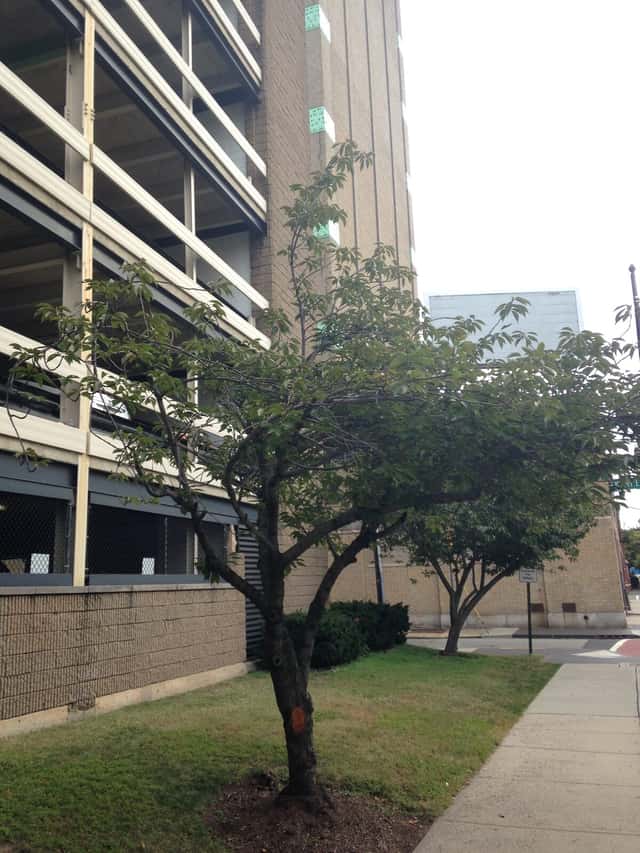
Rosaceae
Chokecherry (Prunus virginiana)
Prunus virginiana
Plant chokecherry in full sun to light shade and well-draining soil; it tolerates sandy, loamy, or clay ground and is drought-tolerant once established. Water deeply during the first year and afterward only in prolonged dry spells. Watch for black knot galls, powdery mildew, and tent caterpillars, and prune out diseased wood in winter.
Every 21 days
Direct sun
° - °C
% - %
Categories
What is Chokecherry?
Chokecherry (Prunus virginiana) is a medium-care plant from the Rosaceae family. Prunus virginiana, known as chokecherry, is a fast-growing, suckering deciduous shrub or small tree native to nearly every U.S. state and Canadian province. In late spring it produces long, fragrant, white flower clusters (racemes) that mature into pea-sized berries, ripening from red to nearly blac...
Chokecherry grows up to 9.0m, spread of 750cm, watering every 21 days. It is not suitable for indoor environments and not safe for pets.
Without precautions, ingestion can cause irritation in pets. Keep out of reach of cats and dogs.
How to Care for Chokecherry?
TLDR: Chokecherry needs Direct sun, watering every 21 days, and temperatures between 15-30°C with 40-70% humidity.
How Often Should You Water Chokecherry?
Water new plantings deeply once a week for the first growing season. Established chokecherries are drought-tolerant and typically only need supplemental water after three or more weeks without rain.
How Much Light Does Chokecherry Need?
Give chokecherry full sun (6+ hours of direct light daily) for the best flowering and fruit set; it will also grow, though bloom less, in partial shade.
What Is the Best Soil for Chokecherry?
Chokecherry adapts to sandy, loamy, or clay soils as long as drainage is adequate; it prefers a slightly acidic to neutral pH around 5.5-7.5 and dislikes constantly soggy ground.
What Pot Should You Use for Chokecherry?
Chokecherry is rarely grown long-term in containers; if starting one in a pot, use a large (40+ L) nursery container with drainage holes and well-draining soil, then transplant into the ground within 1-2 years.
What Is Chokecherry and Where Does It Come From?
Prunus virginiana, known as chokecherry, is a fast-growing, suckering deciduous shrub or small tree native to nearly every U.S. state and Canadian province. In late spring it produces long, fragrant, white flower clusters (racemes) that mature into pea-sized berries, ripening from red to nearly black by late summer. Chokecherry is prized by gardeners for its wildlife value and spring bloom, and by foragers for its tart fruit, traditionally cooked into jellies, syrups, and wine. Every other part of the plant -- bark, leaves, twigs, and seed pits -- contains cyanogenic compounds and is toxic if chewed or wilted, so only the ripe, de-seeded fruit pulp is safe to eat.
How to Propagate Chokecherry?
Seed propagation
Lightly nicking or scarifying the hard seed coat before stratification can improve and speed up germination.
- 1 Collect ripe, dark purple-black fruit in late summer and remove the pulp from the seeds
- 2 Cold-stratify the cleaned seeds in moist sand or peat in the refrigerator for 90-120 days, or sow outdoors in fall so winter cold does the stratifying naturally
- 3 Sow stratified seeds about 1 cm deep in well-draining soil in early spring
- 4 Keep the soil consistently moist until seedlings emerge
Materials needed:
Softwood stem cutting
Keep the growing medium evenly moist but not waterlogged, and remove the plastic cover gradually to acclimate the rooted cutting.
- 1 Take a 15-20 cm (6-8 in) softwood cutting from a healthy branch in late spring or early summer
- 2 Remove the lower leaves and dip the cut end in rooting hormone
- 3 Insert the cutting into a pot of well-draining soil and water it in
- 4 Cover with a clear plastic bag to hold humidity and place in bright, indirect light
- 5 Transplant once roots have developed
Materials needed:
Root sucker transplanting
Because chokecherry spreads readily by suckers, this is the easiest and most reliable propagation method.
- 1 Locate a healthy root sucker growing away from the parent plant in dormant season
- 2 Dig around the sucker to expose the connecting root
- 3 Sever the sucker from the parent root with clean pruners, keeping as many fine roots attached as possible
- 4 Replant the sucker immediately at the same depth and water thoroughly
Materials needed:
How Big Does Chokecherry Grow?
TLDR: Chokecherry can reach up to 9.0m tall with Medium growth rate.
Max height
9.0m
Spread
7.5m
Growth rate
Medium
Foliage
Deciduous
Warning: Toxic Plant
This plant can be toxic if ingested. Keep out of reach of:
Plant Uses
Edible
Can be consumed
Ornamental
Great for decoration
Medicinal
Medicinal properties
Medicinal Uses
- Inner bark traditionally brewed as a tea for coughs, colds, and sore throats
- Used historically as a mild sedative and to ease diarrhea and stomach upset
- Bark preparations applied to wounds in traditional practice
Culinary Uses
- Ripe, fully dark fruit cooked into jelly, syrup, and wine
- A key ingredient in traditional pemmican
- Fruit juice used to flavor beverages and sauces
Is your plant showing symptoms?
Click on the symptom to discover possible causes:
What Diseases Commonly Affect Chokecherry?
TLDR: Chokecherry is susceptible to 10 known diseases. Monitor regularly for early detection.
Canker
Canker is a disease caused by various fungi and bacteria that create necrotic, sunken areas on bark of branches, stems, and trunks. Pathogens enter through wounds and natural openings, especially when plants are stressed. Canker can gradually weaken or kill branches by disrupting water and nutrient flow.
Phytoplasma
Powdery Mildew
Powdery mildew is a common fungal disease caused by various fungi species including Erysiphe, Podosphaera, Oïdium, and Leveillula. It affects over 10,000 plant species worldwide. The disease thrives in warm, dry climates with high humidity and appears as a distinctive white powdery coating on plant surfaces.
Rust
Rust is a common fungal disease caused by fungi in the order Pucciniales that affects a wide variety of plants. The disease gets its name from the characteristic orange, yellow, or reddish-brown pustules that appear on leaves, resembling metal rust. This obligate fungal parasite requires living plants to survive and can cause significant economic losses in agricultural crops.
Meaning & Symbolism
Chokecherry held deep significance for many Indigenous peoples of North America: the Navajo considered it sacred and carved its wood into prayer sticks, while the Cheyenne and Blackfoot valued its fruit so highly they called it simply 'berry.' It remains a symbol of resilience and sustenance on the Northern Plains.
Fun Facts
The Cheyenne and Blackfoot valued the fruit so highly they simply called it "berry."
Chokecherry is the larval host plant for the Eastern Tiger Swallowtail butterfly.
Ripe fruit was pounded whole (pit and all, in small amounts) into pemmican by many Plains peoples.
Despite its toxicity, chokecherry is South Dakota's official state fruit.
Frequently asked questions
Is chokecherry toxic to dogs and cats?
Can people eat chokecherries?
How much sun does chokecherry need?
What is black knot and how do I manage it?
How fast does chokecherry grow and how big does it get?
Compare with similar plants
| Attribute | Difficulty | Light | Watering | Pet Safe |
|---|---|---|---|---|
| Dark Fieldcap | Medium | Low light | 2d | ⚠️ |
| Azalea | Medium | Partial shade | 3d | ⚠️ |
| Muriel's Bamboo | Medium | Partial shade | 3d | ✓ |
| Bougainvillea | Medium | Direct sun | 7d | ⚠️ |
Choose & Compare
Sources & References
- Chokecherry (Prunus virginiana) - How to Grow & Care Guide
- Common Chokecherry - The Morton Arboretum
- Prunus virginiana - NC State Extension Plant Toolbox
- Toxic and Non-toxic Plants: Choke Cherry - ASPCA
- Molecular Detection of Apiosporina morbosa, Causal Agent of Black Knot in Prunus virginiana - Plant Disease
- Mapping X-Disease Phytoplasma Resistance in Prunus virginiana
- Chokecherry: Native Tree with Edible Uses




