Ranunculaceae
Helleborus niger — Christmas Rose Care Guide
Helleborus niger
A slow-growing, low-maintenance woodland perennial that thrives in partial to full shade with rich, well-drained, neutral-to-alkaline soil. Keep the soil evenly moist but never waterlogged, protect the crown from standing water, and remove old, tattered foliage in early spring to prevent fungal disease and make way for new growth.
Every 7 days
Partial shade
° - °C
% - %
Categories
What is Christmas Rose?
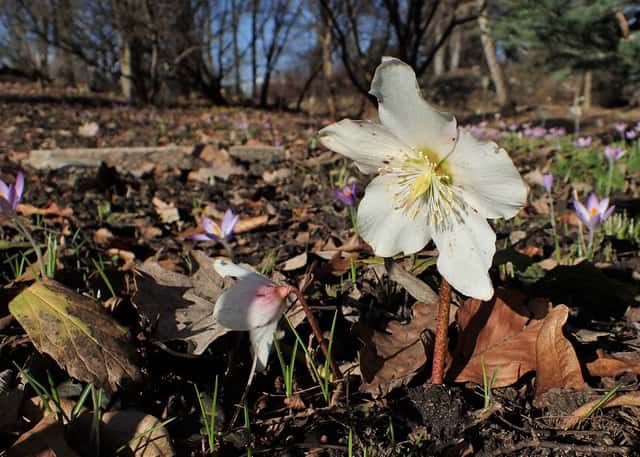
Christmas Rose (Helleborus niger) is a medium-care plant from the Ranunculaceae family. Helleborus niger, commonly called the Christmas rose, is an evergreen perennial in the buttercup family (Ranunculaceae) native to alpine and open woodlands of central and southern Europe. Prized for its large, bowl-shaped white flowers with golden-yellow stamens that open in the depths of winter — o...
Christmas Rose grows up to 30cm, spread of 40cm, watering every 7 days. It is suitable for indoor environments and not safe for pets.
Without precautions, ingestion can cause irritation in pets. Keep out of reach of cats and dogs. Without adequate drainage, root rot can develop within 14 days.
How to Care for Christmas Rose?
TLDR: Christmas Rose needs Partial shade, watering every 7 days, and temperatures between 15-30°C with 40-70% humidity.
How Often Should You Water Christmas Rose?
Water deeply whenever the top few centimeters of soil dry out, keeping the soil consistently but lightly moist. Avoid wetting the crown and foliage — water at the base to reduce the risk of crown rot and leaf spot.
How Much Light Does Christmas Rose Need?
Give it partial to full shade in summer beneath deciduous trees, but allow more winter sun exposure once nearby trees lose their leaves — this helps trigger and sustain its midwinter bloom.
What Is the Best Soil for Christmas Rose?
Plant in organically rich, well-draining soil with a neutral to slightly alkaline pH (6.0-8.0). Amend heavy clay with compost and grit to prevent waterlogging around the crown.
What Pot Should You Use for Christmas Rose?
Use a wide, shallow terracotta or unglazed ceramic pot with generous drainage holes — the material's porosity helps excess moisture escape and protects the crown from rot.
Care Schedule
Fertilize
Every 180 days
What Is Christmas Rose and Where Does It Come From?
Helleborus niger, commonly called the Christmas rose, is an evergreen perennial in the buttercup family (Ranunculaceae) native to alpine and open woodlands of central and southern Europe. Prized for its large, bowl-shaped white flowers with golden-yellow stamens that open in the depths of winter — often piercing through snow — it forms a low, bushy clump of dark green, leathery, palmately divided leaves. Every part of the plant is toxic if ingested, so it is grown strictly as an ornamental.
How to Propagate Christmas Rose?
Clump division
Handle roots gently since hellebores resent disturbance and may sulk for a season after division; wear gloves as sap can irritate skin.
- 1 Lift the established clump carefully in early fall after flowering has finished, keeping as much root intact as possible.
- 2 Wash off excess soil so you can see the natural crown divisions.
- 3 Use a clean, sharp knife to split the crown into sections, each with at least one healthy growth bud and a portion of roots.
- 4 Replant divisions immediately at the same depth in enriched, well-draining soil, spacing them well apart.
- 5 Water thoroughly and keep consistently moist until new growth appears.
Materials needed:
Seed sowing
Fresh seed germinates far better than stored seed; patience is essential, as hellebores are slow to reach flowering size from seed.
- 1 Collect ripe seed pods in early summer just as they begin to split open.
- 2 Sow seed fresh (it loses viability quickly) onto a gritty, free-draining seed compost.
- 3 Cover lightly with grit and place the tray outdoors in a shaded, sheltered spot to experience natural winter chilling.
- 4 Keep the compost consistently moist; germination is often slow and erratic, sometimes taking a full year.
- 5 Transplant seedlings into individual pots once they have their first true leaves, and grow on for 2-3 years before flowering.
Materials needed:
How Big Does Christmas Rose Grow?
TLDR: Christmas Rose can reach up to 30cm tall with Slow growth rate.
Max height
30cm
Spread
40cm
Growth rate
Slow
Foliage
Evergreen
Warning: Toxic Plant
This plant can be toxic if ingested. Keep out of reach of:
Plant Uses
Ornamental
Great for decoration
Ground Cover
Soil coverage
Is your plant showing symptoms?
Click on the symptom to discover possible causes:
What Diseases Commonly Affect Christmas Rose?
TLDR: Christmas Rose is susceptible to 5 known diseases. Monitor regularly for early detection.
Leaf Spot
Leaf spot is a common fungal disease caused by various pathogens including Alternaria, Ascochyta, Colletotrichum, Septoria, and Venturia. It primarily affects leaves, causing discolored spots that can lead to premature leaf drop if left untreated.
Crown Rot
Crown rot is a serious fungal disease that attacks the crown (base) of the plant where the stem meets the soil. It is caused by various fungal pathogens including Phytophthora, Fusarium, and Rhizoctonia. The disease thrives in waterlogged conditions and can quickly spread to kill the entire plant if not addressed promptly.
Downy Mildew
Downy mildew is a fungal-like disease caused by oomycetes (water molds) that thrives in cool, wet conditions. It affects a wide range of plants, causing yellowing leaves with fuzzy white-gray growth underneath, leading to defoliation and reduced yields if left untreated.
Aphids
Aphids are small, soft-bodied, pear-shaped insects (1/16 to 1/8 inch long) that feed by sucking nutrient-rich sap from plants. They reproduce rapidly and can quickly weaken plants, causing distorted growth and transmitting plant viruses. Aphids come in various colors including green, black, red, yellow, brown, and gray. They secrete honeydew, a sticky substance that attracts ants and encourages sooty mold growth.
Meaning & Symbolism
Named for its habit of flowering around Christmas, Helleborus niger has long symbolized hope, purity, and the nativity of Christ — a bloom of optimism appearing when the rest of the garden lies dormant.
Fun Facts
Its common name comes from its habit of blooming around Christmas, sometimes pushing blooms up through snow.
Despite the name "black hellebore," the flowers are white — the name refers to its black roots.
All parts of the plant, including the roots and sap, are toxic, a defense that has helped it survive for centuries in the wild.
It belongs to the buttercup family, not the rose family, despite its common name.
Frequently asked questions
Is Helleborus niger toxic to pets?
Why won't my Christmas rose bloom?
How often should I water Helleborus niger?
Can Helleborus niger be grown indoors?
Compare with similar plants
| Attribute | Difficulty | Light | Watering | Pet Safe |
|---|---|---|---|---|
| Dark Fieldcap | Medium | Low light | 2d | ⚠️ |
| Azalea | Medium | Partial shade | 3d | ⚠️ |
| Muriel's Bamboo | Medium | Partial shade | 3d | ✓ |
| Bougainvillea | Medium | Direct sun | 7d | ⚠️ |




