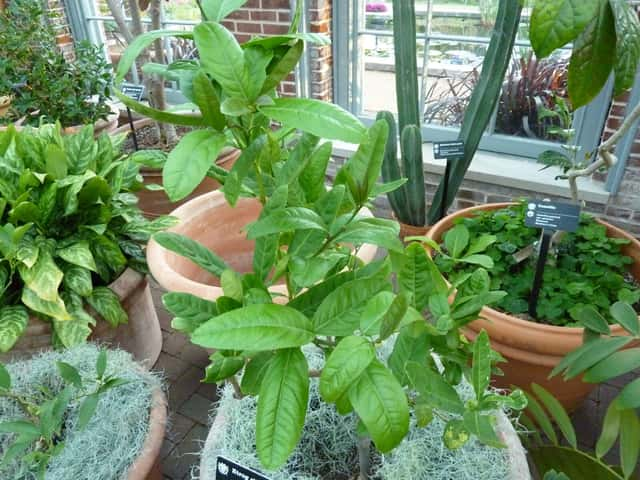
Rutaceae
Citron: How to Grow Citrus medica
Citrus medica
Full sun, rich well-draining soil, regular watering without waterlogging, and protection from frost and wind. In cold climates grow it in a large container and bring it under cover for winter.
Every 7 days
Direct sun
3° - °C
% - %
Categories
What is Citron?
Citron (Citrus medica) is a medium-care plant from the Rutaceae family. The citron (Citrus medica) is an evergreen shrub or small tree in the Rutaceae family, native to the foothills of the Himalayas and one of the original citrus species: lemons and limes descend from crosses with it. It grows slowly to 2.5-4.5 m, with irregular spiny branches and lemon-scented leaves....
Citron grows up to 4.5m, spread of 400cm, watering every 7 days. It is not suitable for indoor environments and not safe for pets.
Without precautions, ingestion can cause irritation in pets. Keep out of reach of cats and dogs.
How to Care for Citron?
TLDR: Citron needs Direct sun, watering every 7 days, and temperatures between 3-30°C with 40-70% humidity.
How Often Should You Water Citron?
Water when the top layer of soil is dry, about once a week in warm weather and much less in winter. Never leave water standing in the saucer.
How Much Light Does Citron Need?
Needs full sun to flower and fruit, sheltered from strong wind and salt spray.
What Is the Best Soil for Citron?
Rich, light, well-draining soil, neutral to slightly acidic. It dislikes chalky soil.
What Pot Should You Use for Citron?
A large, deep pot with drainage holes, terracotta or plastic, on casters if it needs to move indoors for winter.
Care Schedule
Fertilize
Every 30 days
Repot
Every 730 days
What Is Citron and Where Does It Come From?
The citron (Citrus medica) is an evergreen shrub or small tree in the Rutaceae family, native to the foothills of the Himalayas and one of the original citrus species: lemons and limes descend from crosses with it. It grows slowly to 2.5-4.5 m, with irregular spiny branches and lemon-scented leaves. It blooms several times a year with white, purple-tinged flowers and bears large fruits with a thick, bumpy, intensely fragrant rind and little acidic pulp.
How to Propagate Citron?
Grafting
This is the nursery method and controls tree size. Use disinfected tools.
- 1 Choose a vigorous citrus rootstock.
- 2 Take a bud or scion from a healthy citron branch.
- 3 Fit it onto the rootstock and wrap with grafting tape.
- 4 Remove the tape once the bud starts growing.
Materials needed:
Cutting
Citron roots from cuttings more easily than most other citrus.
- 1 Cut a 15-20 cm semi-hardwood shoot.
- 2 Strip the lower leaves and dip in rooting hormone.
- 3 Insert into light, moist potting mix.
- 4 Keep covered, warm and in indirect light until rooted.
Materials needed:
Seed
Seed-grown trees take several years to fruit.
- 1 Take seeds from a ripe fruit and rinse them.
- 2 Sow 1 cm deep in moist mix.
- 3 Keep warm until they germinate.
Materials needed:
How Big Does Citron Grow?
TLDR: Citron can reach up to 4.5m tall with Slow growth rate.
Max height
4.5m
Spread
4.0m
Growth rate
Slow
Foliage
Evergreen
Warning: Toxic Plant
This plant can be toxic if ingested. Keep out of reach of:
Plant Uses
Edible
Can be consumed
Medicinal
Medicinal properties
Aromatic
Pleasant fragrance
Ornamental
Great for decoration
Medicinal Uses
- Used since antiquity against seasickness and scurvy; the juice contains vitamin C and the white pith is a source of pectin.
Culinary Uses
- Candied peel (succade) for cakes and fruitcakes
- Rind cooked in syrup as a spoon sweet
- Liqueurs and the Italian soda Cedrata
- Grated zest for flavouring
Is your plant showing symptoms?
Click on the symptom to discover possible causes:
What Diseases Commonly Affect Citron?
TLDR: Citron is susceptible to 11 known diseases. Monitor regularly for early detection.
Scale Insects
Scale insects are small sap-sucking pests that appear as brown, shell-like bumps on plant stems and leaves. There are over 25 species, divided into armored (hard) and unarmored (soft) scales. They feed by piercing plant tissue and extracting sap, which weakens the plant and can lead to yellowing, stunted growth, and even death if left untreated. They also excrete honeydew, which attracts ants and promotes sooty mold growth.
Aphids
Aphids are small, soft-bodied, pear-shaped insects (1/16 to 1/8 inch long) that feed by sucking nutrient-rich sap from plants. They reproduce rapidly and can quickly weaken plants, causing distorted growth and transmitting plant viruses. Aphids come in various colors including green, black, red, yellow, brown, and gray. They secrete honeydew, a sticky substance that attracts ants and encourages sooty mold growth.
Thrips
Thrips are tiny cigar-shaped insects (1/25-inch long) that damage plants by sucking plant juices and scraping at fruits, flowers, and leaves. With over 6,000 species and rapid reproduction (lifecycle as short as 14 days), they can quickly infest plants and transmit viruses like tomato spotted wilt virus.
Mealybugs
Mealybugs are small, soft-bodied insects covered with a white, waxy, cottony material. They are common pests of houseplants and outdoor plants in mild climates. These sap-sucking insects feed on plant tissue, causing damage, stunted growth, and can lead to plant death if left untreated. They produce sticky honeydew which attracts sooty mold.
Meaning & Symbolism
Sacred fruit in several religions: the etrog of the Jewish festival of Sukkot, an offering in Buddhist temples and an attribute of the goddess Mahalakshmi in Hinduism.
Fun Facts
It is one of the original citrus species and a parent of hybrids such as the lemon.
A single fruit can weigh 3.6-4.5 kg.
The citron is used in the Jewish Sukkot ritual under the name etrog.
Frequently asked questions
Is citron the same as lemon?
Can a citron tree survive cold?
Is citron toxic to cats and dogs?
How long until a citron tree fruits?
Compare with similar plants
| Attribute | Difficulty | Light | Watering | Pet Safe |
|---|---|---|---|---|
| Dark Fieldcap | Medium | Low light | 2d | ⚠️ |
| Azalea | Medium | Partial shade | 3d | ⚠️ |
| Muriel's Bamboo | Medium | Partial shade | 3d | ✓ |
| Bougainvillea | Medium | Direct sun | 7d | ⚠️ |




