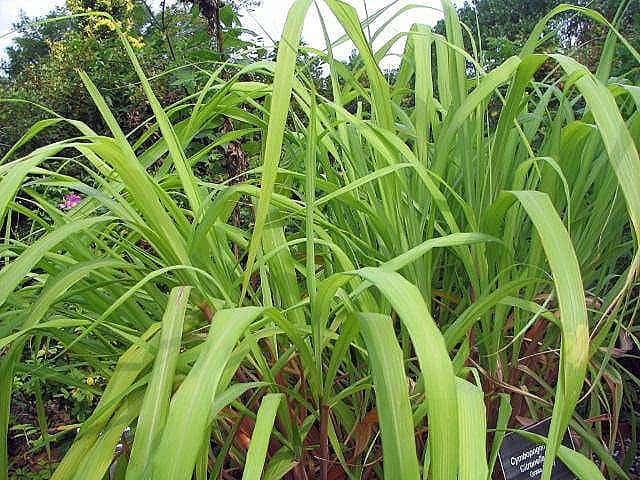
Poaceae
Citronella Grass (Cymbopogon nardus)
Cymbopogon nardus
Thrives in full sun with regular watering to keep soil evenly moist (never soggy) and well-draining. It is a hardy, low-maintenance grass, resistant to most pests and diseases, ideal for large pots or sunny garden beds.
Every 4 days
Direct sun
15° - 35°C
40% - 70%
Categories
What is Citronella Grass?
Citronella Grass (Cymbopogon nardus) is a easy-care plant from the Poaceae family. Cymbopogon nardus, commonly known as citronella grass, is a perennial clumping grass with long, narrow, aromatic leaves and a strong citrus scent. Native to Sri Lanka and Southeast Asia, it is widely cultivated in tropical and subtropical regions for its essential oil, prized as a natural insect rep...
Citronella Grass grows up to 2.0m, spread of 100cm, watering every 4 days, 15°C – 35°C, 40–70% humidity. It is suitable for indoor environments and not safe for pets.
Unlike many tropical plants, Citronella Grass tolerates watering mistakes. Best for beginners. Without precautions, ingestion can cause irritation in pets. Keep out of reach of cats and dogs. Without adequate drainage, root rot can develop within 8 days.
How to Care for Citronella Grass?
TLDR: Citronella Grass needs Direct sun, watering every 4 days, and temperatures between 15-35°C with 40-70% humidity.
How Often Should You Water Citronella Grass?
Water every 3-4 days in summer, keeping soil moist but never waterlogged; reduce frequency in winter.
How Much Light Does Citronella Grass Need?
Needs at least 6 hours of direct sunlight daily; indoors, place near a bright, sunny window.
What Is the Best Soil for Citronella Grass?
Use well-draining sandy loam rich in organic matter, with a pH between 5.5 and 7.5.
What Pot Should You Use for Citronella Grass?
Large, deep pot (at least 30 cm / 12 in) with drainage holes, since the plant forms wide clumps.
Care Schedule
Fertilize
Every 30 days
Repot
Every 365 days
What Is Citronella Grass and Where Does It Come From?
Cymbopogon nardus, commonly known as citronella grass, is a perennial clumping grass with long, narrow, aromatic leaves and a strong citrus scent. Native to Sri Lanka and Southeast Asia, it is widely cultivated in tropical and subtropical regions for its essential oil, prized as a natural insect repellent.
How to Propagate Citronella Grass?
Clump division
Divide mature clumps every 2-3 years to keep the plant vigorous.
- 1 Remove the clump from its pot or bed
- 2 Separate rooted divisions with a clean knife
- 3 Replant each division in well-draining soil
- 4 Water thoroughly after planting
Materials needed:
Seed sowing
Germination can be slow and uneven; division is the more reliable method.
- 1 Sow seeds in light, moist potting mix
- 2 Keep in a warm spot with indirect light
- 3 Transplant seedlings once they reach 10 cm tall
Materials needed:
How Big Does Citronella Grass Grow?
TLDR: Citronella Grass can reach up to 2.0m tall with Fast growth rate.
Max height
2.0m
Spread
1.0m
Growth rate
Fast
Foliage
Evergreen
Warning: Toxic Plant
This plant can be toxic if ingested. Keep out of reach of:
Plant Uses
Aromatic
Pleasant fragrance
Medicinal
Medicinal properties
Ornamental
Great for decoration
Medicinal Uses
- Essential oil used as a natural insect repellent
- Traditional tea for fever and digestive relief
- Antimicrobial properties in traditional medicine
Culinary Uses
- Leaves occasionally used in aromatic teas
Is your plant showing symptoms?
Click on the symptom to discover possible causes:
What Diseases Commonly Affect Citronella Grass?
TLDR: Citronella Grass is susceptible to 4 known diseases. Monitor regularly for early detection.
Root Rot
Root rot is a serious fungal disease that affects the root system of plants, causing them to decay and die. It is primarily caused by overwatering, poor drainage, or soil-borne fungi such as Pythium, Phytophthora, Rhizoctonia, and Fusarium. The disease thrives in waterlogged conditions where roots are deprived of oxygen, making them susceptible to fungal infection.
Aphids
Aphids are small, soft-bodied, pear-shaped insects (1/16 to 1/8 inch long) that feed by sucking nutrient-rich sap from plants. They reproduce rapidly and can quickly weaken plants, causing distorted growth and transmitting plant viruses. Aphids come in various colors including green, black, red, yellow, brown, and gray. They secrete honeydew, a sticky substance that attracts ants and encourages sooty mold growth.
Spider Mites
Spider mites are tiny arachnids (less than 1/20 inch long) related to spiders and ticks that feed on plant sap. They thrive in hot, dry conditions and can cause significant damage to ornamental and vegetable plants. During severe infestations, crop losses can reach 14% or higher as these pests disrupt vital plant processes including photosynthesis, carbon dioxide absorption, and transpiration.
Fungus Gnats
Fungus gnats are small, gray-to-black mosquito-like insects (1/8 to 1/10 inches long) commonly found in indoor plants. Adult gnats are mostly a nuisance, but their larvae feed on plant roots and organic matter in soil, potentially causing serious damage to young or vulnerable plants. The larvae are translucent white with distinctive black heads and can leave slime trails on the soil surface in heavy infestations.
Meaning & Symbolism
Citronella is associated with protection and purification, traditionally used to ward off insects and, in some cultures, negative energy.
Fun Facts
Citronella oil is extracted via steam distillation of the leaves and widely used in candles and natural repellents.
Despite the similar name, citronella grass (Cymbopogon nardus) is a different species from culinary lemongrass (Cymbopogon citratus).
It can form clumps up to 2 meters (6.5 ft) tall under ideal conditions.
Frequently asked questions
Does citronella grass really repel mosquitoes?
How often should I water citronella grass?
Is citronella grass toxic to cats and dogs?
Can I grow citronella grass in a pot?
Compare with similar plants
| Attribute | Difficulty | Light | Watering | Pet Safe |
|---|---|---|---|---|
| Field Maple | Easy | Bright indirect | 14d | ✓ |
| Muriel's Bamboo | Medium | Partial shade | 3d | ✓ |
| Silver Birch | Easy | Direct sun | 14d | ✓ |
| Common Blanketflower | Easy | Direct sun | 10d | ✓ |





