Hydrangeaceae
Climbing Hydrangea
Hydrangea anomala
A slow-to-establish but ultimately vigorous climber that tolerates shade better than most flowering vines. Keep the soil consistently moist and fertile, provide a sturdy support, and be patient for the first two to three years while the root system develops.
Every 7 days
Partial shade
-30° - 35°C
40% - 70%
Categories
What is Climbing hydrangea?
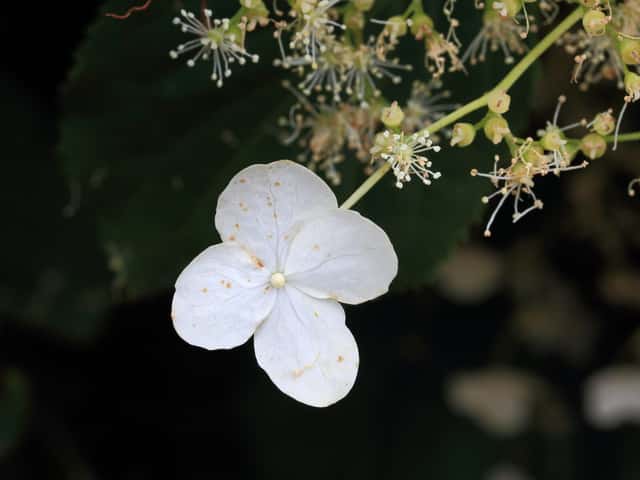
Climbing hydrangea (Hydrangea anomala) is a medium-care plant from the Hydrangeaceae family. Hydrangea anomala is a deciduous, self-clinging climbing vine native to Japan, China, Korea and eastern Siberia. It attaches to walls, fences and trees using aerial rootlets, producing broad, glossy dark-green leaves and flat lacecap flower heads of small fertile florets ringed by showy white steril...
Climbing hydrangea grows up to 12.0m, spread of 600cm, watering every 7 days, -30°C – 35°C, 40–70% humidity. It is not suitable for indoor environments and not safe for pets.
Without precautions, ingestion can cause irritation in pets. Keep out of reach of cats and dogs.
How to Care for Climbing hydrangea?
TLDR: Climbing hydrangea needs Partial shade, watering every 7 days, and temperatures between -30-35°C with 40-70% humidity.
How Often Should You Water Climbing hydrangea?
Keep soil moist but well-drained; never let it dry out completely, especially while the plant is establishing. Water deeply during dry spells.
How Much Light Does Climbing hydrangea Need?
Thrives in partial shade, making it ideal for north- or east-facing walls, but will also flower in full sun if soil stays reliably moist.
What Is the Best Soil for Climbing hydrangea?
Grows in most soil types provided they are fertile and moisture-retentive; enrich chalky or poor soils with organic matter before planting.
What Pot Should You Use for Climbing hydrangea?
Large terracotta or wooden planter with excellent drainage if container-grown, though this vine performs best planted directly in the ground against a sturdy support.
Care Schedule
Fertilize
Every 90 days
What Is Climbing hydrangea and Where Does It Come From?
Hydrangea anomala is a deciduous, self-clinging climbing vine native to Japan, China, Korea and eastern Siberia. It attaches to walls, fences and trees using aerial rootlets, producing broad, glossy dark-green leaves and flat lacecap flower heads of small fertile florets ringed by showy white sterile ones in late spring to summer.
How to Propagate Climbing hydrangea?
Softwood stem cutting
Use a rooting hormone to improve success rate, since this species can be slow and inconsistent to root. Keep humidity high and avoid direct sun while roots form.
- 1 Take a 10-15cm softwood cutting from a non-flowering shoot in early summer
- 2 Remove the lower leaves and dip the cut end in rooting hormone
- 3 Insert into a pot of moist, well-draining cutting compost
- 4 Cover with a clear plastic bag to retain humidity and place in bright, indirect light
- 5 Keep compost moist until roots establish, then pot on
Materials needed:
Layering
Layering is the most reliable propagation method for this species since the stems root readily where they touch moist soil.
- 1 Select a low, flexible stem still attached to the parent plant
- 2 Wound the underside of the stem lightly and bury that section in soil, pinning it down
- 3 Leave the stem tip exposed above the soil
- 4 Keep the buried section consistently moist until roots form
- 5 Once well rooted, sever from the parent plant and transplant
Materials needed:
How Big Does Climbing hydrangea Grow?
TLDR: Climbing hydrangea can reach up to 12.0m tall with Slow growth rate.
Max height
12.0m
Spread
6.0m
Growth rate
Slow
Foliage
Deciduous
Warning: Toxic Plant
This plant can be toxic if ingested. Keep out of reach of:
Plant Uses
Ornamental
Great for decoration
Is your plant showing symptoms?
Click on the symptom to discover possible causes:
What Diseases Commonly Affect Climbing hydrangea?
TLDR: Climbing hydrangea is susceptible to 8 known diseases. Monitor regularly for early detection.
Powdery Mildew
Powdery mildew is a common fungal disease caused by various fungi species including Erysiphe, Podosphaera, Oïdium, and Leveillula. It affects over 10,000 plant species worldwide. The disease thrives in warm, dry climates with high humidity and appears as a distinctive white powdery coating on plant surfaces.
Leaf Spot
Leaf spot is a common fungal disease caused by various pathogens including Alternaria, Ascochyta, Colletotrichum, Septoria, and Venturia. It primarily affects leaves, causing discolored spots that can lead to premature leaf drop if left untreated.
Grey Mould
Root Rot
Root rot is a serious fungal disease that affects the root system of plants, causing them to decay and die. It is primarily caused by overwatering, poor drainage, or soil-borne fungi such as Pythium, Phytophthora, Rhizoctonia, and Fusarium. The disease thrives in waterlogged conditions where roots are deprived of oxygen, making them susceptible to fungal infection.
Meaning & Symbolism
The climbing hydrangea symbolizes gratitude, abundance, and heartfelt emotion, its self-clinging vines and lacecap blooms often associated with patience and steady, quiet growth.
Fun Facts
It can climb over 12 metres high using clinging aerial rootlets, without any support wires or ties.
It is one of the few flowering vines that thrives in shade.
Its flat lacecap flower heads can reach up to 20cm across.
It was introduced to Western gardens from Japan in the 19th century.
Frequently asked questions
Is climbing hydrangea toxic to pets?
How much sun does climbing hydrangea need?
Why is my climbing hydrangea not flowering?
How do I propagate climbing hydrangea?
Compare with similar plants
| Attribute | Difficulty | Light | Watering | Pet Safe |
|---|---|---|---|---|
| Dark Fieldcap | Medium | Low light | 2d | ⚠️ |
| Azalea | Medium | Partial shade | 3d | ⚠️ |
| Muriel's Bamboo | Medium | Partial shade | 3d | ✓ |
| Bougainvillea | Medium | Direct sun | 7d | ⚠️ |
Choose & Compare
Sources & References
- RHS - Hydrangea anomala subsp. petiolaris
- RHS - Climbing hydrangeas Plant Guide
- BBC Gardeners World - Growing Climbing Hydrangeas
- Gardenia.net - Hydrangea anomala subsp. petiolaris
- Gardenia.net - Hydrangea Pests and Diseases
- Oregon State University Landscape Plants - Hydrangea anomala var. petiolaris




