Asparagaceae
Climbing Onion: Medicinal Uses & Care Tips
Bowiea volubilis
It grows best in bright light with the bulb itself shaded, in well-draining sandy soil with minimal watering. During active growth (fall to spring), water sparingly, allowing the soil to dry out completely between waterings. In summer, the plant typically enters dormancy, the stems die back, and watering should be significantly reduced. The plant is slow-growing and sensitive to overwatering.
Every 14 days
Bright indirect
10° - 29°C
30% - 60%
Categories
What is Climbing Onion?
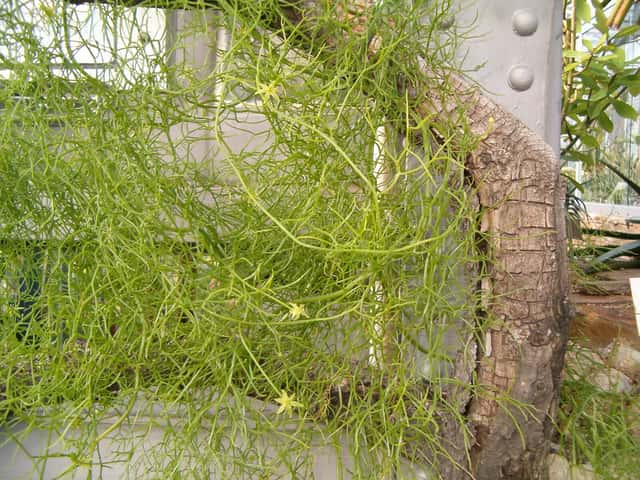
Climbing Onion (Bowiea volubilis) is a medium-care plant from the Asparagaceae family. Bowiea volubilis is a succulent bulbous plant (caudiciform) native to southern and eastern Africa. Instead of traditional leaves, it produces thin, climbing green stems from a large, partially exposed green bulb that perform the function of photosynthesis. These stems can twine around supports and g...
Climbing Onion grows up to 3.0m, spread of 30cm, watering every 14 days, 10°C – 29°C, 30–60% humidity. It is suitable for indoor environments and not safe for pets.
Without precautions, ingestion can cause irritation in pets. Keep out of reach of cats and dogs. Without adequate drainage, root rot can develop within 28 days.
How to Care for Climbing Onion?
TLDR: Climbing Onion needs Bright indirect, watering every 14 days, and temperatures between 10-29°C with 30-60% humidity.
How Often Should You Water Climbing Onion?
Water sparingly and allow the substrate to dry out completely between waterings. During summer dormancy, when the stems turn yellow and die back, significantly reduce or completely stop watering until new growth appears.
How Much Light Does Climbing Onion Need?
Place in a bright location (bright indirect light to moderate direct sun), but protect the bulb itself from direct sunlight to prevent scorching.
What Is the Best Soil for Climbing Onion?
Use a well-draining, sandy or succulent/cactus mix with added perlite or pumice. Avoid highly acidic substrates.
What Pot Should You Use for Climbing Onion?
A shallow pot with a good drainage hole is recommended, as the plant has a shallow root system; the bulb is typically planted so that most of its surface remains above the substrate level.
Care Schedule
Fertilize
Every 60 days
Repot
Every 730 days
What Is Climbing Onion and Where Does It Come From?
Bowiea volubilis is a succulent bulbous plant (caudiciform) native to southern and eastern Africa. Instead of traditional leaves, it produces thin, climbing green stems from a large, partially exposed green bulb that perform the function of photosynthesis. These stems can twine around supports and grow several meters long in warm climates. In spring, small star-shaped greenish-yellow flowers with an unpleasant scent appear. The plant is highly toxic, containing cardiac glycosides (bufadienolides).
How Big Does Climbing Onion Grow?
TLDR: Climbing Onion can reach up to 3.0m tall with Slow growth rate.
Max height
3.0m
Spread
30cm
Growth rate
Slow
Foliage
Deciduous
Warning: Toxic Plant
This plant can be toxic if ingested. Keep out of reach of:
Plant Uses
Ornamental
Great for decoration
Medicinal
Medicinal properties
Medicinal Uses
- In traditional South African medicine, the bulb has been used historically for various ailments (heart problems, edema); however, due to the presence of potent cardiac glycosides, use without professional supervision is dangerous.
Is your plant showing symptoms?
Click on the symptom to discover possible causes:
What Diseases Commonly Affect Climbing Onion?
TLDR: Climbing Onion is susceptible to 4 known diseases. Monitor regularly for early detection.
Mealybugs
Mealybugs are small, soft-bodied insects covered with a white, waxy, cottony material. They are common pests of houseplants and outdoor plants in mild climates. These sap-sucking insects feed on plant tissue, causing damage, stunted growth, and can lead to plant death if left untreated. They produce sticky honeydew which attracts sooty mold.
Powdery Mildew
Powdery mildew is a common fungal disease caused by various fungi species including Erysiphe, Podosphaera, Oïdium, and Leveillula. It affects over 10,000 plant species worldwide. The disease thrives in warm, dry climates with high humidity and appears as a distinctive white powdery coating on plant surfaces.
Root Rot
Root rot is a serious fungal disease that affects the root system of plants, causing them to decay and die. It is primarily caused by overwatering, poor drainage, or soil-borne fungi such as Pythium, Phytophthora, Rhizoctonia, and Fusarium. The disease thrives in waterlogged conditions where roots are deprived of oxygen, making them susceptible to fungal infection.
Overwatering
Overwatering occurs when plants receive too much water, depriving roots of oxygen and causing root rot. This environmental stress is one of the most common causes of houseplant death, as waterlogged soil prevents roots from breathing and functioning properly.
Meaning & Symbolism
The plant does not have a clearly documented symbolic meaning in available sources.
Compare with similar plants
| Attribute | Difficulty | Light | Watering | Pet Safe |
|---|---|---|---|---|
| Dark Fieldcap | Medium | Low light | 2d | ⚠️ |
| Azalea | Medium | Partial shade | 3d | ⚠️ |
| Muriel's Bamboo | Medium | Partial shade | 3d | ✓ |
| Bougainvillea | Medium | Direct sun | 7d | ⚠️ |




