Lamiaceae
Indian Coleus: The Aromatic Medicinal Herb
Coleus barbatus
Easy-care plant that thrives in full sun to partial shade with well-draining soil and moderate watering. Drought-tolerant once established. Prune regularly to maintain shape and encourage bushy growth.
Every 14 days
Bright indirect
10° - 35°C
40% - 70%
Categories
What is Indian Coleus?
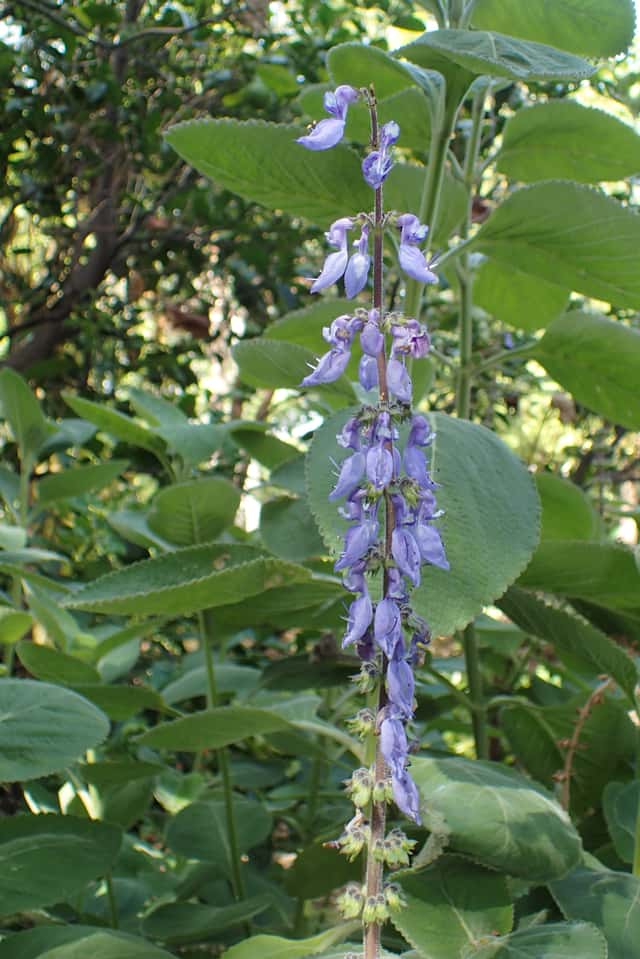
Indian Coleus (Coleus barbatus) is a easy-care plant from the Lamiaceae family. Indian Coleus (Coleus barbatus, syn. Plectranthus barbatus) is an aromatic medicinal herb in the Lamiaceae family, native to Eastern Africa and widely naturalized in Brazil and tropical regions. It features large, velvety, fragrant leaves and produces dense spikes of blue-purple flowers. Widely cult...
Indian Coleus grows up to 1.5m, spread of 120cm, watering every 14 days, 10°C – 35°C, 40–70% humidity. It is not suitable for indoor environments and safe for pets.
Unlike many tropical plants, Indian Coleus tolerates watering mistakes. Best for beginners. Unlike many popular species, Indian Coleus is safe to keep around pets.
How to Care for Indian Coleus?
TLDR: Indian Coleus needs Bright indirect, watering every 14 days, and temperatures between 10-35°C with 40-70% humidity.
How Often Should You Water Indian Coleus?
Water every 10–14 days in warm weather, every 3 weeks in cooler periods. Allow the top 3–4 cm of soil to dry out between waterings to prevent root rot.
How Much Light Does Indian Coleus Need?
Prefers full sun with at least 6 hours of direct light daily. Tolerates partial shade, especially in very hot climates, though growth may be less vigorous.
What Is the Best Soil for Indian Coleus?
Use fertile, well-draining soil with a slightly acidic to neutral pH (5.5–7.5). Amend with sand or perlite for improved drainage. Avoid compacted or waterlogged soil.
What Pot Should You Use for Indian Coleus?
Terracotta or clay pots are ideal for good aeration and drainage. Plastic pots also work well provided they have adequate drainage holes.
Care Schedule
Fertilize
Every 30 days
Misting
Every 7 days
Repot
Every 365 days
What Is Indian Coleus and Where Does It Come From?
Indian Coleus (Coleus barbatus, syn. Plectranthus barbatus) is an aromatic medicinal herb in the Lamiaceae family, native to Eastern Africa and widely naturalized in Brazil and tropical regions. It features large, velvety, fragrant leaves and produces dense spikes of blue-purple flowers. Widely cultivated for its digestive and liver-supportive properties, as well as its ornamental value.
How to Propagate Indian Coleus?
Stem Cutting
Change water every 2–3 days if rooting in water. Substrate rooting is generally faster and more vigorous.
- 1 Cut a healthy stem 10–15 cm long, just below a leaf node
- 2 Remove lower leaves, keeping 2–3 at the top
- 3 Optionally dip base in rooting hormone powder
- 4 Place in moist well-draining substrate or a glass of water
- 5 Keep in indirect light until roots develop
Materials needed:
Seeds
Do not cover seeds as they need light to germinate.
- 1 Sow on slightly moist substrate without covering seeds
- 2 Keep in a warm location (22–26°C) with good light
- 3 Germination occurs in 2–4 weeks
- 4 Transplant seedlings when they reach 5 cm tall
Materials needed:
How Big Does Indian Coleus Grow?
TLDR: Indian Coleus can reach up to 1.5m tall with Fast growth rate.
Max height
1.5m
Spread
1.2m
Growth rate
Fast
Foliage
Evergreen
Warning: Toxic Plant
This plant can be toxic if ingested. Keep out of reach of:
Plant Uses
Medicinal
Medicinal properties
Ornamental
Great for decoration
Aromatic
Pleasant fragrance
Medicinal Uses
- Aids digestion and relieves gas and indigestion
- Liver protection and support for detoxification
- Anti-inflammatory and antioxidant effects
- Relief from intestinal cramps and nausea
- Used in traditional herbal teas for digestive complaints
Is your plant showing symptoms?
Click on the symptom to discover possible causes:
What Diseases Commonly Affect Indian Coleus?
TLDR: Indian Coleus is susceptible to 10 known diseases. Monitor regularly for early detection.
Root Rot
Root rot is a serious fungal disease that affects the root system of plants, causing them to decay and die. It is primarily caused by overwatering, poor drainage, or soil-borne fungi such as Pythium, Phytophthora, Rhizoctonia, and Fusarium. The disease thrives in waterlogged conditions where roots are deprived of oxygen, making them susceptible to fungal infection.
Overwatering
Overwatering occurs when plants receive too much water, depriving roots of oxygen and causing root rot. This environmental stress is one of the most common causes of houseplant death, as waterlogged soil prevents roots from breathing and functioning properly.
Powdery Mildew
Powdery mildew is a common fungal disease caused by various fungi species including Erysiphe, Podosphaera, Oïdium, and Leveillula. It affects over 10,000 plant species worldwide. The disease thrives in warm, dry climates with high humidity and appears as a distinctive white powdery coating on plant surfaces.
Downy Mildew
Downy mildew is a fungal-like disease caused by oomycetes (water molds) that thrives in cool, wet conditions. It affects a wide range of plants, causing yellowing leaves with fuzzy white-gray growth underneath, leading to defoliation and reduced yields if left untreated.
Meaning & Symbolism
Symbolizes health, healing, and longevity in African and Brazilian folk medicine traditions. Considered a plant of digestive protection and well-being.
Fun Facts
The active compound forskolin, found in the roots of Coleus barbatus, is being studied for treating glaucoma, asthma, and cardiomyopathy.
Indian Coleus is one of the most popular herbal teas consumed in Brazil for digestive complaints.
The plant is native to Eastern Africa and was introduced to Brazilian folk medicine by early settlers.
Its blue-purple flower spikes attract pollinators including bees and butterflies.
Frequently asked questions
How much sun does Indian Coleus need?
How often should I water Indian Coleus?
Is Indian Coleus toxic?
How do I propagate Indian Coleus?
Can Indian Coleus be grown in pots?
Compare with similar plants
| Attribute | Difficulty | Light | Watering | Pet Safe |
|---|---|---|---|---|
| Field Maple | Easy | Bright indirect | 14d | ✓ |
| Silver Birch | Easy | Direct sun | 14d | ✓ |
| Common Blanketflower | Easy | Direct sun | 10d | ✓ |
| Cushion Bush | Easy | Direct sun | 14d | ✓ |





