Pinaceae
Colorado Blue Spruce (Picea pungens) Care Guide
Picea pungens
Give this tough conifer full sun, well-draining soil, and deep weekly watering while it establishes. Once mature, it tolerates cold winters (down to USDA zone 3) and short dry spells, but stays healthiest with good airflow and occasional monitoring for needle cast and canker diseases.
Every 7 days
Direct sun
-37° - 35°C
% - %
Categories
What is Colorado Blue Spruce?
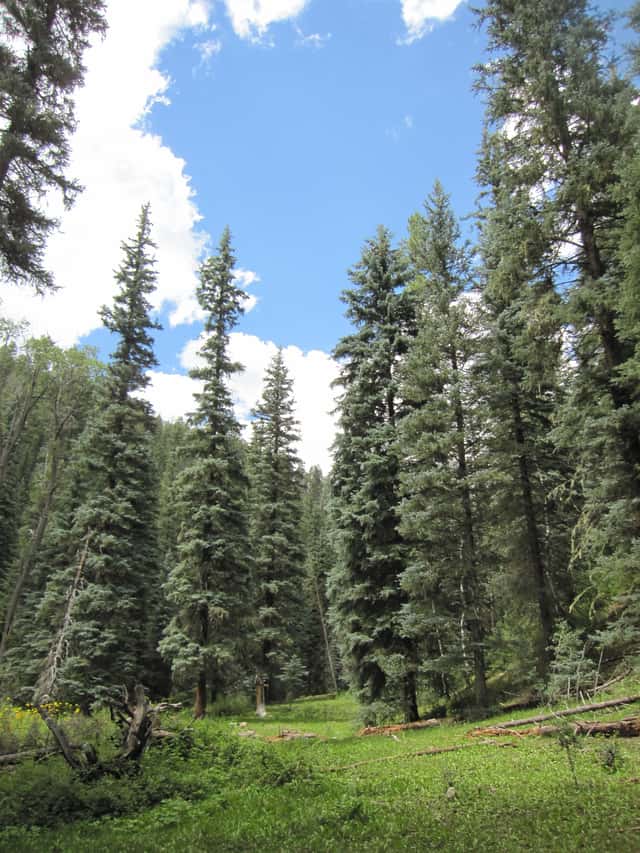
Colorado Blue Spruce (Picea pungens) is a easy-care plant from the Pinaceae family. The Colorado Blue Spruce (Picea pungens) is a large, pyramidal evergreen conifer native to the Rocky Mountains of the western United States. Prized for its stiff, silvery-blue needles arranged in a dense brush-like pattern, it can reach 15-23 m (50-75 ft) tall in the landscape. It is the official st...
Colorado Blue Spruce grows up to 23.0m, spread of 750cm, watering every 7 days, -37°C – 35°C. It is not suitable for indoor environments and safe for pets.
Unlike many tropical plants, Colorado Blue Spruce tolerates watering mistakes. Best for beginners. Unlike many popular species, Colorado Blue Spruce is safe to keep around pets.
How to Care for Colorado Blue Spruce?
TLDR: Colorado Blue Spruce needs Direct sun, watering every 7 days, and temperatures between -37-35°C with 40-70% humidity.
How Often Should You Water Colorado Blue Spruce?
Water deeply once a week during the first 2-3 growing seasons so roots can establish. Mature trees are fairly drought-tolerant and prefer the soil to dry out somewhat between waterings — overly wet soil invites root and needle diseases.
How Much Light Does Colorado Blue Spruce Need?
Plant in full sun, ideally 6+ hours of direct light a day. Insufficient light leads to thin, open growth and duller blue coloring.
What Is the Best Soil for Colorado Blue Spruce?
Well-draining, slightly acidic to neutral soil (pH 6.0-7.5) is ideal. Avoid heavy, compacted, or consistently soggy clay soils.
What Pot Should You Use for Colorado Blue Spruce?
Best grown directly in the ground; if container-grown while young, use a large, well-draining pot and transplant before roots become restricted.
What Is Colorado Blue Spruce and Where Does It Come From?
The Colorado Blue Spruce (Picea pungens) is a large, pyramidal evergreen conifer native to the Rocky Mountains of the western United States. Prized for its stiff, silvery-blue needles arranged in a dense brush-like pattern, it can reach 15-23 m (50-75 ft) tall in the landscape. It is the official state tree of Colorado and a popular choice for windbreaks, privacy screens, and as a living Christmas tree.
How to Propagate Colorado Blue Spruce?
Seed Propagation
Seed-grown trees show genetic variability and may not match the exact blue color or habit of named cultivars, but tend to grow more vigorously.
- 1 Collect ripe cones and extract seeds in autumn
- 2 Cold-stratify seeds at 2-4°C (36-39°F) for 6-8 weeks
- 3 Sow in a well-drained sand-peat mix and keep around 20°C (68°F)
- 4 Keep substrate moist until germination, which takes 3-4 weeks
Materials needed:
Grafting
Grafting is the standard method for reproducing named blue cultivars like 'Hoopsii' or 'Koster' true to type.
- 1 Select vigorous Picea pungens or Picea abies seedlings as rootstock
- 2 Take scion wood from the desired cultivar in late winter
- 3 Use a whip-and-tongue or cleft graft to join scion to rootstock
- 4 Seal and protect the graft union until it calluses
Materials needed:
Semi-hardwood Cuttings
Rooting success is inconsistent for this species; grafting and seed are more reliable methods.
- 1 Take semi-hardwood tip cuttings in late summer
- 2 Dip cut ends in rooting hormone
- 3 Insert into a moist, well-draining rooting medium under mist
- 4 Provide bottom heat to encourage root development
Materials needed:
How Big Does Colorado Blue Spruce Grow?
TLDR: Colorado Blue Spruce can reach up to 23.0m tall with Medium growth rate.
Max height
23.0m
Spread
7.5m
Growth rate
Medium
Foliage
Evergreen
Plant Uses
Ornamental
Great for decoration
Aromatic
Pleasant fragrance
Is your plant showing symptoms?
Click on the symptom to discover possible causes:
What Diseases Commonly Affect Colorado Blue Spruce?
TLDR: Colorado Blue Spruce is susceptible to 5 known diseases. Monitor regularly for early detection.
Canker
Canker is a disease caused by various fungi and bacteria that create necrotic, sunken areas on bark of branches, stems, and trunks. Pathogens enter through wounds and natural openings, especially when plants are stressed. Canker can gradually weaken or kill branches by disrupting water and nutrient flow.
Spider Mites
Spider mites are tiny arachnids (less than 1/20 inch long) related to spiders and ticks that feed on plant sap. They thrive in hot, dry conditions and can cause significant damage to ornamental and vegetable plants. During severe infestations, crop losses can reach 14% or higher as these pests disrupt vital plant processes including photosynthesis, carbon dioxide absorption, and transpiration.
Scale Insects
Scale insects are small sap-sucking pests that appear as brown, shell-like bumps on plant stems and leaves. There are over 25 species, divided into armored (hard) and unarmored (soft) scales. They feed by piercing plant tissue and extracting sap, which weakens the plant and can lead to yellowing, stunted growth, and even death if left untreated. They also excrete honeydew, which attracts ants and promotes sooty mold growth.
Aphids
Aphids are small, soft-bodied, pear-shaped insects (1/16 to 1/8 inch long) that feed by sucking nutrient-rich sap from plants. They reproduce rapidly and can quickly weaken plants, causing distorted growth and transmitting plant viruses. Aphids come in various colors including green, black, red, yellow, brown, and gray. They secrete honeydew, a sticky substance that attracts ants and encourages sooty mold growth.
Meaning & Symbolism
The Colorado Blue Spruce symbolizes endurance, hope, and protection — its evergreen needles surviving harsh mountain winters have made it an emblem of resilience, and it serves as Colorado's official state tree.
Fun Facts
It is the official state tree of Colorado.
Its blue-gray color comes from a waxy coating on the needles that reflects light and reduces water loss.
Some specimens live for over 600 years in the wild.
It is one of the most popular species grown as a living Christmas tree.
Frequently asked questions
How fast does Colorado Blue Spruce grow?
Is Colorado Blue Spruce toxic to pets?
Why are the lower needles turning brown and dropping?
What hardiness zones suit Colorado Blue Spruce?
Compare with similar plants
| Attribute | Difficulty | Light | Watering | Pet Safe |
|---|---|---|---|---|
| Field Maple | Easy | Bright indirect | 14d | ✓ |
| Silver Birch | Easy | Direct sun | 14d | ✓ |
| Common Blanketflower | Easy | Direct sun | 10d | ✓ |
| Cushion Bush | Easy | Direct sun | 14d | ✓ |
Choose & Compare
Sources & References
- How to Grow and Care for Colorado Blue Spruce | Gardener's Path
- How to Plant and Grow a Colorado Blue Spruce Tree | HGTV
- Blue Spruce (Picea pungens): Benefits, Challenges, Uses & More | Gardenia
- Spruce Diseases | The Morton Arboretum
- Identify & Treat Colorado Blue Spruce Tree Diseases (Picea pungens)
- Is Blue spruce Non-Toxic for Pets? Key Facts and Tips
- Picea pungens: Complete guide to blue spruce care, characteristics, and reproduction
- Pícea-azul – Wikipédia
- Picea pungens - Wikipedia en español





