Asteraceae
Coltsfoot: Ground Cover Plant
Tussilago farfara
An extremely low-maintenance and hardy plant that thrives in open, sunny locations and is not demanding regarding soil quality. It spreads aggressively via underground rhizomes, so it is advisable to restrict its growing area with borders or grow it in a container. During the first growing season, the soil should be kept consistently moist, but once established, the plant tolerates drought well.
Every 7 days
Bright indirect
-29° - 32°C
40% - 80%
Categories
What is Coltsfoot?
Coltsfoot (Tussilago farfara) is a easy-care plant from the Asteraceae family. Coltsfoot (Tussilago farfara) is a perennial herbaceous plant in the Asteraceae family, known for its exceptional growth habit: flowers emerge in early spring before the leaves appear. The scaly, 5–15 cm tall flower stalks bear bright yellow, dandelion-like inflorescences as early as April or May. O...
Coltsfoot grows up to 20cm, spread of 100cm, watering every 7 days, -29°C – 32°C, 40–80% humidity. It is not suitable for indoor environments and not safe for pets.
Unlike many tropical plants, Coltsfoot tolerates watering mistakes. Best for beginners. Without precautions, ingestion can cause irritation in pets. Keep out of reach of cats and dogs.
How to Care for Coltsfoot?
TLDR: Coltsfoot needs Bright indirect, watering every 7 days, and temperatures between -29-32°C with 40-80% humidity.
How Often Should You Water Coltsfoot?
Keep the soil consistently moist, especially during the first growing season while the root system is developing. Afterward, coltsfoot is quite drought-tolerant and does not require regular watering—avoid standing water, as it can cause root rot.
How Much Light Does Coltsfoot Need?
Thrives best in full sun but also adapts to partial shade. Flowering is most abundant and colors are brightest in sunny locations.
What Is the Best Soil for Coltsfoot?
Not demanding regarding soil type—grows in clay, sand, and both acidic or alkaline soils—but performs best in moist, nutrient-rich, and well-drained soil.
What Pot Should You Use for Coltsfoot?
Because coltsfoot spreads easily via underground rhizomes, it is best grown in a rimless, sunken, or otherwise restricted, well-drained pot to control its spread.
What Is Coltsfoot and Where Does It Come From?
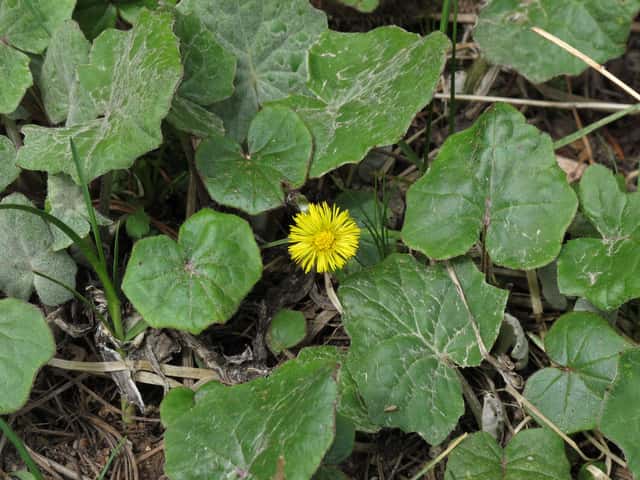
Coltsfoot (Tussilago farfara) is a perennial herbaceous plant in the Asteraceae family, known for its exceptional growth habit: flowers emerge in early spring before the leaves appear. The scaly, 5–15 cm tall flower stalks bear bright yellow, dandelion-like inflorescences as early as April or May. Only after flowering do the large, 10–20 cm wide heart- or kidney-shaped leaves emerge from the ground, with undersides covered in a dense white down. The plant spreads effectively via long rhizomes reaching depths of up to 70 cm and often forms extensive colonies in open, sunny locations—roadside verges, ditch banks, sandy shores, and disturbed ground. The species is very common in Southern and Central Finland, becoming rarer toward the north. The genus and species names derive from the Latin words 'tussis' (cough) and 'agere' (to act on/expel), referring to the plant's long history in folk medicine for treating coughs.
How Big Does Coltsfoot Grow?
TLDR: Coltsfoot can reach up to 20cm tall with Fast growth rate.
Max height
20cm
Spread
1.0m
Growth rate
Fast
Foliage
Deciduous
Warning: Toxic Plant
This plant can be toxic if ingested. Keep out of reach of:
Plant Uses
Medicinal
Medicinal properties
Edible
Can be consumed
Ground Cover
Soil coverage
Medicinal Uses
- Traditionally used as a tea or syrup to relieve coughs, sore throats, and respiratory tract inflammations
- Leaves have also been used externally to treat wounds and skin irritations
- Note: The plant contains pyrrolizidine alkaloids (such as senkirkine) which are harmful to the liver, so long-term internal use is not recommended without professional guidance
Culinary Uses
- Young flower buds can be eaten raw or cooked and have a mild anise-like flavor
- Dried leaves have traditionally been used to make cough drops and sweets
- Note: The roots contain the highest concentration of pyrrolizidine alkaloids, so consumption is recommended to be limited to leaves and flowers in moderation
Is your plant showing symptoms?
Click on the symptom to discover possible causes:
What Diseases Commonly Affect Coltsfoot?
TLDR: Coltsfoot is susceptible to 3 known diseases. Monitor regularly for early detection.
Aphids
Aphids are small, soft-bodied, pear-shaped insects (1/16 to 1/8 inch long) that feed by sucking nutrient-rich sap from plants. They reproduce rapidly and can quickly weaken plants, causing distorted growth and transmitting plant viruses. Aphids come in various colors including green, black, red, yellow, brown, and gray. They secrete honeydew, a sticky substance that attracts ants and encourages sooty mold growth.
Powdery Mildew
Powdery mildew is a common fungal disease caused by various fungi species including Erysiphe, Podosphaera, Oïdium, and Leveillula. It affects over 10,000 plant species worldwide. The disease thrives in warm, dry climates with high humidity and appears as a distinctive white powdery coating on plant surfaces.
Root Rot
Root rot is a serious fungal disease that affects the root system of plants, causing them to decay and die. It is primarily caused by overwatering, poor drainage, or soil-borne fungi such as Pythium, Phytophthora, Rhizoctonia, and Fusarium. The disease thrives in waterlogged conditions where roots are deprived of oxygen, making them susceptible to fungal infection.
Meaning & Symbolism
In the language of flowers, coltsfoot is known as a symbol of justice—it was said to convey the message that 'justice shall be done.' This belief stems from the plant's unique habit of blooming before its leaves appear, which has also been interpreted as a sign of hope and new beginnings in spring.
Compare with similar plants
| Attribute | Difficulty | Light | Watering | Pet Safe |
|---|---|---|---|---|
| Field Maple | Easy | Bright indirect | 14d | ✓ |
| Silver Birch | Easy | Direct sun | 14d | ✓ |
| Common Blanketflower | Easy | Direct sun | 10d | ✓ |
| Cushion Bush | Easy | Direct sun | 14d | ✓ |
Choose & Compare
Sources & References
- Tussilago farfara - Wikipedia
- Leskenlehti – Wikipedia
- Coltsfoot (Tussilago Farfara) Care Guide - Plantiary
- Coltsfoot: Potential Benefits, Side Effects, and Dosage - Healthline
- Tussilago farfara - PFAF Plant Database
- The Language and Symbolism of Coltsfoot
- Coltsfoot: Pictures, Flowers, Leaves and Identification - Edible Wild Food





