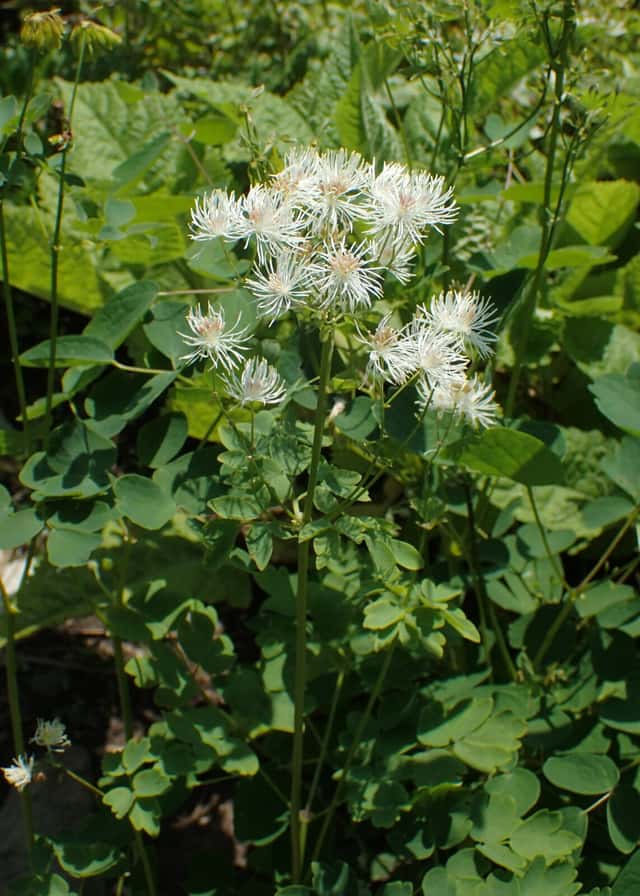
Ranunculaceae
Columbine meadow-rue: Perfect Plant for Beginners
Thalictrum aquilegiifolium
Grow in light partial shade in nutrient-rich, moist but well-drained soil. Keep the soil consistently moist; it does not thrive in intense, dry, or stifling summer heat.
Every 5 days
Partial shade
-25° - 30°C
40% - 70%
Categories
What is Columbine meadow-rue?
Columbine meadow-rue (Thalictrum aquilegiifolium) is a easy-care plant from the Ranunculaceae family. Thalictrum aquilegiifolium (Columbine meadow-rue) is a tall, hardy perennial in the buttercup family, featuring delicate, aquilegia-like blue-green foliage and fluffy plumes of purple to pink—sometimes white—staminate flowers in early summer. It provides an airy and elegant element to semi-shaded bo...
Columbine meadow-rue grows up to 1.2m, spread of 45cm, watering every 5 days, -25°C – 30°C, 40–70% humidity. It is not suitable for indoor environments and not safe for pets.
Unlike many tropical plants, Columbine meadow-rue tolerates watering mistakes. Best for beginners. Without precautions, ingestion can cause irritation in pets. Keep out of reach of cats and dogs.
How to Care for Columbine meadow-rue?
TLDR: Columbine meadow-rue needs Partial shade, watering every 5 days, and temperatures between -25-30°C with 40-70% humidity.
How Often Should You Water Columbine meadow-rue?
Keep the soil consistently moist but never waterlogged; provide extra water during periods of drought and heat.
How Much Light Does Columbine meadow-rue Need?
Light partial shade is best; it can tolerate full sun in cooler climates but not scorching afternoon sun.
What Is the Best Soil for Columbine meadow-rue?
Nutrient-rich, humus-rich, and well-drained soil with consistent moisture is ideal.
What Pot Should You Use for Columbine meadow-rue?
A spacious pot with drainage holes and moisture-retentive soil if grown in a container.
What Is Columbine meadow-rue and Where Does It Come From?
Thalictrum aquilegiifolium (Columbine meadow-rue) is a tall, hardy perennial in the buttercup family, featuring delicate, aquilegia-like blue-green foliage and fluffy plumes of purple to pink—sometimes white—staminate flowers in early summer. It provides an airy and elegant element to semi-shaded borders and works beautifully positioned behind lower-growing plants.
How Big Does Columbine meadow-rue Grow?
TLDR: Columbine meadow-rue can reach up to 1.2m tall with Medium growth rate.
Max height
1.2m
Spread
45cm
Growth rate
Medium
Foliage
Deciduous
Warning: Toxic Plant
This plant can be toxic if ingested. Keep out of reach of:
Plant Uses
Ornamental
Great for decoration
Is your plant showing symptoms?
Click on the symptom to discover possible causes:
What Diseases Commonly Affect Columbine meadow-rue?
TLDR: Columbine meadow-rue is susceptible to 4 known diseases. Monitor regularly for early detection.
Powdery Mildew
Powdery mildew is a common fungal disease caused by various fungi species including Erysiphe, Podosphaera, Oïdium, and Leveillula. It affects over 10,000 plant species worldwide. The disease thrives in warm, dry climates with high humidity and appears as a distinctive white powdery coating on plant surfaces.
Rust
Rust is a common fungal disease caused by fungi in the order Pucciniales that affects a wide variety of plants. The disease gets its name from the characteristic orange, yellow, or reddish-brown pustules that appear on leaves, resembling metal rust. This obligate fungal parasite requires living plants to survive and can cause significant economic losses in agricultural crops.
Slugs and Snails
Slugs and snails are mollusks that feed on plant tissue, causing irregular holes in leaves and damage to young seedlings. They are most active at night and in moist conditions, leaving characteristic silvery slime trails. These pests can quickly devastate gardens, especially during wet seasons.
Aphids
Aphids are small, soft-bodied, pear-shaped insects (1/16 to 1/8 inch long) that feed by sucking nutrient-rich sap from plants. They reproduce rapidly and can quickly weaken plants, causing distorted growth and transmitting plant viruses. Aphids come in various colors including green, black, red, yellow, brown, and gray. They secrete honeydew, a sticky substance that attracts ants and encourages sooty mold growth.
Meaning & Symbolism
A symbol of lightness and elegance due to its airy, feathery inflorescences.
Compare with similar plants
| Attribute | Difficulty | Light | Watering | Pet Safe |
|---|---|---|---|---|
| Field Maple | Easy | Bright indirect | 14d | ✓ |
| Silver Birch | Easy | Direct sun | 14d | ✓ |
| Common Blanketflower | Easy | Direct sun | 10d | ✓ |
| Cushion Bush | Easy | Direct sun | 14d | ✓ |





