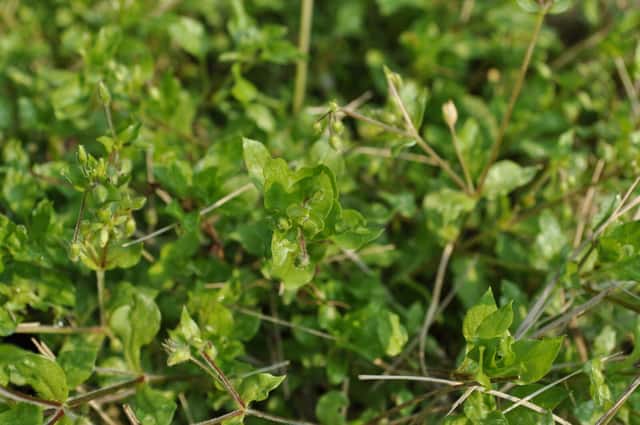
Caryophyllaceae
Stellaria (Common Chickweed) Care Guide
Stellaria
Stellaria is very low-maintenance and largely takes care of itself once established. Keep the soil consistently moist, give it full sun to partial shade, and it will grow rapidly with almost no extra input. It rarely needs feeding, misting, or pruning, and is more often controlled than pampered.
Every 3 days
Partial shade
° - °C
% - %
Categories
What is Common Chickweed?
Common Chickweed (Stellaria) is a easy-care plant from the Caryophyllaceae family. Stellaria is a genus of roughly 120 low-growing herbaceous plants in the carnation family (Caryophyllaceae), best known through its most common and widespread member, Stellaria media, or common chickweed. This sprawling, mat-forming annual produces tender oval leaves and tiny star-shaped white flowe...
Common Chickweed grows up to 50cm, spread of 30cm, watering every 3 days. It is not suitable for indoor environments and safe for pets.
Unlike many tropical plants, Common Chickweed tolerates watering mistakes. Best for beginners. Unlike many popular species, Common Chickweed is safe to keep around pets.
How to Care for Common Chickweed?
TLDR: Common Chickweed needs Partial shade, watering every 3 days, and temperatures between 15-30°C with 40-70% humidity.
How Often Should You Water Common Chickweed?
Water enough to keep the soil consistently moist but not waterlogged - roughly every 2-3 days in dry weather. Chickweed struggles and dies back quickly in drought, so do not let the soil dry out completely.
How Much Light Does Common Chickweed Need?
Grows best in full sun to partial shade. In hot climates, a bit of afternoon shade helps prevent the foliage from wilting during summer heat.
What Is the Best Soil for Common Chickweed?
Prefers rich, organic, moisture-retentive soil with good drainage, from clay to sandy loam, at a mildly acidic to neutral pH (around 5.5-7.5). Tolerates occasional wet or flooded conditions.
What Pot Should You Use for Common Chickweed?
Not typically grown in decorative pots; if containerized, use a wide, shallow container with moisture-retentive, rich potting mix.
What Is Common Chickweed and Where Does It Come From?
Stellaria is a genus of roughly 120 low-growing herbaceous plants in the carnation family (Caryophyllaceae), best known through its most common and widespread member, Stellaria media, or common chickweed. This sprawling, mat-forming annual produces tender oval leaves and tiny star-shaped white flowers (its genus name comes from the Latin "stella," meaning star). Chickweed thrives in cool, moist conditions and is one of the fastest-growing plants in temperate gardens, often flowering and setting seed within weeks of germination. It is naturalized nearly worldwide and is valued both as a nutritious wild edible and as a traditional skin-soothing herb, even though gardeners often treat it as a weed.
How to Propagate Common Chickweed?
Seed Sowing
Chickweed self-seeds readily and needs no special treatment to germinate; in most gardens it will reseed on its own year after year.
- 1 Scatter seeds directly onto moist, rich soil
- 2 Press seeds lightly into the surface without burying them deeply
- 3 Keep soil consistently moist until germination
- 4 Thin seedlings if growth is too dense
Materials needed:
Stem Cutting
Stems root readily at the leaf nodes, so cuttings establish quickly with minimal care.
- 1 Snip a healthy trailing stem section a few centimeters long
- 2 Place the cutting directly onto moist soil or into water
- 3 Keep consistently damp until roots form at the nodes
Materials needed:
How Big Does Common Chickweed Grow?
TLDR: Common Chickweed can reach up to 50cm tall with Fast growth rate.
Max height
50cm
Spread
30cm
Growth rate
Fast
Foliage
Semi-evergreen
Plant Uses
Edible
Can be consumed
Medicinal
Medicinal properties
Medicinal Uses
- soothing itchy or irritated skin
- minor wounds, rashes and insect bites (traditional poultice use)
- traditional remedy for coughs and chest complaints
Culinary Uses
- fresh salads
- cooked leaf vegetable (potherb), similar to spinach
- herbal tea
- garnish
Is your plant showing symptoms?
Click on the symptom to discover possible causes:
What Diseases Commonly Affect Common Chickweed?
TLDR: Common Chickweed is susceptible to 8 known diseases. Monitor regularly for early detection.
Downy Mildew
Downy mildew is a fungal-like disease caused by oomycetes (water molds) that thrives in cool, wet conditions. It affects a wide range of plants, causing yellowing leaves with fuzzy white-gray growth underneath, leading to defoliation and reduced yields if left untreated.
Root Rot
Root rot is a serious fungal disease that affects the root system of plants, causing them to decay and die. It is primarily caused by overwatering, poor drainage, or soil-borne fungi such as Pythium, Phytophthora, Rhizoctonia, and Fusarium. The disease thrives in waterlogged conditions where roots are deprived of oxygen, making them susceptible to fungal infection.
Aphids
Aphids are small, soft-bodied, pear-shaped insects (1/16 to 1/8 inch long) that feed by sucking nutrient-rich sap from plants. They reproduce rapidly and can quickly weaken plants, causing distorted growth and transmitting plant viruses. Aphids come in various colors including green, black, red, yellow, brown, and gray. They secrete honeydew, a sticky substance that attracts ants and encourages sooty mold growth.
Spider Mites
Spider mites are tiny arachnids (less than 1/20 inch long) related to spiders and ticks that feed on plant sap. They thrive in hot, dry conditions and can cause significant damage to ornamental and vegetable plants. During severe infestations, crop losses can reach 14% or higher as these pests disrupt vital plant processes including photosynthesis, carbon dioxide absorption, and transpiration.
Fun Facts
The genus name Stellaria comes from the Latin word for "star," describing its tiny star-shaped flowers.
Each flower has five deeply split petals that make it look like it has ten petals instead of five.
Chickweed can flower nearly year-round in mild climates, even sprouting through light winter frost.
It is a key ingredient in Nanakusa-no-sekku, a traditional Japanese seven-herb rice porridge eaten in early spring.
Frequently asked questions
Is chickweed edible?
Is chickweed invasive or hard to control?
Does chickweed need a lot of water?
Is chickweed toxic to pets?
What diseases affect chickweed?
Compare with similar plants
| Attribute | Difficulty | Light | Watering | Pet Safe |
|---|---|---|---|---|
| Field Maple | Easy | Bright indirect | 14d | ✓ |
| Silver Birch | Easy | Direct sun | 14d | ✓ |
| Common Blanketflower | Easy | Direct sun | 10d | ✓ |
| Cushion Bush | Easy | Direct sun | 14d | ✓ |





