Papaveraceae
Common fumitory: Ground Cover Plant
Fumaria officinalis
An undemanding, fast-growing plant that thrives in almost all soil types (loam, sand, clay, limestone) and tolerates both sunny and semi-shaded locations well. It is rarely attacked by pests or diseases. It is primarily grown in the wild or in medicinal herb gardens and is not suitable for container cultivation.
Every 5 days
Bright indirect
5° - 25°C
40% - 70%
Categories
What is Common fumitory?
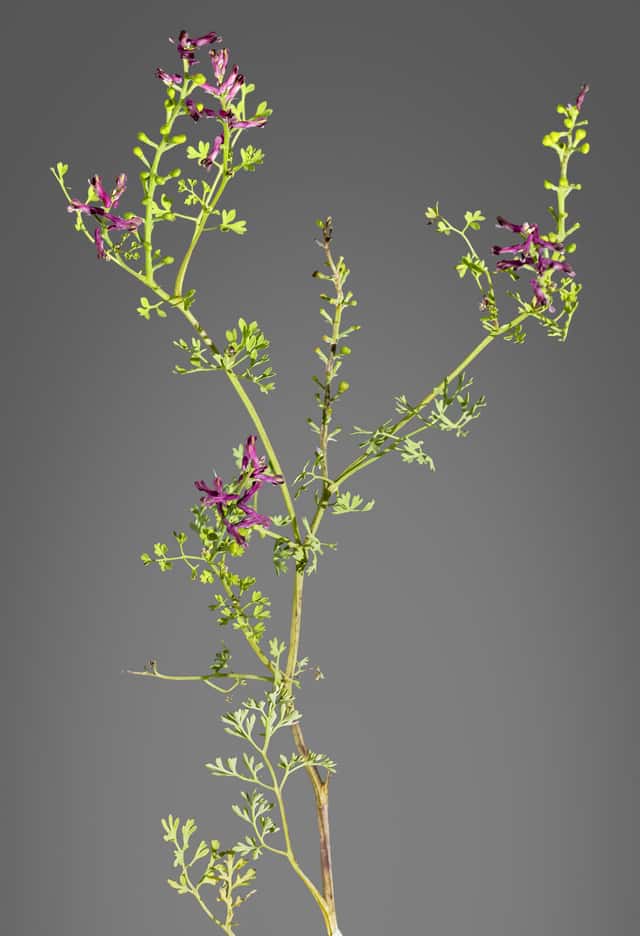
Common fumitory (Fumaria officinalis) is a easy-care plant from the Papaveraceae family. Common fumitory is an annual herbaceous plant reaching a height of 10–50 cm, native to Europe and North Africa, and a common weed in fields, gardens, and fallow lands. It is characterized by bluish-grey-green, finely divided, bipinnate leaves and clusters of pale pinkish-purple, spurred flowers with...
Common fumitory grows up to 50cm, spread of 30cm, watering every 5 days, 5°C – 25°C, 40–70% humidity. It is not suitable for indoor environments and not safe for pets.
Unlike many tropical plants, Common fumitory tolerates watering mistakes. Best for beginners. Without precautions, ingestion can cause irritation in pets. Keep out of reach of cats and dogs.
How to Care for Common fumitory?
TLDR: Common fumitory needs Bright indirect, watering every 5 days, and temperatures between 5-25°C with 40-70% humidity.
How Often Should You Water Common fumitory?
Keep the soil evenly moist during the growing season, but allow it to dry out between waterings, as stagnant water can lead to root rot.
How Much Light Does Common fumitory Need?
It prefers full sun but also grows well in partial shade.
What Is the Best Soil for Common fumitory?
Loose, nutrient-rich, but well-drained, neutral or slightly alkaline soil is ideal for it.
What Pot Should You Use for Common fumitory?
Not a potted plant: it develops best when sown directly into the open ground in its final location.
What Is Common fumitory and Where Does It Come From?
Common fumitory is an annual herbaceous plant reaching a height of 10–50 cm, native to Europe and North Africa, and a common weed in fields, gardens, and fallow lands. It is characterized by bluish-grey-green, finely divided, bipinnate leaves and clusters of pale pinkish-purple, spurred flowers with dark crimson tips. Its fruit is a nutlet that is wider than it is long, with a truncated apex.
How to Propagate Common fumitory?
Sowing seeds
- The plant often self-seeds, so it may reappear on its own the following year.
- Internal consumption in high doses or for longer than 8 days should be avoided due to its alkaloid content (protopine, fumarine).
- 1 Seed preparation
Collect ripe seeds in late summer or purchase high-quality seeds.
- 2 Sowing
Sow the seeds in early spring directly into their final location, approximately 1 cm deep.
- 3 Thinning
When the seedlings reach a height of 5 cm, thin them to a distance of 15-20 cm.
Materials needed:
How Big Does Common fumitory Grow?
TLDR: Common fumitory can reach up to 50cm tall with Fast growth rate.
Max height
50cm
Spread
30cm
Growth rate
Fast
Foliage
Deciduous
Warning: Toxic Plant
This plant can be toxic if ingested. Keep out of reach of:
Plant Uses
Medicinal
Medicinal properties
Ground Cover
Soil coverage
Medicinal Uses
- Choleretic (cholagogue) effect
- Diuretic effect
- Treatment of skin diseases and eczema
- Improvement of digestion and liver function
- Mild laxative and antispasmodic effect
Culinary Uses
- Traditionally used as a rennet substitute for curdling plant-based milks/cheeses, providing a slightly sour taste and preservative effect
Is your plant showing symptoms?
Click on the symptom to discover possible causes:
What Diseases Commonly Affect Common fumitory?
TLDR: Common fumitory is susceptible to 6 known diseases. Monitor regularly for early detection.
Aphids
Aphids are small, soft-bodied, pear-shaped insects (1/16 to 1/8 inch long) that feed by sucking nutrient-rich sap from plants. They reproduce rapidly and can quickly weaken plants, causing distorted growth and transmitting plant viruses. Aphids come in various colors including green, black, red, yellow, brown, and gray. They secrete honeydew, a sticky substance that attracts ants and encourages sooty mold growth.
Downy Mildew
Downy mildew is a fungal-like disease caused by oomycetes (water molds) that thrives in cool, wet conditions. It affects a wide range of plants, causing yellowing leaves with fuzzy white-gray growth underneath, leading to defoliation and reduced yields if left untreated.
Damping Off
Damping off is a soil-borne fungal disease that affects seeds and young seedlings, causing rotting of stem and root tissues at and below the soil line. It is caused by several fungi including Pythium, Rhizoctonia, Fusarium, and Phytophthora. The disease thrives in cold, wet conditions with poor air circulation.
Overwatering
Overwatering occurs when plants receive too much water, depriving roots of oxygen and causing root rot. This environmental stress is one of the most common causes of houseplant death, as waterlogged soil prevents roots from breathing and functioning properly.
Meaning & Symbolism
In folklore, it symbolizes smoke and spiritual-physical purification; it earned its name from its smoke-like, grayish foliage, as the ancients believed it sprang from the smoke of the earth rather than from seeds.
Compare with similar plants
| Attribute | Difficulty | Light | Watering | Pet Safe |
|---|---|---|---|---|
| Field Maple | Easy | Bright indirect | 14d | ✓ |
| Silver Birch | Easy | Direct sun | 14d | ✓ |
| Common Blanketflower | Easy | Direct sun | 10d | ✓ |
| Cushion Bush | Easy | Direct sun | 14d | ✓ |





