Ericaceae
Calluna vulgaris (Common Heather) Care Guide
Calluna vulgaris
Plant common heather in full sun and acidic, well-drained, humus-rich soil. Water regularly while establishing, then only during prolonged dry spells, as this drought-tolerant shrub dislikes soggy roots. Trim lightly after flowering to keep growth dense and compact, and avoid fertilizing heavily — a light ericaceous feed in spring is usually enough.
Every 7 days
Direct sun
-20° - 25°C
% - %
Categories
What is Common Heather?
Common Heather (Calluna vulgaris) is a medium-care plant from the Ericaceae family. Calluna vulgaris, commonly known as common heather or ling, is a low-growing evergreen shrub native to Europe, western Asia, and parts of North Africa. It is the sole species in the genus Calluna and a defining plant of moorland and heathland ecosystems. Its tiny, scale-like leaves densely cover wir...
Common Heather grows up to 60cm, spread of 60cm, watering every 7 days, -20°C – 25°C. It is not suitable for indoor environments and safe for pets.
Unlike many popular species, Common Heather is safe to keep around pets.
How to Care for Common Heather?
TLDR: Common Heather needs Direct sun, watering every 7 days, and temperatures between -20-25°C with 40-70% humidity.
How Often Should You Water Common Heather?
Keep soil lightly moist for the first 18 months after planting, then water only during extended dry periods. Always let the topsoil dry out between waterings to prevent root rot.
How Much Light Does Common Heather Need?
Give heather at least 6 hours of direct sun daily. Too much shade causes leggy growth and weak flowering.
What Is the Best Soil for Common Heather?
Use acidic, well-draining, humus-rich soil with a pH between 4.5 and 5.5 — ericaceous or peat-free heather compost works well. Avoid heavy clay or alkaline (limey) soils.
What Pot Should You Use for Common Heather?
If growing in containers, use a wide, well-draining pot filled with ericaceous compost; terracotta or unglazed pots help prevent waterlogging.
Care Schedule
Fertilize
Every 180 days
What Is Common Heather and Where Does It Come From?
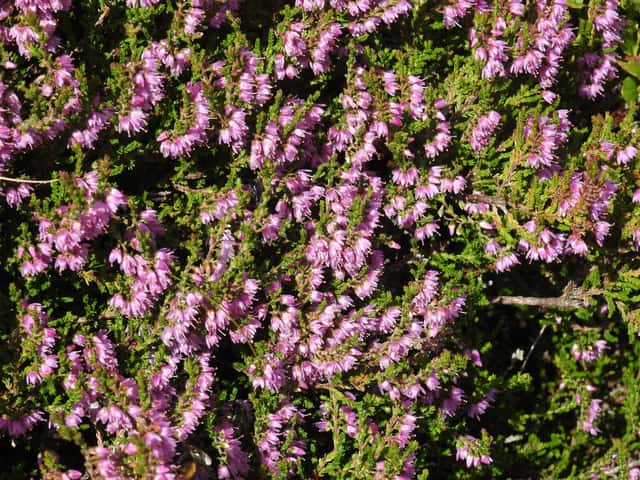
Calluna vulgaris, commonly known as common heather or ling, is a low-growing evergreen shrub native to Europe, western Asia, and parts of North Africa. It is the sole species in the genus Calluna and a defining plant of moorland and heathland ecosystems. Its tiny, scale-like leaves densely cover wiry stems, and from late summer into autumn it produces masses of small bell-shaped flowers in shades of purple, pink, and white that attract bees and other pollinators. Hardy and adaptable to poor, acidic soils, heather is prized in gardens for year-round foliage color and its ability to thrive where little else will grow.
How to Propagate Common Heather?
Semi-ripe stem cuttings
Use only non-flowering shoots and keep the medium consistently moist but never waterlogged.
- 1 Take 5-8 cm semi-ripe cuttings from non-flowering shoots in mid-to-late summer
- 2 Strip the lower leaves and dip the cut end in rooting hormone
- 3 Insert into a free-draining, acidic cutting mix (equal parts peat-free ericaceous compost and perlite)
- 4 Keep in a shaded, humid propagator until roots form
- 5 Pot on once well rooted
Materials needed:
Simple layering
Heather often self-layers naturally in the garden; simply encourage stems to touch the soil.
- 1 Choose a low, flexible stem still attached to the parent plant
- 2 Pin a section of the stem to the soil surface with a peg or stone
- 3 Cover the pinned section with acidic soil, leaving the tip exposed
- 4 Keep the area consistently moist until roots develop
- 5 Sever from the parent plant and transplant once well rooted
Materials needed:
How Big Does Common Heather Grow?
TLDR: Common Heather can reach up to 60cm tall with Slow growth rate.
Max height
60cm
Spread
60cm
Growth rate
Slow
Foliage
Evergreen
Plant Uses
Ornamental
Great for decoration
Ground Cover
Soil coverage
Medicinal
Medicinal properties
Medicinal Uses
- Traditionally used in herbal teas for urinary tract and digestive support
- Historic use as a mild diuretic and antiseptic in folk medicine
Culinary Uses
- Flowers used to flavor heather honey and herbal teas
- Historically used to brew heather ale
Is your plant showing symptoms?
Click on the symptom to discover possible causes:
What Diseases Commonly Affect Common Heather?
TLDR: Common Heather is susceptible to 5 known diseases. Monitor regularly for early detection.
Phytophthora Root Rot
Disease caused by fungus-like organisms (oomycetes) that live in soil and can survive for years. It affects roots, stem, and crown of plants, being especially severe in waterlogged or poorly drained soils. It is the second most common cause of root rot in trees and shrubs.
Root Rot
Root rot is a serious fungal disease that affects the root system of plants, causing them to decay and die. It is primarily caused by overwatering, poor drainage, or soil-borne fungi such as Pythium, Phytophthora, Rhizoctonia, and Fusarium. The disease thrives in waterlogged conditions where roots are deprived of oxygen, making them susceptible to fungal infection.
Powdery Mildew
Powdery mildew is a common fungal disease caused by various fungi species including Erysiphe, Podosphaera, Oïdium, and Leveillula. It affects over 10,000 plant species worldwide. The disease thrives in warm, dry climates with high humidity and appears as a distinctive white powdery coating on plant surfaces.
Gray Mold (Botrytis Blight)
Gray mold, caused by the fungus Botrytis cinerea, is a widespread necrotrophic pathogen affecting over 1,400 plant species. It thrives in cool, humid conditions and attacks weakened or aging plant tissues, causing soft rot and characteristic gray fuzzy growth.
Meaning & Symbolism
Heather has long symbolized protection, admiration, and solitude in European folklore. White heather in particular is considered a Scottish good-luck charm, traditionally worn by brides and carried by travelers.
Fun Facts
Calluna vulgaris is the only species in its genus and gives its name to the "heath" habitat found across European moorlands.
Its flowers produce a distinctive, richly flavored heather honey prized by beekeepers in Scotland and Ireland.
White-flowered heather is a traditional Scottish symbol of good luck.
Heather stems are naturally self-layering, letting the plant spread and root wherever a branch touches the ground.
Frequently asked questions
Is common heather toxic to cats or dogs?
How often should I water heather?
Why isn't my heather flowering well?
Does heather need special soil?
How do I propagate common heather?
Compare with similar plants
| Attribute | Difficulty | Light | Watering | Pet Safe |
|---|---|---|---|---|
| Dark Fieldcap | Medium | Low light | 2d | ⚠️ |
| Azalea | Medium | Partial shade | 3d | ⚠️ |
| Muriel's Bamboo | Medium | Partial shade | 3d | ✓ |
| Bougainvillea | Medium | Direct sun | 7d | ⚠️ |
Choose & Compare
Sources & References
- Calluna vulgaris: planting & caring for heather - Plantura
- Calluna Vulgaris Care: All About Growing Common Heather
- Calluna vulgaris | heather - RHS
- Calluna vulgaris (Common Heather) - NC Extension Gardener Plant Toolbox
- Heather (Calluna spp.)-Root Rot - PNW Pest Management Handbooks
- Identify & Treat Ling Shrub Diseases (Calluna vulgaris)




