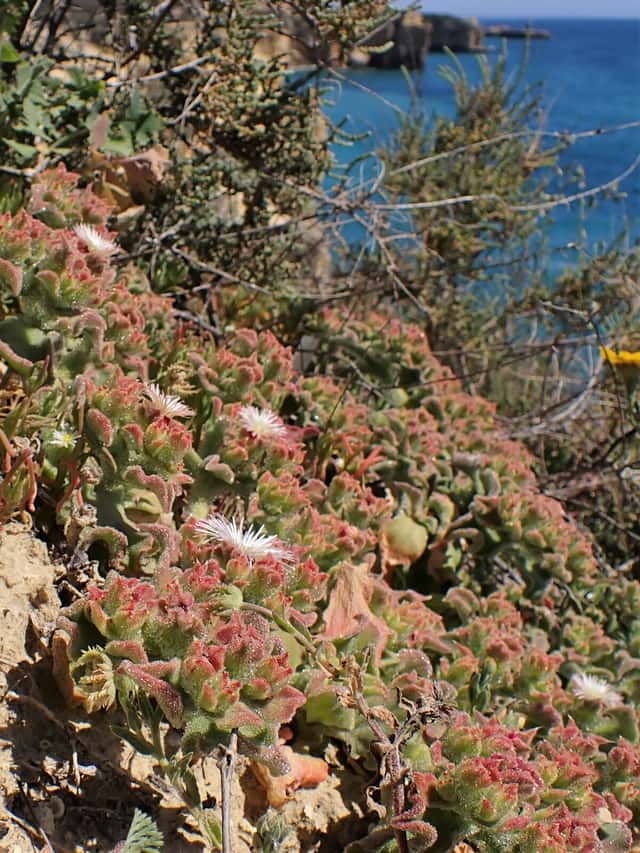
Aizoaceae
Common Ice Plant: Growing and Caring for This Edible Succulent
Mesembryanthemum crystallinum
Grow in full sun in sandy, fast-draining soil, watering only once the substrate has dried out completely. It is highly drought- and salt-tolerant but sensitive to excess moisture, which can lead to root rot.
Every 14 days
Direct sun
° - °C
% - %
Categories
What is Common Ice Plant?
Common Ice Plant (Mesembryanthemum crystallinum) is a easy-care plant from the Aizoaceae family. Mesembryanthemum crystallinum, commonly known as the common ice plant, is a low-growing halophytic succulent native to the coastal sands and salt marshes of South Africa, now naturalized along Mediterranean and other mild coastlines worldwide. Its leaves and stems are covered in glistening, bladder-...
Common Ice Plant grows up to 15cm, spread of 60cm, watering every 14 days. It is suitable for indoor environments and safe for pets.
Unlike many tropical plants, Common Ice Plant tolerates watering mistakes. Best for beginners. Unlike many popular species, Common Ice Plant is safe to keep around pets. Without adequate drainage, root rot can develop within 28 days.
How to Care for Common Ice Plant?
TLDR: Common Ice Plant needs Direct sun, watering every 14 days, and temperatures between 15-30°C with 40-70% humidity.
How Often Should You Water Common Ice Plant?
Water only when the soil is completely dry; overwatering is the biggest risk, potentially causing root rot and damping-off in young seedlings.
How Much Light Does Common Ice Plant Need?
Needs full, direct sun for most of the day; in shaded spots growth becomes leggy and leaf color turns dull.
What Is the Best Soil for Common Ice Plant?
Use a sandy, well-draining, low-fertility mix; this plant tolerates saline and nutrient-poor soils, matching its native coastal habitat.
What Pot Should You Use for Common Ice Plant?
Unglazed terracotta pots with generous drainage holes help prevent moisture buildup around the roots.
What Is Common Ice Plant and Where Does It Come From?
Mesembryanthemum crystallinum, commonly known as the common ice plant, is a low-growing halophytic succulent native to the coastal sands and salt marshes of South Africa, now naturalized along Mediterranean and other mild coastlines worldwide. Its leaves and stems are covered in glistening, bladder-like epidermal cells that store water and salt, giving the plant a frosted, ice-crystal appearance. It is grown both as an ornamental groundcover and as a gourmet edible green, prized for its succulent, slightly salty leaves eaten raw or cooked.
How to Propagate Common Ice Plant?
Seed Sowing
Seeds need light to germinate; avoid burying them deeply and keep seedlings well ventilated to prevent damping-off.
- 1 Sow in sandy, well-draining substrate, covering seeds lightly
- 2 Keep in a sunny, well-ventilated spot
- 3 Water lightly until germination, avoiding waterlogging
Materials needed:
Stem Cutting
Avoid overwatering while the cutting roots; let the substrate dry between waterings.
- 1 Cut a healthy stem cutting, ideally when the plant is not flowering
- 2 Let the cutting callus for 1-2 days before planting
- 3 Plant in lightly moist sandy substrate
Materials needed:
How Big Does Common Ice Plant Grow?
TLDR: Common Ice Plant can reach up to 15cm tall with Fast growth rate.
Max height
15cm
Spread
60cm
Growth rate
Fast
Foliage
Evergreen
Plant Uses
Edible
Can be consumed
Ornamental
Great for decoration
Ground Cover
Soil coverage
Medicinal
Medicinal properties
Medicinal Uses
- Traditionally used as a diuretic and demulcent
- Used in folk medicine for inflammations of the urinary and respiratory mucous membranes
Culinary Uses
- Leaves eaten raw in salads for a crunchy, salty bite
- Leaves and stems sauteed or steamed as a spinach substitute
- Flower buds used as an edible garnish
- Leaves and stems pickled
Is your plant showing symptoms?
Click on the symptom to discover possible causes:
What Diseases Commonly Affect Common Ice Plant?
TLDR: Common Ice Plant is susceptible to 4 known diseases. Monitor regularly for early detection.
Aphids
Aphids are small, soft-bodied, pear-shaped insects (1/16 to 1/8 inch long) that feed by sucking nutrient-rich sap from plants. They reproduce rapidly and can quickly weaken plants, causing distorted growth and transmitting plant viruses. Aphids come in various colors including green, black, red, yellow, brown, and gray. They secrete honeydew, a sticky substance that attracts ants and encourages sooty mold growth.
Slugs and Snails
Slugs and snails are mollusks that feed on plant tissue, causing irregular holes in leaves and damage to young seedlings. They are most active at night and in moist conditions, leaving characteristic silvery slime trails. These pests can quickly devastate gardens, especially during wet seasons.
Root Rot
Root rot is a serious fungal disease that affects the root system of plants, causing them to decay and die. It is primarily caused by overwatering, poor drainage, or soil-borne fungi such as Pythium, Phytophthora, Rhizoctonia, and Fusarium. The disease thrives in waterlogged conditions where roots are deprived of oxygen, making them susceptible to fungal infection.
Damping Off
Damping off is a soil-borne fungal disease that affects seeds and young seedlings, causing rotting of stem and root tissues at and below the soil line. It is caused by several fungi including Pythium, Rhizoctonia, Fusarium, and Phytophthora. The disease thrives in cold, wet conditions with poor air circulation.
Fun Facts
Its glistening leaves, covered in tiny translucent "bladder cells," inspired the common name ice plant
It is a halophyte, meaning it tolerates and even benefits from salty soils
In Japan it is commercially grown as a gourmet vegetable, sold as "ice plant"
Frequently asked questions
Is the common ice plant edible?
How often should I water a common ice plant?
Is the ice plant toxic to pets?
Why do the leaves look covered in ice?
Compare with similar plants
| Attribute | Difficulty | Light | Watering | Pet Safe |
|---|---|---|---|---|
| Field Maple | Easy | Bright indirect | 14d | ✓ |
| Silver Birch | Easy | Direct sun | 14d | ✓ |
| Common Blanketflower | Easy | Direct sun | 10d | ✓ |
| Cushion Bush | Easy | Direct sun | 14d | ✓ |
Choose & Compare
Sources & References
- Mesembryanthemum crystallinum (Common Ice Plant) | World of Succulents
- Mesembryanthemum crystallinum - PFAF Plant Database
- Mesembryanthemum crystallinum - Wikipedia
- Complete care guide and interesting facts about Mesembryanthemum crystallinum
- Escarcha, Escarchada, Hierba del rocio - InfoJardin
- Beneficios e aplicacao da Erva-do-Orvalho





