Asteraceae
Common Sneezeweed: Perfect Plant for Beginners
Helenium autumnale
Sneezeweed is easy to care for and thrives best in a full-sun, sheltered location in nutrient-rich, moist, but well-drained soil. Regular watering without waterlogging, spring fertilization, and deadheading spent blooms promote a long and abundant flowering period. The plant should be divided every 3 to 4 years in spring or fall to maintain its vitality.
Every 3 days
Bright indirect
-37° - 35°C
40% - 80%
Categories
What is Common Sneezeweed?
Common Sneezeweed (Helenium autumnale) is a easy-care plant from the Asteraceae family. Common Sneezeweed (Helenium autumnale) is a hardy, perennial herbaceous plant in the aster family (Asteraceae), native to North America, where it frequently grows in moist meadows, along banks, and in marshy areas. From July through October, it produces numerous daisy-like flower heads in vibrant sh...
Common Sneezeweed grows up to 1.5m, spread of 75cm, watering every 3 days, -37°C – 35°C, 40–80% humidity. It is not suitable for indoor environments and not safe for pets.
Unlike many tropical plants, Common Sneezeweed tolerates watering mistakes. Best for beginners. Without precautions, ingestion can cause irritation in pets. Keep out of reach of cats and dogs.
How to Care for Common Sneezeweed?
TLDR: Common Sneezeweed needs Bright indirect, watering every 3 days, and temperatures between -37-35°C with 40-80% humidity.
How Often Should You Water Common Sneezeweed?
Water regularly and generously, especially during the flowering period and dry spells—the soil should always remain slightly moist without becoming waterlogged. A layer of mulch helps retain soil moisture and reduces the frequency of watering.
How Much Light Does Common Sneezeweed Need?
Full sun with at least 6 hours of direct light daily ensures the most vibrant flower colors and the most prolific blooming. Sunny partial shade is tolerated but results in weaker growth and fewer flowers; shady locations should be avoided.
What Is the Best Soil for Common Sneezeweed?
Nutrient-rich, humus-rich soil with good water retention but no waterlogging is ideal. Sandy soils should be enriched with compost or bark humus. A pH value in the slightly acidic to neutral range (5.5–7.0) is preferred.
What Pot Should You Use for Common Sneezeweed?
If cultivating Sneezeweed in a container, a large, deep pot with a diameter of at least 30-40 cm and good drainage holes is recommended so that the deep-reaching roots have sufficient space and waterlogging is prevented. A drainage layer of gravel at the bottom is highly recommended.
Care Schedule
Fertilize
Every 30 days
Repot
Every 1095 days
What Is Common Sneezeweed and Where Does It Come From?
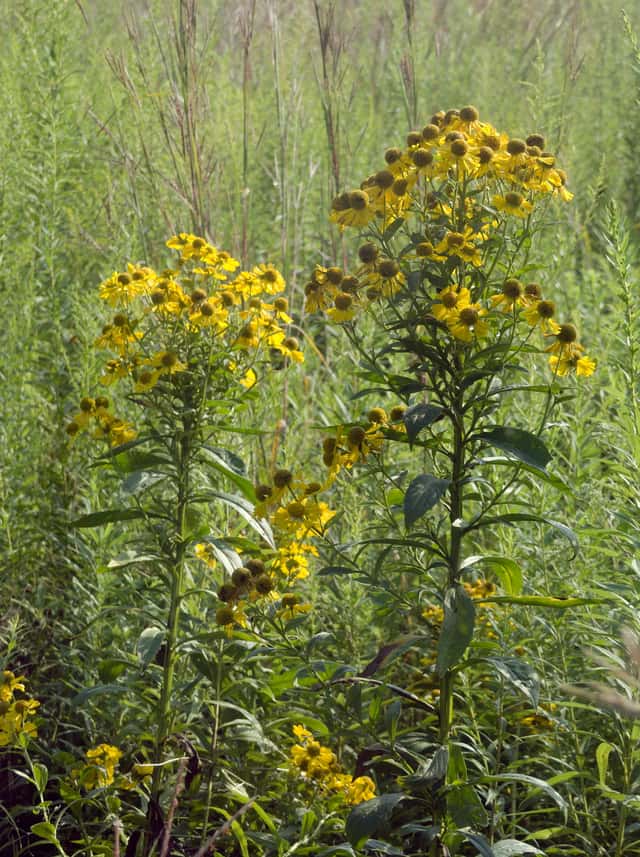
Common Sneezeweed (Helenium autumnale) is a hardy, perennial herbaceous plant in the aster family (Asteraceae), native to North America, where it frequently grows in moist meadows, along banks, and in marshy areas. From July through October, it produces numerous daisy-like flower heads in vibrant shades of yellow, gold, orange, red, and copper-brown, clustered around a spherical, dark center. Depending on the variety, the plant reaches heights of 50 to 160 cm and grows in a bushy, upright habit with dark green, lance-shaped leaves on winged stems. As a robust pollinator plant for bees and butterflies, it is a popular choice for naturalistic gardens, perennial borders, and cottage gardens in late summer and fall.
How to Propagate Common Sneezeweed?
Division
Division in spring rejuvenates the plant, promotes more vigorous growth, and prevents the perennial from dying out in the center.
- 1 Dig up the entire perennial every 3-4 years in spring or fall
- 2 Divide the root ball into several sections with 2-3 shoots each using a sharp spade or your hands
- 3 Immediately replant the sections in prepared, humus-rich soil in a full-sun location
- 4 Water thoroughly after planting and keep moist for the first few weeks
Materials needed:
Sowing
Sneezeweed varieties grown from seed usually do not bloom until the second year; for true-to-type plants, division is more reliable.
- 1 Sow seeds shallowly in April in seed-starting soil at approximately 21°C and cover only lightly with soil
- 2 Keep the seed tray in a bright spot and consistently moist until germination occurs after 7-14 days
- 3 Prick out and harden off after several pairs of leaves appear
- 4 Transplant outdoors to a sunny location after the last frosts
Materials needed:
How Big Does Common Sneezeweed Grow?
TLDR: Common Sneezeweed can reach up to 1.5m tall with Medium growth rate.
Max height
1.5m
Spread
75cm
Growth rate
Medium
Foliage
Deciduous
Warning: Toxic Plant
This plant can be toxic if ingested. Keep out of reach of:
Plant Uses
Ornamental
Great for decoration
Medicinal Uses
- Historically, dried and crushed leaves were used by indigenous peoples of North America as a snuff to induce sneezing (hence the name 'Sneezeweed')—due to the presence of sesquiterpene lactones, this is not considered a recommended application today.
Is your plant showing symptoms?
Click on the symptom to discover possible causes:
What Diseases Commonly Affect Common Sneezeweed?
TLDR: Common Sneezeweed is susceptible to 7 known diseases. Monitor regularly for early detection.
Powdery Mildew
Powdery mildew is a common fungal disease caused by various fungi species including Erysiphe, Podosphaera, Oïdium, and Leveillula. It affects over 10,000 plant species worldwide. The disease thrives in warm, dry climates with high humidity and appears as a distinctive white powdery coating on plant surfaces.
Rust
Rust is a common fungal disease caused by fungi in the order Pucciniales that affects a wide variety of plants. The disease gets its name from the characteristic orange, yellow, or reddish-brown pustules that appear on leaves, resembling metal rust. This obligate fungal parasite requires living plants to survive and can cause significant economic losses in agricultural crops.
Leaf Spot
Leaf spot is a common fungal disease caused by various pathogens including Alternaria, Ascochyta, Colletotrichum, Septoria, and Venturia. It primarily affects leaves, causing discolored spots that can lead to premature leaf drop if left untreated.
Aphids
Aphids are small, soft-bodied, pear-shaped insects (1/16 to 1/8 inch long) that feed by sucking nutrient-rich sap from plants. They reproduce rapidly and can quickly weaken plants, causing distorted growth and transmitting plant viruses. Aphids come in various colors including green, black, red, yellow, brown, and gray. They secrete honeydew, a sticky substance that attracts ants and encourages sooty mold growth.
Meaning & Symbolism
The German name 'Sonnenbraut' (Sun's Bride) refers to the glowing, sun-yellow to fiery-red flower colors that brighten late summer and autumn. The plant is considered a symbol of warmth, joy of life, and the colorful farewell to summer, as it enlivens gardens with its long blooming period until October.
Compare with similar plants
| Attribute | Difficulty | Light | Watering | Pet Safe |
|---|---|---|---|---|
| Field Maple | Easy | Bright indirect | 14d | ✓ |
| Silver Birch | Easy | Direct sun | 14d | ✓ |
| Common Blanketflower | Easy | Direct sun | 10d | ✓ |
| Cushion Bush | Easy | Direct sun | 14d | ✓ |





