Apocynaceae
Hoya Australis: Common Waxflower Care Guide
Hoya australis
Give this hoya bright, indirect light, water only once the top inch or two of soil has dried, and pot it in a fast-draining mix. It rewards consistent, moderate care with clusters of fragrant, wax-like flowers, especially when slightly root-bound.
Every 10 days
Bright indirect
15° - 29°C
40% - 60%
Categories
What is Common Waxflower?
Common Waxflower (Hoya australis) is a easy-care plant from the Apocynaceae family. Hoya australis, known as the common waxflower, is a fast-growing evergreen vine native to eastern and northern Australia, Papua New Guinea, and nearby Pacific islands. Its thick, glossy, succulent-like leaves store water, helping the plant withstand occasional drought. Established plants produce rou...
Common Waxflower grows up to 6.0m, spread of 100cm, watering every 10 days, 15°C – 29°C, 40–60% humidity. It is suitable for indoor environments and safe for pets.
Unlike many tropical plants, Common Waxflower tolerates watering mistakes. Best for beginners. Unlike many popular species, Common Waxflower is safe to keep around pets. Without adequate drainage, root rot can develop within 20 days.
How to Care for Common Waxflower?
TLDR: Common Waxflower needs Bright indirect, watering every 10 days, and temperatures between 15-29°C with 40-60% humidity.
How Often Should You Water Common Waxflower?
Let the top 2-5 cm (1-2 in) of soil dry out completely between waterings; the succulent leaves wrinkle slightly when the plant is thirsty, which is your cue to water deeply and let excess drain away.
How Much Light Does Common Waxflower Need?
Place in bright, indirect light-an east- or west-facing window works well. A few hours of gentle morning sun encourages blooming, but shield the plant from harsh midday or afternoon sun to avoid leaf scorch.
What Is the Best Soil for Common Waxflower?
Use a chunky, fast-draining mix such as orchid bark, perlite, and a little potting soil; good aeration around the roots is essential to prevent rot.
What Pot Should You Use for Common Waxflower?
A terracotta or unglazed clay pot with generous drainage holes helps excess moisture evaporate and suits this hoya's drought-tolerant roots.
Care Schedule
Fertilize
Every 60 days
What Is Common Waxflower and Where Does It Come From?
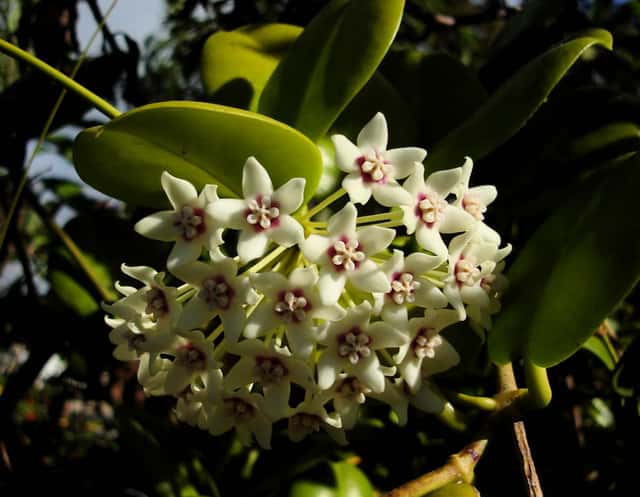
Hoya australis, known as the common waxflower, is a fast-growing evergreen vine native to eastern and northern Australia, Papua New Guinea, and nearby Pacific islands. Its thick, glossy, succulent-like leaves store water, helping the plant withstand occasional drought. Established plants produce rounded clusters of up to 40 star-shaped, waxy white flowers with deep red centers, prized for their strong, sweet fragrance and abundant nectar.
How to Propagate Common Waxflower?
Stem cutting
Change water weekly if rooting in water, and transplant to soil once roots reach 2-3 cm; avoid direct sun during rooting to prevent stress.
- 1 Cut a healthy stem with 2-3 leaves and at least one node just below a leaf.
- 2 Let the cut end callus for a few hours in a dry spot.
- 3 Place the cutting in water or moist, well-draining potting mix, keeping at least one node submerged or buried.
- 4 Keep in bright, indirect light and maintain gentle warmth until roots form.
Materials needed:
How Big Does Common Waxflower Grow?
TLDR: Common Waxflower can reach up to 6.0m tall with Medium growth rate.
Max height
6.0m
Spread
1.0m
Growth rate
Medium
Foliage
Evergreen
Plant Uses
Ornamental
Great for decoration
Is your plant showing symptoms?
Click on the symptom to discover possible causes:
What Diseases Commonly Affect Common Waxflower?
TLDR: Common Waxflower is susceptible to 7 known diseases. Monitor regularly for early detection.
Mealybugs
Mealybugs are small, soft-bodied insects covered with a white, waxy, cottony material. They are common pests of houseplants and outdoor plants in mild climates. These sap-sucking insects feed on plant tissue, causing damage, stunted growth, and can lead to plant death if left untreated. They produce sticky honeydew which attracts sooty mold.
Scale Insects
Scale insects are small sap-sucking pests that appear as brown, shell-like bumps on plant stems and leaves. There are over 25 species, divided into armored (hard) and unarmored (soft) scales. They feed by piercing plant tissue and extracting sap, which weakens the plant and can lead to yellowing, stunted growth, and even death if left untreated. They also excrete honeydew, which attracts ants and promotes sooty mold growth.
Spider Mites
Spider mites are tiny arachnids (less than 1/20 inch long) related to spiders and ticks that feed on plant sap. They thrive in hot, dry conditions and can cause significant damage to ornamental and vegetable plants. During severe infestations, crop losses can reach 14% or higher as these pests disrupt vital plant processes including photosynthesis, carbon dioxide absorption, and transpiration.
Aphids
Aphids are small, soft-bodied, pear-shaped insects (1/16 to 1/8 inch long) that feed by sucking nutrient-rich sap from plants. They reproduce rapidly and can quickly weaken plants, causing distorted growth and transmitting plant viruses. Aphids come in various colors including green, black, red, yellow, brown, and gray. They secrete honeydew, a sticky substance that attracts ants and encourages sooty mold growth.
Meaning & Symbolism
In many cultures the waxflower is linked to enduring, unconditional love and hospitality, largely because of the plant's persistent, ever-blooming nature and the way its dense clusters of flowers evoke welcoming warmth.
Fun Facts
Each flower cluster can hold up to 40 star-shaped blooms, all opening at once to release a powerful, sweet fragrance, especially in the evening.
The waxy texture of the petals comes from a natural coating that helps the flowers retain moisture and resist quick wilting.
In the wild, Hoya australis climbs trees and rocks along coastal Australia using twining stems, sometimes reaching several meters in length.
Frequently asked questions
Is Hoya australis toxic to cats and dogs?
Why isn't my Hoya australis blooming?
How often should I water Hoya australis?
How do I fix wrinkled or yellowing leaves?
Compare with similar plants
| Attribute | Difficulty | Light | Watering | Pet Safe |
|---|---|---|---|---|
| Field Maple | Easy | Bright indirect | 14d | ✓ |
| Silver Birch | Easy | Direct sun | 14d | ✓ |
| Common Blanketflower | Easy | Direct sun | 10d | ✓ |
| Cushion Bush | Easy | Direct sun | 14d | ✓ |





