Asparagaceae
Compact Corn Plant (Dracaena fragrans 'Compacta')
Dracaena fragrans 'Compacta'
Easy care: medium to bright indirect light, moderate watering that allows the topsoil to dry between waterings, and average room humidity. Grows slowly and rarely needs pruning or frequent repotting.
Every 12 days
Partial shade
16° - 27°C
40% - 60%
Categories
What is Compact Corn Plant?
Compact Corn Plant (Dracaena fragrans 'Compacta') is a easy-care plant from the Asparagaceae family. The Compact Corn Plant (Dracaena fragrans 'Compacta') is a dwarf cultivar of the classic corn plant, prized for its dense rosette of glossy, dark green leaves that rarely need pruning to keep a tidy shape. Native to tropical regions of Africa, this compact form typically stays under 1.2 m tall when...
Compact Corn Plant grows up to 1.2m, spread of 60cm, watering every 12 days, 16°C – 27°C, 40–60% humidity. It is suitable for indoor environments and not safe for pets.
Unlike many tropical plants, Compact Corn Plant tolerates watering mistakes. Best for beginners. Without precautions, ingestion can cause irritation in pets. Keep out of reach of cats and dogs. Without adequate drainage, root rot can develop within 24 days.
How to Care for Compact Corn Plant?
TLDR: Compact Corn Plant needs Partial shade, watering every 12 days, and temperatures between 16-27°C with 40-60% humidity.
How Often Should You Water Compact Corn Plant?
Water only once the top half of the soil feels dry, typically every 10-14 days in summer and every 3 weeks in winter. Use filtered or rested (24h) water since the plant is sensitive to fluoride and chlorine, which cause brown leaf-tip burn.
How Much Light Does Compact Corn Plant Need?
Thrives in medium to bright indirect light and tolerates low light. Avoid direct sun, especially afternoon sun, which scorches and bleaches the leaves.
What Is the Best Soil for Compact Corn Plant?
Use a light, well-draining potting mix of peat/coco coir, pine bark, and perlite. Avoid soggy soil, which encourages root rot.
What Pot Should You Use for Compact Corn Plant?
Ceramic or plastic pot with drainage holes, only slightly larger than the root ball.
Care Schedule
Fertilize
Every 60 days
Misting
Every 14 days
Rotate
Every 30 days
Repot
Every 730 days
What Is Compact Corn Plant and Where Does It Come From?
The Compact Corn Plant (Dracaena fragrans 'Compacta') is a dwarf cultivar of the classic corn plant, prized for its dense rosette of glossy, dark green leaves that rarely need pruning to keep a tidy shape. Native to tropical regions of Africa, this compact form typically stays under 1.2 m tall when grown in containers, making it a popular choice for offices, low-light rooms, and small apartments. It is one of the most forgiving and low-maintenance houseplants available, tolerating low light and occasional neglect.
How to Propagate Compact Corn Plant?
Stem cutting
If rooting in water, change it every few days and move to soil once roots reach 1-2 inches (3-5 cm).
- 1 Cut a 4-6 inch (10-15 cm) section of stem with a healthy node using sterilized shears
- 2 Let the cut end callous over for a few hours in a shaded spot
- 3 Plant the cutting in lightly moist potting mix or place it in water
- 4 Keep in indirect light at 70-80°F (21-27°C) until roots form
Materials needed:
How Big Does Compact Corn Plant Grow?
TLDR: Compact Corn Plant can reach up to 1.2m tall with Slow growth rate.
Max height
1.2m
Spread
60cm
Growth rate
Slow
Foliage
Evergreen
Warning: Toxic Plant
This plant can be toxic if ingested. Keep out of reach of:
Plant Uses
Ornamental
Great for decoration
Air Purifying
Improves air quality
Is your plant showing symptoms?
Click on the symptom to discover possible causes:
What Diseases Commonly Affect Compact Corn Plant?
TLDR: Compact Corn Plant is susceptible to 6 known diseases. Monitor regularly for early detection.
Root Rot
Root rot is a serious fungal disease that affects the root system of plants, causing them to decay and die. It is primarily caused by overwatering, poor drainage, or soil-borne fungi such as Pythium, Phytophthora, Rhizoctonia, and Fusarium. The disease thrives in waterlogged conditions where roots are deprived of oxygen, making them susceptible to fungal infection.
Leaf Spot
Leaf spot is a common fungal disease caused by various pathogens including Alternaria, Ascochyta, Colletotrichum, Septoria, and Venturia. It primarily affects leaves, causing discolored spots that can lead to premature leaf drop if left untreated.
Bacterial Leaf Spot
Bacterial leaf spot is a plant disease caused by bacteria in the Xanthomonas and Pseudomonas genera that affects various ornamental and edible plants. The bacteria infect leaves through wounds or natural openings, causing characteristic lesions that can lead to premature leaf drop and plant weakening.
Scale Insects
Scale insects are small sap-sucking pests that appear as brown, shell-like bumps on plant stems and leaves. There are over 25 species, divided into armored (hard) and unarmored (soft) scales. They feed by piercing plant tissue and extracting sap, which weakens the plant and can lead to yellowing, stunted growth, and even death if left untreated. They also excrete honeydew, which attracts ants and promotes sooty mold growth.
Meaning & Symbolism
Regarded as a symbol of good luck, prosperity, and purified energy in homes and offices.
Fun Facts
It was one of the plants tested in NASA's famous Clean Air Study for removing indoor air toxins
The Compacta cultivar grows much slower than standard Dracaena fragrans, rarely exceeding 4 feet (1.2 m)
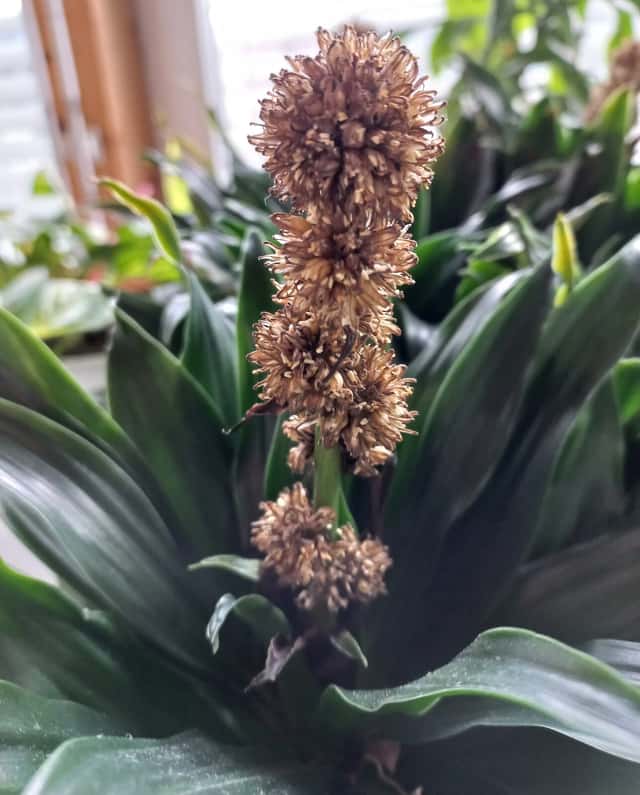
Its flowers, when they appear, are small, white, and intensely fragrant, usually opening at night
Frequently asked questions
Is the Compact Corn Plant toxic to cats and dogs?
How often should I water my Compact Corn Plant?
Why are the leaf tips on my Dracaena turning brown?
How much light does a Compact Corn Plant need?
Compare with similar plants
| Attribute | Difficulty | Light | Watering | Pet Safe |
|---|---|---|---|---|
| Field Maple | Easy | Bright indirect | 14d | ✓ |
| Silver Birch | Easy | Direct sun | 14d | ✓ |
| Common Blanketflower | Easy | Direct sun | 10d | ✓ |
| Cushion Bush | Easy | Direct sun | 14d | ✓ |





