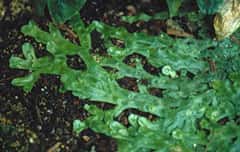
Conocephalaceae
Conocephalum – Great Scented Liverwort
Conocephalum
Keep substrate constantly moist but not waterlogged. Mist regularly to maintain high ambient humidity. Never allow to fully dry out.
Every 3 days
Low light
5° - 25°C
70% - 100%
Categories
What is Great Scented Liverwort?
Great Scented Liverwort (Conocephalum) is a easy-care plant from the Conocephalaceae family. Conocephalum is a genus of thallose liverworts (bryophytes) in the family Conocephalaceae, best known for the distinctive hexagonal patterning on their thallus surface resembling snake scales — earning them the nickname "snakeskin liverwort." These non-vascular plants thrive in shaded, moist habitat...
Great Scented Liverwort grows up to 5cm, spread of 30cm, watering every 3 days, 5°C – 25°C, 70–100% humidity. It is suitable for indoor environments and safe for pets.
Unlike many tropical plants, Great Scented Liverwort tolerates watering mistakes. Best for beginners. Unlike many popular species, Great Scented Liverwort is safe to keep around pets. Without adequate drainage, root rot can develop within 7 days.
How to Care for Great Scented Liverwort?
TLDR: Great Scented Liverwort needs Low light, watering every 3 days, and temperatures between 5-25°C with 70-100% humidity.
How Often Should You Water Great Scented Liverwort?
Mist or soak the substrate with dechlorinated water every 2–3 days. Distilled or rain water is preferred.
How Much Light Does Great Scented Liverwort Need?
Prefers low to moderate indirect light. Avoid direct sun which desiccates the thallus. Full-spectrum LED lighting works well in enclosed terrariums.
What Is the Best Soil for Great Scented Liverwort?
Peaty, well-draining substrate rich in organic matter. Slightly acidic to neutral pH (5.0–7.0). A mix of peat moss and perlite works well.
What Pot Should You Use for Great Scented Liverwort?
Shallow tray, glass terrarium, or vivarium enclosure with good moisture retention.
Care Schedule
Fertilize
Every 14 days
Misting
Every 3 days
Rotate
Every 7 days
Repot
Every 365 days
What Is Great Scented Liverwort and Where Does It Come From?
Conocephalum is a genus of thallose liverworts (bryophytes) in the family Conocephalaceae, best known for the distinctive hexagonal patterning on their thallus surface resembling snake scales — earning them the nickname "snakeskin liverwort." These non-vascular plants thrive in shaded, moist habitats such as stream banks, wet rocks, and forest floors. They are widely used in terrariums, vivariums, and paludariums as a lush, low-growing green carpet.
How Big Does Great Scented Liverwort Grow?
TLDR: Great Scented Liverwort can reach up to 5cm tall with Slow growth rate.
Max height
5cm
Spread
30cm
Growth rate
Slow
Foliage
Evergreen
Plant Uses
Ornamental
Great for decoration
Ground Cover
Soil coverage
Is your plant showing symptoms?
Click on the symptom to discover possible causes:
What Diseases Commonly Affect Great Scented Liverwort?
TLDR: Great Scented Liverwort is susceptible to 8 known diseases. Monitor regularly for early detection.
Root Rot
Root rot is a serious fungal disease that affects the root system of plants, causing them to decay and die. It is primarily caused by overwatering, poor drainage, or soil-borne fungi such as Pythium, Phytophthora, Rhizoctonia, and Fusarium. The disease thrives in waterlogged conditions where roots are deprived of oxygen, making them susceptible to fungal infection.
Overwatering
Overwatering occurs when plants receive too much water, depriving roots of oxygen and causing root rot. This environmental stress is one of the most common causes of houseplant death, as waterlogged soil prevents roots from breathing and functioning properly.
Underwatering
Underwatering or drought stress is a physiological disorder that occurs when the amount of water a plant loses through transpiration exceeds the amount its roots can absorb from the soil. This leads to cellular dehydration and various visible symptoms that can compromise plant health and productivity.
Low Humidity Stress
Low humidity stress occurs when indoor air becomes too dry, causing plants to lose moisture faster than they can absorb it through their roots. This is especially common during winter heating periods, near radiators and heating vents, or in air-conditioned spaces. Tropical plants are particularly susceptible to low humidity damage.
Fun Facts
The hexagonal pattern on the thallus resembles snake scales, earning its popular name "snakeskin liverwort."
Liverworts like Conocephalum are among the oldest land plants on Earth, with a fossil record stretching back over 470 million years.
When handled, the thallus releases a pleasant earthy, herbal scent.
Conocephalum absorbs water directly through its thallus — it has no true roots, only rhizoids for anchoring.
Frequently asked questions
Does Conocephalum need soil?
Can I grow Conocephalum in a closed terrarium?
How often should I water it?
Compare with similar plants
| Attribute | Difficulty | Light | Watering | Pet Safe |
|---|---|---|---|---|
| Field Maple | Easy | Bright indirect | 14d | ✓ |
| Silver Birch | Easy | Direct sun | 14d | ✓ |
| Common Blanketflower | Easy | Direct sun | 10d | ✓ |
| Cushion Bush | Easy | Direct sun | 14d | ✓ |





