Poaceae
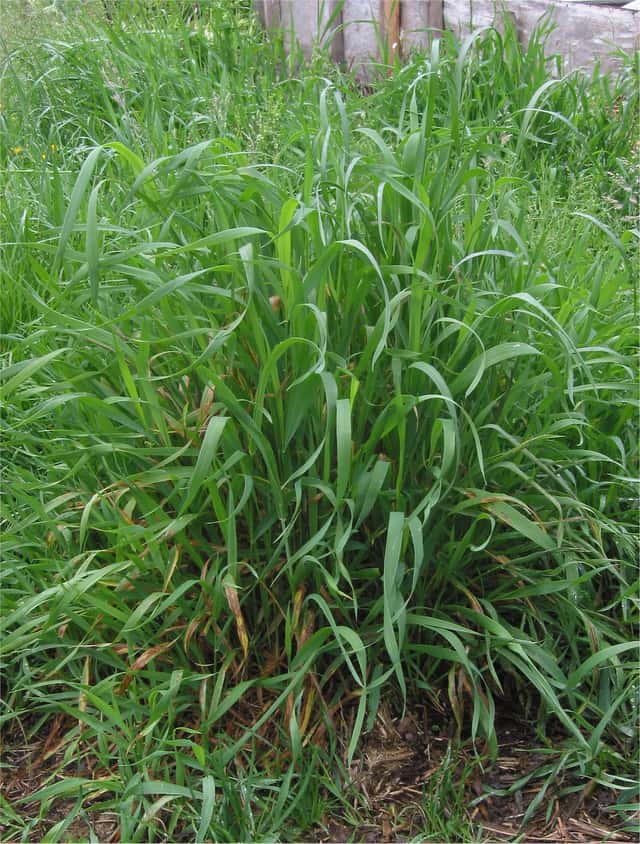
Quackgrass: Ground Cover Plant
Elymus repens
Requires no special care; it grows vigorously even under neglect and in poor soils. The real challenge, if not desired in the garden, is containing its spread, as every rhizome fragment left in the soil can generate a new plant. If intentionally grown as ground cover, it tolerates drought, occasional waterlogging, and almost any exposure.
Every 14 days
Bright indirect
-30° - 35°C
% - %
Categories
What is Quackgrass?
Quackgrass (Elymus repens) is a easy-care plant from the Poaceae family. Quackgrass (Elymus repens) is a perennial rhizomatous grass, widespread across Europe, Asia, and North America, where it is considered one of the most tenacious and difficult-to-eradicate weeds. It spreads rapidly via thin, sharp underground rhizomes capable of regenerating a new plant from even a s...
Quackgrass grows up to 1.5m, spread of 100cm, watering every 14 days, -30°C – 35°C. It is not suitable for indoor environments and safe for pets.
Unlike many tropical plants, Quackgrass tolerates watering mistakes. Best for beginners. Unlike many popular species, Quackgrass is safe to keep around pets.
How to Care for Quackgrass?
TLDR: Quackgrass needs Bright indirect, watering every 14 days, and temperatures between -30-35°C with 40-70% humidity.
How Often Should You Water Quackgrass?
Once established, it is highly drought-tolerant thanks to its dense rhizome system that explores the soil deeply. Watering is rarely necessary, except during the first few months after establishment or during periods of extreme heat.
How Much Light Does Quackgrass Need?
Prefers full sun but adapts well to partial shade; it even grows in low-light positions, though less vigorously.
What Is the Best Soil for Quackgrass?
Adapts to virtually any soil type—sandy, loamy, clay, or limestone—with a pH ranging from acidic to alkaline (approximately 4.2-8.3). It prefers well-drained soils but also tolerates heavy or temporarily water-saturated ground.
What Pot Should You Use for Quackgrass?
Cultivation in pots or indoors is not recommended; it is an outdoor species, invasive and aggressive in growth. If you wish to contain it in a flowerbed, it is preferable to delimit it with root barriers buried at least 12-16 inches (30-40 cm) deep.
What Is Quackgrass and Where Does It Come From?
Quackgrass (Elymus repens) is a perennial rhizomatous grass, widespread across Europe, Asia, and North America, where it is considered one of the most tenacious and difficult-to-eradicate weeds. It spreads rapidly via thin, sharp underground rhizomes capable of regenerating a new plant from even a small severed fragment. It forms dense, matted carpets and tolerates almost any soil type, light, and moisture level, allowing it to grow spontaneously in gardens, fields, hedgerows, and roadsides. Despite being a weed, it has a long traditional history as a medicinal plant and is partially edible.
How Big Does Quackgrass Grow?
TLDR: Quackgrass can reach up to 1.5m tall with Fast growth rate.
Max height
1.5m
Spread
1.0m
Growth rate
Fast
Foliage
Deciduous
Plant Uses
Medicinal
Medicinal properties
Edible
Can be consumed
Ground Cover
Soil coverage
Medicinal Uses
- Rhizome traditionally used as a diuretic and urinary tract cleanser
- Infusion/decoction used for cystitis and urinary tract inflammation
- Traditional use also as a mild laxative and for liver disorders
Culinary Uses
- Edible rhizomes, fresh, dried, roasted, or ground into flour
- Young spring shoots eaten raw in salads
- Seeds can be used, though small and low-yielding, as an emergency cereal
Is your plant showing symptoms?
Click on the symptom to discover possible causes:
What Diseases Commonly Affect Quackgrass?
TLDR: Quackgrass is susceptible to 4 known diseases. Monitor regularly for early detection.
Rust
Rust is a common fungal disease caused by fungi in the order Pucciniales that affects a wide variety of plants. The disease gets its name from the characteristic orange, yellow, or reddish-brown pustules that appear on leaves, resembling metal rust. This obligate fungal parasite requires living plants to survive and can cause significant economic losses in agricultural crops.
Powdery Mildew
Mosaic Virus
Mosaic virus is a group of plant viruses that cause mottled, patchy patterns on leaves and can affect a wide variety of plants. The virus creates characteristic yellow, white, and green mosaic patterns, often accompanied by stunted growth and deformed plant parts. This highly contagious disease spreads rapidly through insect vectors and contaminated tools.
Aphids
Aphids are small, soft-bodied, pear-shaped insects (1/16 to 1/8 inch long) that feed by sucking nutrient-rich sap from plants. They reproduce rapidly and can quickly weaken plants, causing distorted growth and transmitting plant viruses. Aphids come in various colors including green, black, red, yellow, brown, and gray. They secrete honeydew, a sticky substance that attracts ants and encourages sooty mold growth.
Meaning & Symbolism
It is not associated with traditional ornamental symbolism; in popular culture, its ability to regenerate from any root fragment has made it an informal symbol of resilience, tenacity, and persistence.
Compare with similar plants
| Attribute | Difficulty | Light | Watering | Pet Safe |
|---|---|---|---|---|
| Field Maple | Easy | Bright indirect | 14d | ✓ |
| Muriel's Bamboo | Medium | Partial shade | 3d | ✓ |
| Silver Birch | Easy | Direct sun | 14d | ✓ |
| Common Blanketflower | Easy | Direct sun | 10d | ✓ |





