Apiaceae
Cow Parsley (Anthriscus sylvestris)
Anthriscus sylvestris
Grow cow parsley in full sun to partial shade in moisture-retentive but well-drained soil. It thrives with little intervention once established, tolerating a wide range of soils, but resents waterlogging. Deadhead spent flowerheads before seed set to control its enthusiastic self-seeding.
Every 7 days
Bright indirect
-20° - 30°C
% - %
Categories
What is Cow Parsley?
Cow Parsley (Anthriscus sylvestris) is a easy-care plant from the Apiaceae family. Cow parsley is a fast-growing biennial or short-lived perennial umbellifer native to Europe, western Asia, and northwestern Africa. Its hollow, ridged stems rise 60-170 cm tall, topped from late spring into early summer with frothy white umbels of tiny flowers above finely divided, fern-like leaves....
Cow Parsley grows up to 1.7m, spread of 100cm, watering every 7 days, -20°C – 30°C. It is not suitable for indoor environments and not safe for pets.
Unlike many tropical plants, Cow Parsley tolerates watering mistakes. Best for beginners. Without precautions, ingestion can cause irritation in pets. Keep out of reach of cats and dogs.
How to Care for Cow Parsley?
TLDR: Cow Parsley needs Bright indirect, watering every 7 days, and temperatures between -20-30°C with 40-70% humidity.
How Often Should You Water Cow Parsley?
Water regularly while young, then let the soil dry slightly between waterings once established - cow parsley is sensitive to constantly soggy soil and prone to root rot in waterlogged ground.
How Much Light Does Cow Parsley Need?
Give it full sun for the fullest flowering, though it tolerates partial shade well and is often found happily naturalized under light woodland cover.
What Is the Best Soil for Cow Parsley?
Plant in well-draining soil enriched with organic matter; it tolerates chalk, clay, loam, and sandy soils and is unfussy about pH, from slightly acid to alkaline.
What Pot Should You Use for Cow Parsley?
Best grown directly in the ground rather than pots; if container growing, use a large, deep pot with generous drainage holes since it develops a substantial taproot.
What Is Cow Parsley and Where Does It Come From?
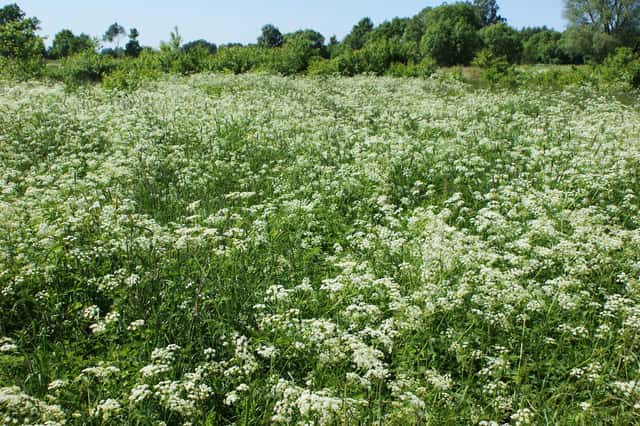
Cow parsley is a fast-growing biennial or short-lived perennial umbellifer native to Europe, western Asia, and northwestern Africa. Its hollow, ridged stems rise 60-170 cm tall, topped from late spring into early summer with frothy white umbels of tiny flowers above finely divided, fern-like leaves. A common sight along hedgerows, woodland edges, and roadside verges, it self-seeds readily and naturalizes easily in wildflower gardens.
How to Propagate Cow Parsley?
Sowing seed
Fresh seed germinates far better than stored seed; the plant self-seeds so readily that deliberate propagation is rarely needed.
- 1 Collect ripe, dry seed from the umbels in summer
- 2 Sow directly outdoors in autumn to let winter cold naturally stratify the seed, or in spring after artificial cold treatment
- 3 Keep the soil lightly moist until germination
- 4 Thin seedlings to about 30 cm apart once they have a few true leaves
Materials needed:
Clump division
Division works best on plants behaving as short-lived perennials; not every individual survives past its second year.
- 1 Dig up an established clump of a short-lived perennial plant
- 2 Split the crown with a sharp knife or spade, making sure each section keeps roots and shoots
- 3 Replant immediately at the same depth and water well
Materials needed:
How Big Does Cow Parsley Grow?
TLDR: Cow Parsley can reach up to 1.7m tall with Fast growth rate.
Max height
1.7m
Spread
1.0m
Growth rate
Fast
Foliage
Semi-evergreen
Warning: Toxic Plant
This plant can be toxic if ingested. Keep out of reach of:
Plant Uses
Ornamental
Great for decoration
Is your plant showing symptoms?
Click on the symptom to discover possible causes:
What Diseases Commonly Affect Cow Parsley?
TLDR: Cow Parsley is susceptible to 4 known diseases. Monitor regularly for early detection.
Aphids
Aphids are small, soft-bodied, pear-shaped insects (1/16 to 1/8 inch long) that feed by sucking nutrient-rich sap from plants. They reproduce rapidly and can quickly weaken plants, causing distorted growth and transmitting plant viruses. Aphids come in various colors including green, black, red, yellow, brown, and gray. They secrete honeydew, a sticky substance that attracts ants and encourages sooty mold growth.
Powdery Mildew
Powdery mildew is a common fungal disease caused by various fungi species including Erysiphe, Podosphaera, Oïdium, and Leveillula. It affects over 10,000 plant species worldwide. The disease thrives in warm, dry climates with high humidity and appears as a distinctive white powdery coating on plant surfaces.
Slugs and Snails
Slugs and snails are mollusks that feed on plant tissue, causing irregular holes in leaves and damage to young seedlings. They are most active at night and in moist conditions, leaving characteristic silvery slime trails. These pests can quickly devastate gardens, especially during wet seasons.
Spider Mites
Spider mites are tiny arachnids (less than 1/20 inch long) related to spiders and ticks that feed on plant sap. They thrive in hot, dry conditions and can cause significant damage to ornamental and vegetable plants. During severe infestations, crop losses can reach 14% or higher as these pests disrupt vital plant processes including photosynthesis, carbon dioxide absorption, and transpiration.
Meaning & Symbolism
In British folklore its old country name 'mother-die' comes from a superstition warning that bringing the flowers indoors invites the death of a parent; more cheerfully, its billowing white blooms are one of the classic heralds of an English spring.
Fun Facts
Its old country name 'mother-die' comes from a childhood superstition that picking the flowers and bringing them indoors would cause a parent's death.
Cow parsley is so common along British roadsides in spring that entire lanes seem to foam with its white flowers, earning it nicknames like 'Queen Anne's lace' and 'lady's lace'.
It's a member of the carrot family, Apiaceae, the same family as parsley, celery, and the deadly poison hemlock it's often mistaken for.
Despite looking delicate, cow parsley can grow over 1.5 meters tall and often blooms so densely it forms a continuous white haze along hedgerows.
Frequently asked questions
Is cow parsley poisonous?
How do I stop cow parsley from spreading too much?
Does cow parsley need full sun?
Is cow parsley the same as Queen Anne's lace?
Compare with similar plants
| Attribute | Difficulty | Light | Watering | Pet Safe |
|---|---|---|---|---|
| Field Maple | Easy | Bright indirect | 14d | ✓ |
| Silver Birch | Easy | Direct sun | 14d | ✓ |
| Common Blanketflower | Easy | Direct sun | 10d | ✓ |
| Cushion Bush | Easy | Direct sun | 14d | ✓ |





