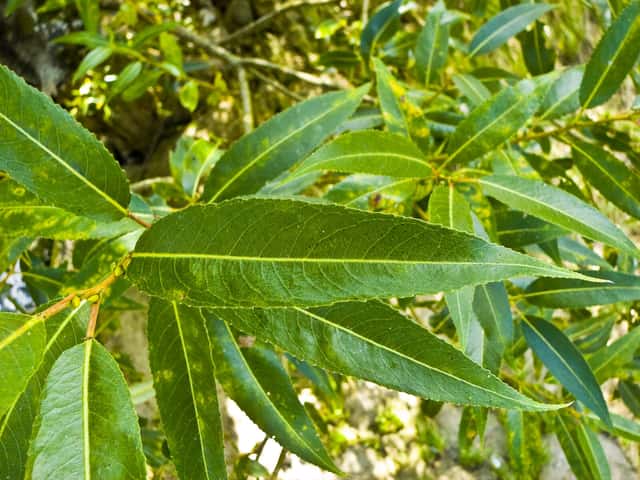
Salicaceae
Crack willow: Full Sun Plant
Salix × fragilis
A tough, low-maintenance tree for wet to waterlogged soils in full sun. It needs almost no care once established, but its vigorous roots should be kept well away from drains and foundations.
Every 3 days
Direct sun
-30° - 35°C
40% - 80%
Categories
What is Crack willow?
Crack willow (Salix × fragilis) is a easy-care plant from the Salicaceae family. Salix × fragilis, the crack willow, is a fast-growing deciduous tree native to Eurasia, common along rivers, marshes and wet ground. It reaches around 15 m and is named for its twigs, which snap off cleanly and readily root where they land.
Crack willow grows up to 15.0m, spread of 1500cm, watering every 3 days, -30°C – 35°C, 40–80% humidity. It is not suitable for indoor environments and safe for pets.
Unlike many tropical plants, Crack willow tolerates watering mistakes. Best for beginners. Unlike many popular species, Crack willow is safe to keep around pets.
How to Care for Crack willow?
TLDR: Crack willow needs Direct sun, watering every 3 days, and temperatures between -30-35°C with 40-80% humidity.
How Often Should You Water Crack willow?
Enjoys constantly moist or even waterlogged soil; water generously during dry spells, especially in the first few years.
How Much Light Does Crack willow Need?
Grow in full sun — it cannot grow in shade and is strongest with direct light all day.
What Is the Best Soil for Crack willow?
Tolerates sandy, clay or poor soils as long as they stay moist; prefers a slightly acidic to neutral pH.
What Pot Should You Use for Crack willow?
Best planted directly in the ground in a large, damp site; rarely container-grown due to its size and aggressive roots.
What Is Crack willow and Where Does It Come From?
Salix × fragilis, the crack willow, is a fast-growing deciduous tree native to Eurasia, common along rivers, marshes and wet ground. It reaches around 15 m and is named for its twigs, which snap off cleanly and readily root where they land.
How to Propagate Crack willow?
Hardwood cutting
- Willows root extremely easily, no rooting hormone needed.
- 1 Take the cutting
Cut a healthy 20-30 cm woody stem in late winter.
- 2 Plant
Push half the cutting into moist soil or stand it in water.
- 3 Wait
Keep it moist; roots appear within a few weeks.
Materials needed:
How Big Does Crack willow Grow?
TLDR: Crack willow can reach up to 15.0m tall with Fast growth rate.
Max height
15.0m
Spread
15.0m
Growth rate
Fast
Foliage
Deciduous
Plant Uses
Ornamental
Great for decoration
Medicinal
Medicinal properties
Medicinal Uses
- Bark contains salicin, the historical precursor of acetylsalicylic acid (aspirin)
Is your plant showing symptoms?
Click on the symptom to discover possible causes:
What Diseases Commonly Affect Crack willow?
TLDR: Crack willow is susceptible to 7 known diseases. Monitor regularly for early detection.
Aphids
Aphids are small, soft-bodied, pear-shaped insects (1/16 to 1/8 inch long) that feed by sucking nutrient-rich sap from plants. They reproduce rapidly and can quickly weaken plants, causing distorted growth and transmitting plant viruses. Aphids come in various colors including green, black, red, yellow, brown, and gray. They secrete honeydew, a sticky substance that attracts ants and encourages sooty mold growth.
Caterpillars
Caterpillars are the larval stage of moths and butterflies that feed voraciously on plant foliage, stems, flowers, and fruits. Common species include cabbage loopers, tomato hornworms, armyworms, and cutworms. These pests can cause extensive damage by consuming large amounts of plant tissue in a short time. They vary in size from small (1/4 inch) to large (5 inches), with colors ranging from green to brown, often featuring stripes or spots. Caterpillars are highly mobile and can quickly spread throughout gardens, making them one of the most destructive common pests.
Rust
Rust is a common fungal disease caused by fungi in the order Pucciniales that affects a wide variety of plants. The disease gets its name from the characteristic orange, yellow, or reddish-brown pustules that appear on leaves, resembling metal rust. This obligate fungal parasite requires living plants to survive and can cause significant economic losses in agricultural crops.
Anthracnose
Anthracnose is a fungal disease caused by fungi in the genus Colletotrichum that affects many plants, including vegetables, fruits, and trees. The disease thrives in cool, wet conditions, causing dark, sunken lesions on leaves, stems, flowers, and fruits.
Meaning & Symbolism
Flexibility, resilience and renewal.
Compare with similar plants
| Attribute | Difficulty | Light | Watering | Pet Safe |
|---|---|---|---|---|
| Field Maple | Easy | Bright indirect | 14d | ✓ |
| Silver Birch | Easy | Direct sun | 14d | ✓ |
| Common Blanketflower | Easy | Direct sun | 10d | ✓ |
| Cushion Bush | Easy | Direct sun | 14d | ✓ |





