Plantaginaceae
Creeping Gloxinia: Fast Growing
Asarina erubescens
Give creeping gloxinia full sun to light afternoon shade, well-draining sandy or loamy soil, and consistently moist (never waterlogged) conditions through the growing season. It is a vigorous climber, so provide a trellis, fence, or support early on and pinch young shoots to encourage bushy growth. Feed with a balanced liquid fertilizer every two weeks, switching to a higher-potash formula once flower buds form, and protect the roots from freezing in winter.
Every 4 days
Bright indirect
10° - 30°C
40% - 70%
Categories
What is Creeping Gloxinia?
Creeping Gloxinia (Asarina erubescens) is a medium-care plant from the Plantaginaceae family. Asarina erubescens, commonly known as creeping gloxinia or climbing snapdragon, is a fast-growing evergreen perennial vine native to the oak forests and canyon walls of the Sierra Madre Oriental range in Mexico, at elevations between 1,000 and 2,200 meters. Rather than using tendrils, it climbs by t...
Creeping Gloxinia grows up to 2.5m, spread of 100cm, watering every 4 days, 10°C – 30°C, 40–70% humidity. It is suitable for indoor environments and safe for pets.
Unlike many popular species, Creeping Gloxinia is safe to keep around pets. Without adequate drainage, root rot can develop within 8 days.
How to Care for Creeping Gloxinia?
TLDR: Creeping Gloxinia needs Bright indirect, watering every 4 days, and temperatures between 10-30°C with 40-70% humidity.
How Often Should You Water Creeping Gloxinia?
Keep the soil evenly moist but never soggy, watering roughly every 4-5 days (more often in hot weather, less in cool months). Water at the base of the plant rather than overhead to keep foliage dry and reduce the risk of fungal disease, and let the top of the soil dry slightly between waterings once the plant is established.
How Much Light Does Creeping Gloxinia Need?
Provide full sun for the best flowering; in very hot climates, a little afternoon shade helps prevent leaf scorch. Indoors, place it in the brightest spot available, such as a south- or east-facing window, and consider supplemental lighting for young seedlings.
What Is the Best Soil for Creeping Gloxinia?
Plant in a light, sandy or loamy, well-draining mix with a near-neutral pH (around 6.0-7.0). Adding perlite or coarse sand improves drainage in containers, and heavy, waterlogged soil should be avoided since it encourages root and crown rot.
What Pot Should You Use for Creeping Gloxinia?
Choose a hanging basket or a wide, sturdy container fitted with a trellis or stake, and make sure it has ample drainage holes; the twining stems will climb or cascade beautifully, but the roots dislike sitting in water.
Care Schedule
Fertilize
Every 14 days
Rotate
Every 14 days
Repot
Every 365 days
What Is Creeping Gloxinia and Where Does It Come From?
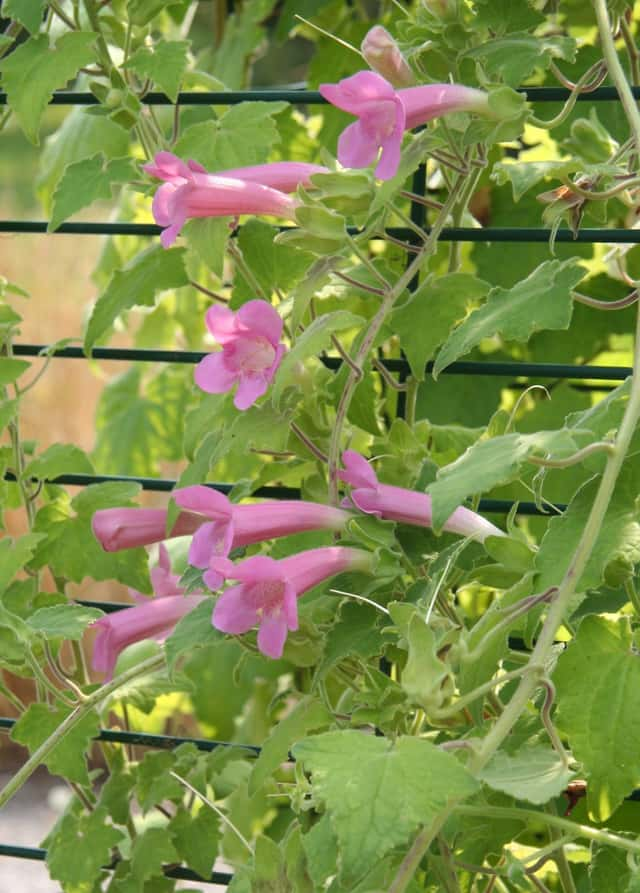
Asarina erubescens, commonly known as creeping gloxinia or climbing snapdragon, is a fast-growing evergreen perennial vine native to the oak forests and canyon walls of the Sierra Madre Oriental range in Mexico, at elevations between 1,000 and 2,200 meters. Rather than using tendrils, it climbs by twining its soft, velvety, triangular leaf-stalks around trellises, fences, and other supports, reaching lengths of up to 2.5 m (8 ft) in a single season. From summer through the first frost it produces a continuous show of tubular, trumpet-shaped flowers up to 7 cm long, rosy-pink with a paler throat (white in some cultivated forms), which attract hummingbirds and butterflies. Grown as a tender perennial in USDA zones 7b-11 and as a fast summer annual elsewhere, it is a popular choice for hanging baskets, trellises, and container gardens.
How to Propagate Creeping Gloxinia?
Seed
Do not bury seeds deeply; they need some light to germinate. Provide supplemental lighting for strong early growth.
- 1 Sow seeds shallowly and thinly onto a moist seed-starting mix in spring.
- 2 Keep the temperature between 15-21C (60-70F) until germination.
- 3 Transplant seedlings once they have their first true leaves and are large enough to handle.
Materials needed:
Stem Cutting
Root cuttings promptly after taking them since they wilt quickly if left out. A humidity dome speeds rooting.
- 1 Take a 10-15 cm non-flowering stem cutting with 2-3 leaf nodes.
- 2 Remove the lower leaves and plant the cutting immediately in a moist, well-draining potting mix.
- 3 Keep the cutting warm and consistently moist until roots establish, then pinch the tip to encourage branching.
Materials needed:
How Big Does Creeping Gloxinia Grow?
TLDR: Creeping Gloxinia can reach up to 2.5m tall with Fast growth rate.
Max height
2.5m
Spread
1.0m
Growth rate
Fast
Foliage
Evergreen
Plant Uses
Ornamental
Great for decoration
Is your plant showing symptoms?
Click on the symptom to discover possible causes:
What Diseases Commonly Affect Creeping Gloxinia?
TLDR: Creeping Gloxinia is susceptible to 9 known diseases. Monitor regularly for early detection.
Powdery Mildew
Powdery mildew is a common fungal disease caused by various fungi species including Erysiphe, Podosphaera, Oïdium, and Leveillula. It affects over 10,000 plant species worldwide. The disease thrives in warm, dry climates with high humidity and appears as a distinctive white powdery coating on plant surfaces.
Root Rot
Root rot is a serious fungal disease that affects the root system of plants, causing them to decay and die. It is primarily caused by overwatering, poor drainage, or soil-borne fungi such as Pythium, Phytophthora, Rhizoctonia, and Fusarium. The disease thrives in waterlogged conditions where roots are deprived of oxygen, making them susceptible to fungal infection.
Whiteflies
Whiteflies are small, soft-bodied, winged insects closely related to aphids and mealybugs. They are moth-like in appearance, about 1/16 inch long, triangular in shape, and gray-white in color. These sap-sucking pests feed on plant tissue, causing yellowing, stunted growth, and wilting. They also excrete honeydew, which attracts ants and promotes sooty mold growth. Whiteflies can transmit serious plant viruses.
Mealybugs
Mealybugs are small, soft-bodied insects covered with a white, waxy, cottony material. They are common pests of houseplants and outdoor plants in mild climates. These sap-sucking insects feed on plant tissue, causing damage, stunted growth, and can lead to plant death if left untreated. They produce sticky honeydew which attracts sooty mold.
Meaning & Symbolism
As a vigorous, ever-climbing vine that flowers non-stop from summer into fall, creeping gloxinia is often associated with resilience, warmth, and welcoming hospitality, a plant that reaches upward and keeps blooming through adversity.
Compare with similar plants
| Attribute | Difficulty | Light | Watering | Pet Safe |
|---|---|---|---|---|
| Dark Fieldcap | Medium | Low light | 2d | ⚠️ |
| Azalea | Medium | Partial shade | 3d | ⚠️ |
| Muriel's Bamboo | Medium | Partial shade | 3d | ✓ |
| Bougainvillea | Medium | Direct sun | 7d | ⚠️ |
Choose & Compare
Sources & References
- Asarina erubescens - RHS
- Lophospermum erubescens - Wikipedia
- Creeping Gloxinia Info - Gardening Know How
- Lophospermum: How To Grow and Care For Mexican Twist - Plant Care Today
- Toxic and Non-toxic Plants: Creeping Gloxinia - ASPCA
- Lophospermum erubescens - Creeping Gloxinia - Rainyside Gardeners
- Asarina Plant Growing & Care Guide for Gardeners




