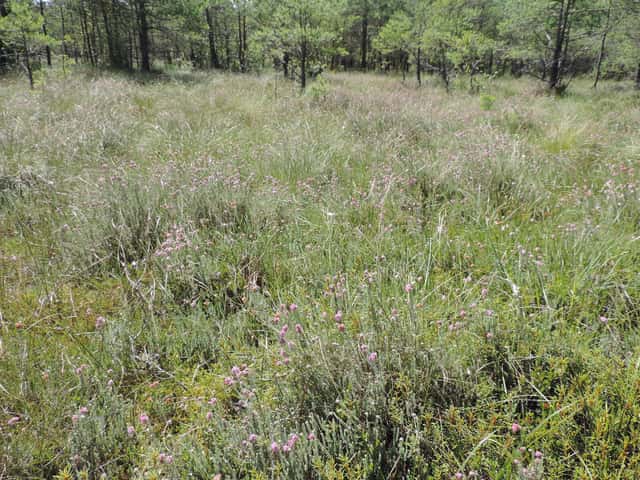
Ericaceae
Cross-leaved Heath (Erica tetralix)
Erica tetralix
Grow in full sun in acidic (pH 4 to 6), peaty, constantly moist, lime-free soil. It cannot tolerate shade or dry soil. Slow-growing and compact, hardy to USDA zone 3.
Every 4 days
Bright indirect
-40° - °C
% - %
Categories
What is Cross-leaved Heath?
Cross-leaved Heath (Erica tetralix) is a medium-care plant from the Ericaceae family. Low evergreen shrub of the Ericaceae family, native to bogs, wet heaths and damp coniferous woodland across western Europe. It has erect or creeping stems, grey-green glandular leaves arranged in whorls of four, and drooping clusters of small pink bell-shaped flowers from summer to autumn.
Cross-leaved Heath grows up to 30cm, spread of 50cm, watering every 4 days. It is not suitable for indoor environments and safe for pets.
Unlike many popular species, Cross-leaved Heath is safe to keep around pets.
How to Care for Cross-leaved Heath?
TLDR: Cross-leaved Heath needs Bright indirect, watering every 4 days, and temperatures between -40-30°C with 40-70% humidity.
How Often Should You Water Cross-leaved Heath?
Keep the soil constantly moist and never let it dry out. Use rainwater or lime-free water, as it is a calcifuge.
How Much Light Does Cross-leaved Heath Need?
Needs full sun in an open position; it will not thrive in shade.
What Is the Best Soil for Cross-leaved Heath?
Use acidic, peaty or light sandy loam that is poor in nutrients and free of lime. It tolerates some dryness in gardens but prefers boggy conditions.
What Pot Should You Use for Cross-leaved Heath?
Clay or plastic pot with drainage holes, filled with acidic peat-based compost kept moist; best grown outdoors.
What Is Cross-leaved Heath and Where Does It Come From?
Low evergreen shrub of the Ericaceae family, native to bogs, wet heaths and damp coniferous woodland across western Europe. It has erect or creeping stems, grey-green glandular leaves arranged in whorls of four, and drooping clusters of small pink bell-shaped flowers from summer to autumn.
How to Propagate Cross-leaved Heath?
Seed sowing
Seed is tiny; use lime-free acidic compost and rainwater.
- 1 Collect seed when it ripens, around October
- 2 Sow on the surface of acidic peaty compost without burying it deeply
- 3 Keep constantly moist in a bright position
Materials needed:
Cuttings
Use clean tools and lime-free mix; avoid waterlogging the rooting medium.
- 1 Take tips of healthy non-flowering shoots
- 2 Strip the lower leaves
- 3 Insert into moist acidic peaty mix
- 4 Keep moist and out of strong sun until rooted
Materials needed:
Layering
Uses the plant's creeping habit; keep the rooting point constantly moist.
- 1 Bend a low stem down to the soil
- 2 Pin its middle section under moist acidic soil
- 3 Wait for roots and separate from the parent plant
Materials needed:
How Big Does Cross-leaved Heath Grow?
TLDR: Cross-leaved Heath can reach up to 30cm tall with Slow growth rate.
Max height
30cm
Spread
50cm
Growth rate
Slow
Foliage
Evergreen
Plant Uses
Ornamental
Great for decoration
Ground Cover
Soil coverage
Is your plant showing symptoms?
Click on the symptom to discover possible causes:
What Diseases Commonly Affect Cross-leaved Heath?
TLDR: Cross-leaved Heath is susceptible to 5 known diseases. Monitor regularly for early detection.
Phytophthora Root Rot
Disease caused by fungus-like organisms (oomycetes) that live in soil and can survive for years. It affects roots, stem, and crown of plants, being especially severe in waterlogged or poorly drained soils. It is the second most common cause of root rot in trees and shrubs.
Root Rot
Root rot is a serious fungal disease that affects the root system of plants, causing them to decay and die. It is primarily caused by overwatering, poor drainage, or soil-borne fungi such as Pythium, Phytophthora, Rhizoctonia, and Fusarium. The disease thrives in waterlogged conditions where roots are deprived of oxygen, making them susceptible to fungal infection.
Powdery Mildew
Powdery mildew is a common fungal disease caused by various fungi species including Erysiphe, Podosphaera, Oïdium, and Leveillula. It affects over 10,000 plant species worldwide. The disease thrives in warm, dry climates with high humidity and appears as a distinctive white powdery coating on plant surfaces.
Spider Mites
Spider mites are tiny arachnids (less than 1/20 inch long) related to spiders and ticks that feed on plant sap. They thrive in hot, dry conditions and can cause significant damage to ornamental and vegetable plants. During severe infestations, crop losses can reach 14% or higher as these pests disrupt vital plant processes including photosynthesis, carbon dioxide absorption, and transpiration.
Meaning & Symbolism
An emblem of European heaths and bogs, associated with resilience on poor, wet soils.
Fun Facts
The name tetralix refers to leaves arranged in whorls of four.
Charles Darwin suggested its sticky leaf glands might hint at protocarnivorous tendencies.
A whitefly, Trialeurodes ericae, was named after this plant because of their frequent association.
Frequently asked questions
What soil does Erica tetralix need?
Can I let it dry out between waterings?
Does it need sun or shade?
How hardy is it?
Compare with similar plants
| Attribute | Difficulty | Light | Watering | Pet Safe |
|---|---|---|---|---|
| Dark Fieldcap | Medium | Low light | 2d | ⚠️ |
| Azalea | Medium | Partial shade | 3d | ⚠️ |
| Muriel's Bamboo | Medium | Partial shade | 3d | ✓ |
| Bougainvillea | Medium | Direct sun | 7d | ⚠️ |




